Jonathan Glancey argues that in the wake of the UK government's culling of Commission for Architecture and the Built Environment, and a recession which only diluted our consumerist thirst, the current aim to build cheaply has cost us design quality.


"Spending on architecture and building (not always the same thing) has fallen in real terms over the past 200 years," writes Glancey. He uses the medieval parish as an example of a society that was prepared to spend up to half it's long term budget a church. "Where once buildings were the greatest, proudest and most expensive objects money could buy, today we spend on much else besides."
Consumerism has made us philistine in comparison - the proportion of budgets spent on buildings has decreased even as the economy has grown. "Today, we simply can't, or don't want to, afford the price of meticulously wrought buildings. Britain is no longer a productive or a collective society; we are an atomistic nation of individual consumers. We might say we want better buildings, yet evidently, we don't want to pay for them."
Read the full story: Great Architecture Doesn't Come Cheap

The World's 10 Most Impressive Modern Churches
The tradition of celebrating Christmas in church has not changed, but the buildings have. Architects are redefining our urban landscape and not stopping short at sacred buildings.
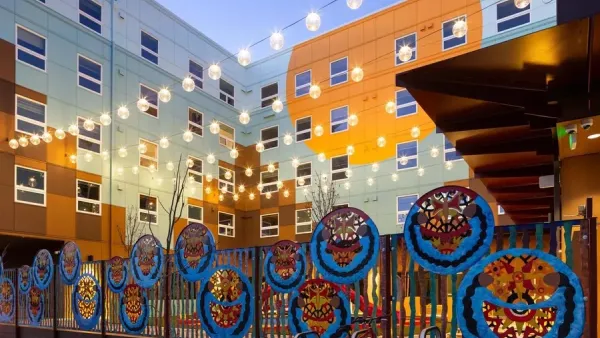
Seattle church complex includes 87 affordable homes
The Columbia City Church of Hope deeded part of its property to an affordable housing developer after limiting in-person congregation during the pandemic.
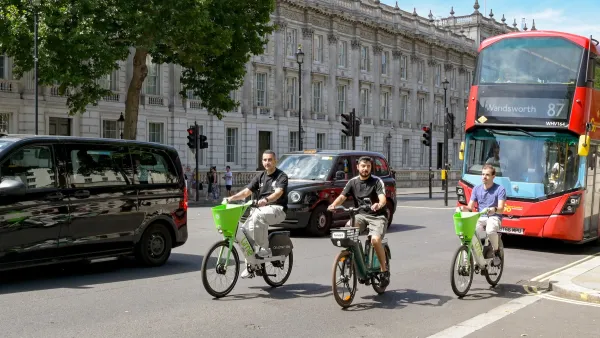
Bike use in London grew by 43% since 2019, but car use remains roughly the same
The city's efforts to reduce car use have stalled despite ambitious programs like congestion pricing and low-traffic neighborhoods.

Planetizen Federal Action Tracker
A weekly monitor of how Trump’s orders and actions are impacting planners and planning in America.

Amtrak, CN end decades-long dispute with eight-year agreement
The new operating agreement establishes an updated framework for the companies to work together, including processes to resolve disputes.
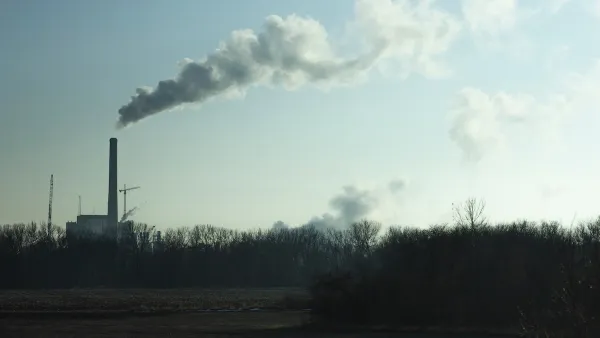
Nation's most wind-powered state turns to coal as data centers increase energy demand
For the first time in decades, Iowa has increased its generation of coal power.

Alabama scores up to $2.5 billion federal loan for largest infrastructure project in state’s history
The Mobile River Bridge and Bayway Project aims to ease congestion at Alabama’s worst bottleneck.

Trump is considering data centers on 6 states' public land — some state officials say they had no idea
If the administration approves the proposed projects, data center and data center-related developments will cover 17,600 acres of public land.

Despite court ruling, Trump is keeping nearly all wind projects in the US on hold
At least 110 wind energy projects have not heard from the government since a federal judge ruled that the Trump administration's freeze on wind turbine clearances was likely illegal.

FREE Course: Walkable City 1: Why Walkability?
After describing his path towards focusing on walkability as the essence of good planning, Jeff Speck marches through his five principal reasons for making more walkable places.
Reinventing Malls: Planning Alchemy—Turning Gray Fields Into Gold
The course focuses on the opportunities and imperatives that shape reinvention of mall sites.

KFH Group Inc.
Greater Baltimore Committee
Eagle County Government
The Architects Foundation
University of Cincinnati Online
The Pocatello Development Authority
The Urban Renewal Agency of the City of Pocatello