In suburban Vancouver, a small development near a university is trying to replicate the successes of Vancouver's urbanism with dense building clusters and walkable neighborhoods.


Grist's Jonathan Hiskes takes a tour.
"Up close, the neighborhood of 3,000 (so far) isn't fortress-like at all. The building cluster includes a variety of forms -- condo towers ranging from four stories to a planned 20-story tower at the highest point, single-family townhomes, and rental units above streetfront shops. First-floor dwellings have front doors and small yards rather than impersonal facades. Narrow streets slow down traffic. This being the Pacific Northwest, greenery sprouts from every soil patch and crevice in sight. Beautifully designed walkways and playgrounds give the sense that, rather than forgoing a suburban backyard, residents get an expansive, intricate yard to share.
The project has a slew of smart energy and water-management features (to protect nearby salmon-bearing streams), but one accomplishment jumps out: By centering the neighborhood around outdoor spaces, an elementary school, and two daycare centers, planners have attracted more families with children than the regional average. That might be the most important story UniverCity has to tell, given the pervasive belief (at least in the U.S.) that urban neighborhoods are no place to raise kids."
Read the full story: City-in-miniature on a hill The UniverCity project: An experiment in suburban urbanism


Midburbs: A New Definition of Suburbs
When the name “suburb” just doesn't quite fit.

Vancouver Day Care Rejection Poses Larger Questions
What does it mean for cities and civic life when neighborhoods are viewed as products geared for individual consumption rather than ever-evolving communities?

The Story of Ballparks Is the Story of American Cities
A new book looks at the evolution of American ballparks and the changes that have mirrored urbanism.

Planetizen Federal Action Tracker
A weekly monitor of how Trump’s orders and actions are impacting planners and planning in America.

Amtrak, CN end decades-long dispute with eight-year agreement
The new operating agreement establishes an updated framework for the companies to work together, including processes to resolve disputes.
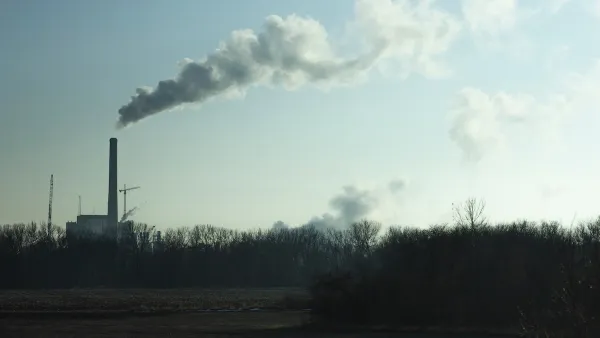
Nation's most wind-powered state turns to coal as data centers increase energy demand
For the first time in decades, Iowa has increased its generation of coal power.

Trump is considering data centers on 6 states' public land — some state officials say they had no idea
If the administration approves the proposed projects, data center and data center-related developments will cover 17,600 acres of public land.

Despite court ruling, Trump is keeping nearly all wind projects in the US on hold
At least 110 wind energy projects have not heard from the government since a federal judge ruled that the Trump administration's freeze on wind turbine clearances was likely illegal.

Community feedback ushers in changes to NYC’s Park Avenue redesign
New aspects of the design include a two-way bike lane and separate paths for cyclists and pedestrians.

FREE Course: Walkable City 1: Why Walkability?
After describing his path towards focusing on walkability as the essence of good planning, Jeff Speck marches through his five principal reasons for making more walkable places.
Reinventing Malls: Planning Alchemy—Turning Gray Fields Into Gold
The course focuses on the opportunities and imperatives that shape reinvention of mall sites.

KFH Group Inc.
Greater Baltimore Committee
Eagle County Government
The Architects Foundation
University of Cincinnati Online
The Pocatello Development Authority
The Urban Renewal Agency of the City of Pocatello