Street furniture and plantings transform a small strip of roadway within a bustling San Francisco neighborhood, much to the delight of the planners and designers who fought for the change for over five years.


It took five long years for one hundred feet of Linden Street to be reborn as the Linden Living Alley in San Francisco, a city widely recognized for its innovative and cutting-edge urban design practices. Local planners and designers overcame a variety of bureaucratic hurdles over the course of five years to transform a small strip of the street into a space that attempts to reconcile the needs of automobiles with those of pedestrians and cyclists.
John King of the San Francisco Chronicle sees the setbacks faced by the Linden project as a quintessential example of the disconnect between creative visions of ideal urban settings and what actually manifests itself in the form of the built environment at the conclusion of construction.
"That's because when you look past the new trees and grasses, Linden Alley shows how difficult it is to transfer planning theory to real life," writes King.
Read the full story: Linden Alley planners in S.F. went extra mile

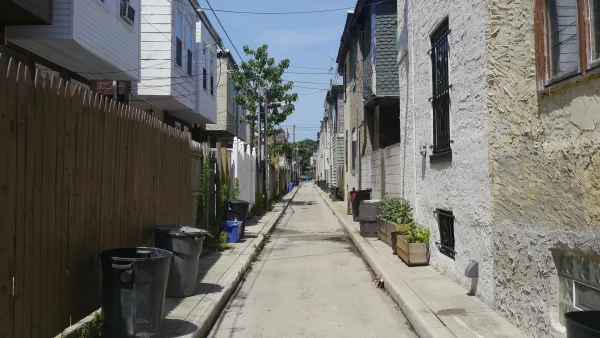
Philadelphia Alleys Ranked for Makeover
In advance of what may be a wider program, Philadelphia's alleys have been ranked for their aesthetic quality. Those in the "average" range are most suitable for retrofits.

Children in 55 countries are redesigning their cities in Minecraft
A U.N.-backed program lets students and community members reimagine sites in their neighborhoods in the game — and translate them into real-life buildings.
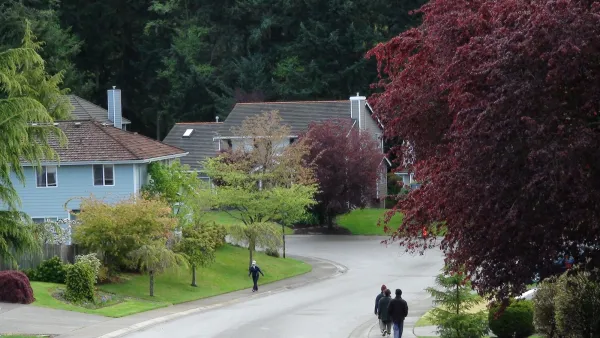
Move over, zoning. Housing’s unsung hero is better street design.
The physical layout of infrastructure is the quiet force that shapes housing supply.

Planetizen Federal Action Tracker
A weekly monitor of how Trump’s orders and actions are impacting planners and planning in America.

‘Going backwards:’ Baltimore mayor, students rally against state's transit funding plan
Maryland's proposed six-year plan provides no funding for Baltimore’s BMORE bus program and reduces its road maintenance funding.

Detroit to transform waterfront with $2.2 billion investment
Developers will convert about 18 acres of unused parking lot space into civic spaces.

HUD, USDA agree on framework to simplify housing environmental review standards
Their agreement is a requirement of the 21st Century ROAD to Housing Act.

Cost of water rising at a faster pace than inflation, median household income
California and Maryland residents have seen their water bills grow especially high.

NYC building owners overwhelmingly comply with new emissions limits
The New York City Department of Buildings is fining owners who did not file emissions reports.

FREE Course: Walkable City 1: Why Walkability?
After describing his path towards focusing on walkability as the essence of good planning, Jeff Speck marches through his five principal reasons for making more walkable places.
Reinventing Malls: Planning Alchemy—Turning Gray Fields Into Gold
The course focuses on the opportunities and imperatives that shape reinvention of mall sites.

planning NEXT
City of Thousand Oaks
City of Wisconsin Rapids
The Architects Foundation
University of Cincinnati Online
Northern Illinois Transit Authority (NITA)
The Pocatello Development Authority
The Urban Renewal Agency of the City of Pocatello