Cities around the world are eager to launch bike share programs, but many are deterred by high start-up costs. A new system may offer a cheaper alternative.


While the Velbi-style system used by Paris and other European cities requires installation of physical docking stations, Social Bicycle System (SoBi) employs a compact lockbox that can be attached to any bicycle. Users in search of a ride can locate and unlock bikes with enabling software on their cell phones. The SoBi cost per bike is $500 versus $4,000 per bike for the Velbi-style system.
A pilot program is coming soon the New York, where developer Ryan Rzepecki was formerly a bicycle planner with the city's Department Of Transportation. However, large government sponsors may not be required in the future, Christian Madera writes:
'What's perhaps most exciting is that given its lower cost and open model – SoBi could eventually be adopted by individuals and smaller organizations to create organic bike sharing networks that could conceivably stretch around the world.'
Read the full story: A Smarter Model for Bicycle Sharing

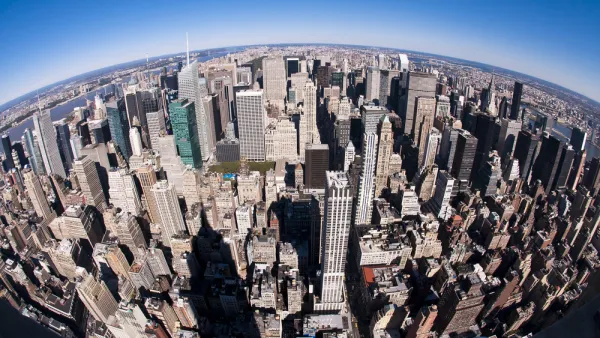
Is New York a Modern City-State?
Places Journal talks with New York Design Commissioner David Burney about the politics of urban design and planning.
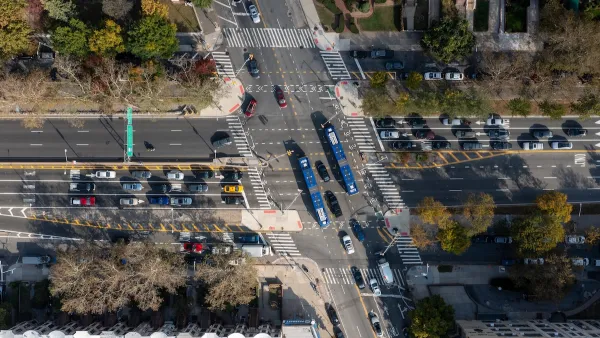
This road in NYC is infamously dangerous — and Mamdani can't fix it
New York City's Ocean Parkway is known for reckless driving, but the power to implement safety measures lies with the state rather than the city.
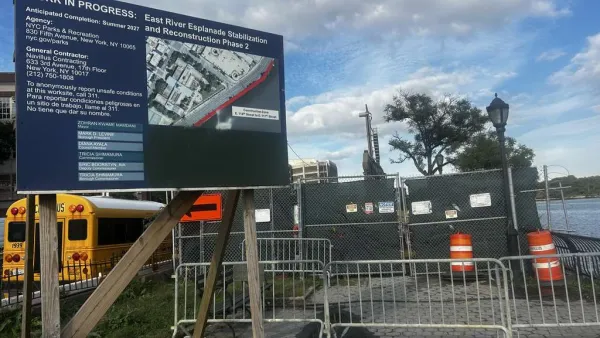
Ballooning costs delay NYC green space restoration after six years of planning
“There’s a stark inequity in how the city prioritizes infrastructure projects across different Manhattan neighborhoods," said Maria Kessler, executive director for Friends of the East River Esplanade. “Why is this neighborhood the last and unserved?”

Planetizen Federal Action Tracker
A weekly monitor of how Trump’s orders and actions are impacting planners and planning in America.

California plans to bury El Niño’s downpour
If the state plays its cards right, it may be able to store a billion acre-feet of El Niño’s water in aquifers.

Chicago breaks ground on $3 billion megadevelopment
The new neighborhood, titled Foundry Park, will one day host 3,700 residences.

California High-Speed Rail Authority CEO resigns after $600,000 scandal
Under Ian Choudri, the authority used taxpayer dollars to fund first class flights and trips to nightclubs.

Want to study the Missouri River? Soon, you may need unanimous approval from 10 states
Legislation would require 10 governors’ permission to study or build projects moving water outside the basin.

Desperate measures: Advocates weigh draining Lake Powell to fill Colorado River
Draining the reservoir could reduce evaporation losses by a couple hundred thousand acre-feet.

FREE Course: Walkable City 1: Why Walkability?
After describing his path towards focusing on walkability as the essence of good planning, Jeff Speck marches through his five principal reasons for making more walkable places.
Reinventing Malls: Planning Alchemy—Turning Gray Fields Into Gold
The course focuses on the opportunities and imperatives that shape reinvention of mall sites.

City of Rosemead
Rutgers University, Edward J. Bloustein School of Planning and Public Policy
One Hundred Miles
Hunter College, City University of New York (CUNY)
The Architects Foundation
University of Cincinnati Online
City of Cambridge
Montrose County
The Pocatello Development Authority