Architect Magazine talks with Toni Griffin, the urban planner who's leading the effort to rewrite Detroit's comprehensive plan to help the city through troubled times.


Griffin is heading the 12-18 month effort to rewrite the city's planning policies, and is facing many challenges along the way, one of which being the fact that the city now has roughly 40 square miles of vacant or abandoned land.
"Architect: Won't some people, in fact, have to move, if the city can no longer provide fire, sanitation, police, and other services to their present locations?
Griffin: The city is not looking at a forced relocation strategy. The team is sensitive to the scars left by federal urban renewal programs in the mid-to-late '60s, which in fact did uproot people. So we're talking about giving people choices to live in neighborhoods that can best provide the services they need.
It's going to be tough, but the planning process seeks to create more efficient and sustainable patterns of development and growth, as well as seeking new possibilities for the repurposing of land."
Read the full story: Can This Planner Save Detroit?

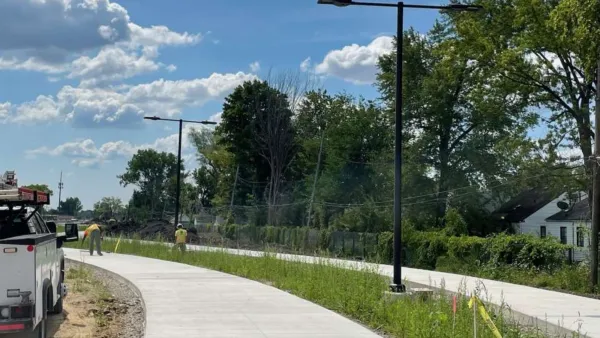
Detroit greenway brings revival — and fears of displacement
The planned Joe Louis Greenway is already bringing change to the neighborhoods near it.
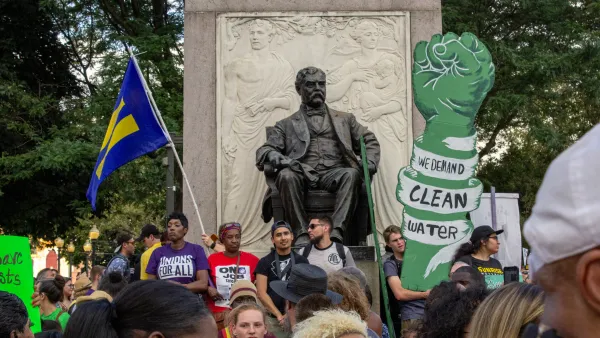
Some Detroit residents spend as much as 25% of their disposable income on water bills. A fraught history explains why.
Detroit’s water affordability crisis is tied to the uneven distribution of stormwater management costs.
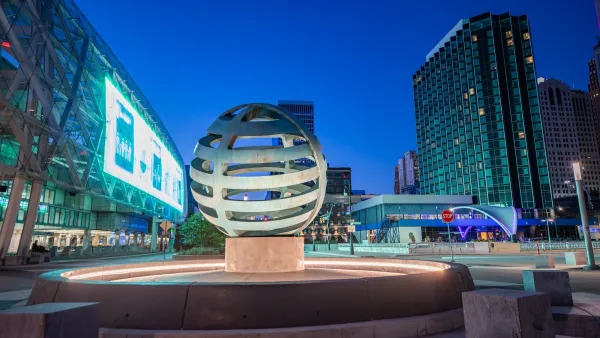
APA conference draws 4,000 urban planners to Detroit this weekend
The annual conference brings together planners for a weekend of panels, discussions and tours.

Planetizen Federal Action Tracker
A weekly monitor of how Trump’s orders and actions are impacting planners and planning in America.

Amtrak, CN end decades-long dispute with eight-year agreement
The new operating agreement establishes an updated framework for the companies to work together, including processes to resolve disputes.

Judges permit Denver to divert 77,000 acre feet from the Colorado River for reservoir expansion
Overuse and climate change have caused the Colorado River’s water levels to plummet.

Atlanta City Council unanimously backs $3.5 billion Beltline light rail project
The resolution was drafted after Atlanta Mayor Andre Dickens pulled support for the Atlanta Streetcar extension last year.

SEPTA to bring nearby frequent transit to over 1 million new riders as part of decade-long plan
The agency's Accelerate plan will also bring frequent transit to twice the amount of jobs that are currently located near it.

NYC plants over 18,000 trees, the most new foliage in a decade
Many of the trees were planted in communities vulnerable to extreme heat.

FREE Course: Walkable City 1: Why Walkability?
After describing his path towards focusing on walkability as the essence of good planning, Jeff Speck marches through his five principal reasons for making more walkable places.
Reinventing Malls: Planning Alchemy—Turning Gray Fields Into Gold
The course focuses on the opportunities and imperatives that shape reinvention of mall sites.

City of Thousand Oaks
City of Wisconsin Rapids
Harvard University Graduate School of Design
The Architects Foundation
University of Cincinnati Online
The Pocatello Development Authority
The Urban Renewal Agency of the City of Pocatello