What happens when a major retailer pulls out of a waterfront redevelopment project?


Bruce Fisher writes about what to do when a large big box retailer pulls out of a waterfront development project. This has been a shock to Buffalo's planning and development community - providing for lots of discussion and questions (be sure to read the comments).
Fisher points out that the Buffalo area is shrinking and therefore whatever is done needs to be quite different from what's done in growing regions. In this context Fisher's suggestion that funds be spent to clean up the water, increase public access and encourage local initiatives rather than subsidizing big box retail and parking.
He writes, "Numbers matter. The distinctive challenges of the Great Lakes communities begin with a recognition of what we are. That doesn't mean throwing up our hands in despair-but it does mean figuring out whether we are after visitors or whether we are after a sustainable context for the people who live here."
Thanks to Andy Nash
Read the full story: Our Waterfront, Ourselves


Mayoral Op-Ed Touts New Equitable Development Model in Minneapolis
A plan for 48 acres of riverfront land could make Minneapolis a leader in doing redevelopment right, argue city leaders.
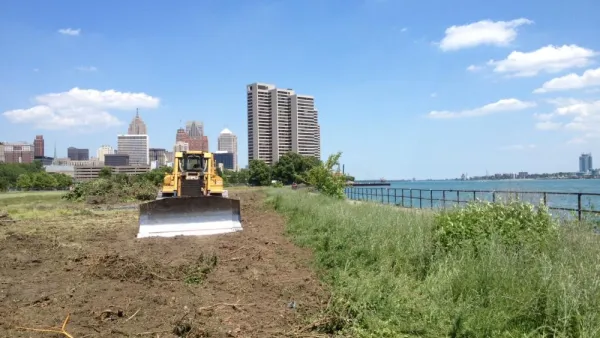
Massive Private Gift to Fund Parks and Trails in Detroit, Buffalo
The gift is especially notable for its contributions toward efforts to redevelop Detroit's West Riverfront.
Fracking Permits Temporarily Halted in North Carolina
Natural gas drilling was recently approved in North Carolina, but new operations are now on hold until the state Supreme Court resolves an issue about the process for appointing environmental review positions.

Planetizen Federal Action Tracker
A weekly monitor of how Trump’s orders and actions are impacting planners and planning in America.

Northwest rail fans eager for Sept. 30 debut of Amtrak’s Airo fleet
Get ready for that new train smell and more seats. But they won’t go faster or run more frequently on the Cascades route in Washington and Oregon.

Trump is considering data centers on 6 states' public land — some state officials say they had no idea
If the administration approves the proposed projects, data center and data center-related developments will cover 17,600 acres of public land.

After decades of planning, Sacramento gains new light rail station
Trains will arrive every 15 minutes during peak hours and every 30 minutes during non-peak hours.

Massive tunnel-boring machine breaks ground on Gateway Project
The Trump administration revoked funding for the project in October 2025, and then restored it earlier this year.

Airo trainsets begin service on Amtrak Cascades route
The trains feature panoramic windows, complementary wifi and over 300 seats per train set.

FREE Course: Walkable City 1: Why Walkability?
After describing his path towards focusing on walkability as the essence of good planning, Jeff Speck marches through his five principal reasons for making more walkable places.
Reinventing Malls: Planning Alchemy—Turning Gray Fields Into Gold
The course focuses on the opportunities and imperatives that shape reinvention of mall sites.

City of Thousand Oaks
City of Wisconsin Rapids
Harvard University Graduate School of Design
The Architects Foundation
University of Cincinnati Online
Northern Illinois Transit Authority (NITA)
The Pocatello Development Authority
The Urban Renewal Agency of the City of Pocatello