The crash of the economy happened at the right time for gentrifying downtown Los Angeles, according to this piece from the Los Angeles Times.


Before the city's gentrifying downtown could go completely yuppy, the crash of the housing market and the economy seems to have stopped it in a sweet a spot, according to architecture critic Christopher Hawthorne.
"When the bottom fell out of the economy in 2008, taking the housing market along with it, the results, at least for many fledgling businesses downtown, were brutal. And yet the economic collapse has also managed to freeze downtown's transformation from sleepy to energized -- and freeze it at a particularly appealing spot.
Gentrification has decelerated in several parts of downtown into a kind of limbo, leaving them sufficiently changed to feel newly vital but not enough to seem overexposed. At the same time, plummeting housing prices and the conversion of several ill-fated condo projects into rental buildings means not only that the area is continuing to attract new residents but also that it may see a more compelling mixture of people -- more teachers and designers, fewer real-estate speculators -- than it did when forgettable two-bedroom units were selling for $800,000."
Read the full story: City walk
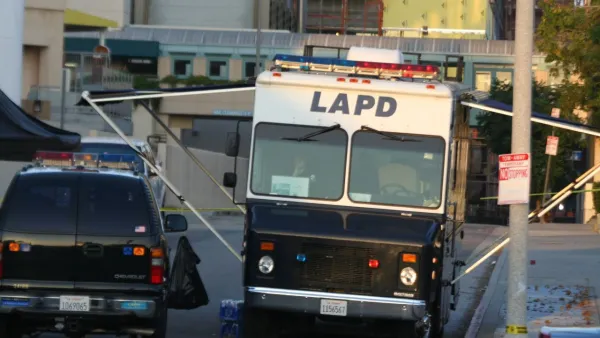
Still Gritty: Crime Wave in Downtown Los Angeles
As people and jobs stream into the district, downtown's long-simmering problems butt up against vigorous urban renewal. Crime is up, but so are property values.
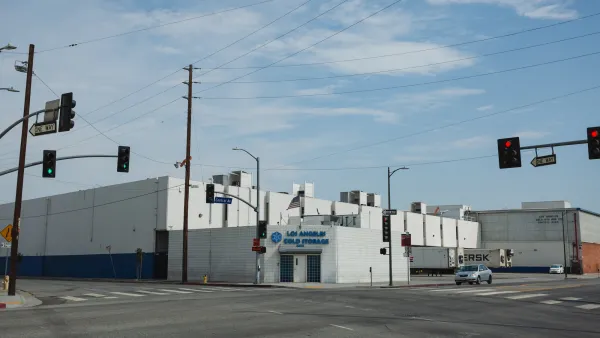
LA approves $2B 'urban village' plan for former cold storage facilities
The project promises an interconnected neighborhood with a focus on public space.
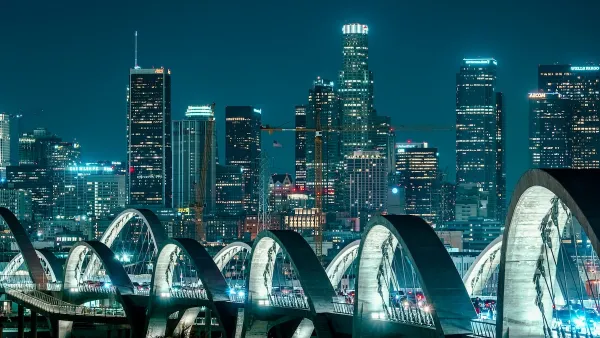
Downtown Los Angeles Gears Up for Growth
A new report highlights Downtown L.A.’s ongoing revival through major housing projects, adaptive reuse, hospitality growth, and preparations for global events in the years ahead.

Planetizen Federal Action Tracker
A weekly monitor of how Trump’s orders and actions are impacting planners and planning in America.

California plans to bury El Niño’s downpour
If the state plays its cards right, it may be able to store a billion acre-feet of El Niño’s water in aquifers.

Desperate measures: Advocates weigh draining Lake Powell to fill Colorado River
Draining the reservoir could reduce evaporation losses by a couple hundred thousand acre-feet.

US buildings threatened, destroyed by fires set to triple by 2060
Researchers found a high fire risk for socioeconomically vulnerable neighborhoods in the American West.

LA residents may be allowed to paint their own crosswalks
Councilwoman Katy Yaroslavsky put out a motion instructing the Los Angeles Department of Public Transportation to study the feasibility of allowing volunteers to paint crosswalks.

Dallas moves to overhaul its zoning code
The city's zoning reform will allow more multi-family and mixed-use developments.

FREE Course: Walkable City 1: Why Walkability?
After describing his path towards focusing on walkability as the essence of good planning, Jeff Speck marches through his five principal reasons for making more walkable places.
Reinventing Malls: Planning Alchemy—Turning Gray Fields Into Gold
The course focuses on the opportunities and imperatives that shape reinvention of mall sites.

City of Rosemead
Rutgers University, Edward J. Bloustein School of Planning and Public Policy
One Hundred Miles
Hunter College, City University of New York (CUNY)
The Architects Foundation
University of Cincinnati Online
City of Cambridge
Montrose County
The Pocatello Development Authority