The emphasis on high speed rial in the U.S. overlooks the potential harm it could cause to the nation's powerful freight rail system, according to this piece from The Economist.


America's freight railroads -- regarded as the best in the world -- could be hurt by the emergence of high-speed rail in the U.S., mainly because those systems would likely use the same rails as the freight railroads.
"[T]he problem with America's plans for high-speed rail is not their modesty. It is that even this limited ambition risks messing up the successful freight railways. Their owners worry that the plans will demand expensive train-control technology that freight traffic could do without. They fear a reduction in the capacity available to freight. Most of all they fret that the spending of federal money on upgrading their tracks will lead the Federal Railroad Administration (FRA), the industry watchdog, to impose tough conditions on them and, in effect, to reintroduce regulation of their operations. Attempts at re-regulation have been made in Congress in recent years, in response to rising freight rates. 'The freight railroads feel they are under attack,' says Don Phillips, a rail expert in Virginia."
Read the full story: High-speed railroading
Stimulus Gets Transportation Projects Moving - In China
While the U.S. waffles over its stimulus package, China is two months into a grand countrywide transportation facelift, building high-speed rail, expanding freight capacity and generally beefing up the country's mobility.
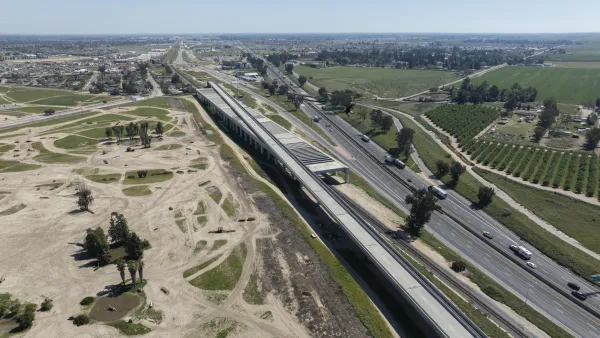
California High-Speed Rail Authority could be broke by the end of 2027
A report from the Office of Inspector General says the authority must borrow against state infusions to stay afloat.
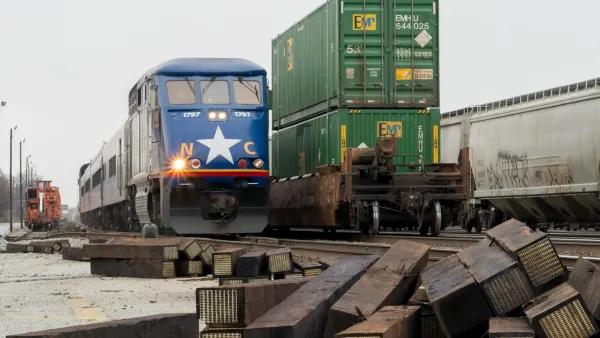
Why are America's trains so slow?
A brief historical inquiry.

Desperate measures: Advocates weigh draining Lake Powell to fill Colorado River
Draining the reservoir could reduce evaporation losses by a couple hundred thousand acre-feet.

Eastern Nebraska is running out of electricity
Data centers and electrification are straining eastern Nebraska’s grid, throttling economic development.

Malls are becoming the midtowns of the future
Mall and office park redevelopments are a generational opportunity to create new nodes of urbanity.

NYC breaks ground on anti-flooding infrastructure project
New York City's new system will reduce stormwater flows to local sewers by 90%.

One Kentucky town’s secret to affordable housing
The Smoketown Community Land Trust has already built seven affordable homes for community members.

Houston gains petal-shaped cooling infrastructure to make streets more ‘delightful’
The city has installed the pavilions along 15 blocks in Houston.

FREE Course: Walkable City 1: Why Walkability?
After describing his path towards focusing on walkability as the essence of good planning, Jeff Speck marches through his five principal reasons for making more walkable places.
Reinventing Malls: Planning Alchemy—Turning Gray Fields Into Gold
The course focuses on the opportunities and imperatives that shape reinvention of mall sites.

City of Rosemead
Rutgers University, Edward J. Bloustein School of Planning and Public Policy
One Hundred Miles
University of Michigan School for Environment and Sustainability (SEAS)
Hunter College, City University of New York (CUNY)
The Architects Foundation
City of Cambridge
Montrose County
The Pocatello Development Authority