Despite flowing through ten different nations, the Nile's water is only technically the property of Egypt and Sudan. The other eight nations are trying to change that. But as the debate heats up, the river's ecosystem may be caught in the cross-fire.


This piece from Yale Environment 360 looks at the complicated history of the Nile and how division of its water rights could exacerbate environmental damage to its ecosystem.
"Yet as the nations of the Nile bicker over its future, nobody is speaking up for the river itself - for the ecosystems that depend on it, or for the physical processes on which its future as a life-giving resource in the world's largest desert depends. The danger is that efforts to stave off water wars may lead to engineers trying to squeeze yet more water from the river - and doing the Nile still more harm. What is at risk here is not only the Nile, but also the largest wetland in Africa and one of the largest tropical wetlands in the world - the wildlife-rich Sudd.
In May, five upstream Nile nations - Ethiopia, Uganda, Kenya, Tanzania and Rwanda - signed a treaty declaring their rights to a share of the river's flow. They said they would no longer be bound by a treaty drawn up by the British in 1959. That treaty had given Egypt 55.5 cubic kilometers of the river's flow and Sudan 18.5 cubic kilometers, but no formal entitlements for any nation upstream."
Read the full story: Does Egypt Own The Nile? A Battle Over Precious Water

Regions of Water's Future Uncertainty
This interactive map from Good's Water issue highlight seven regions in the world that are likely to experience conflict over water shortages.
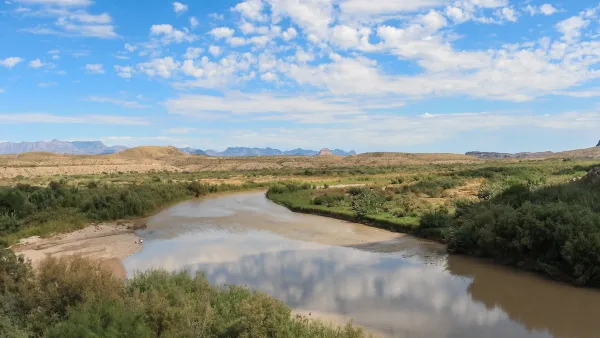
US and Mexico Sign Agreement to Deliver Remaining Water Obligations
The plan could bring much-needed water to farmers in South Texas.

Report: European Rivers Are in Trouble
Some of the continent’s most important rivers are suffering from overuse and pollution.

Planetizen Federal Action Tracker
A weekly monitor of how Trump’s orders and actions are impacting planners and planning in America.

‘Going backwards:’ Baltimore mayor, students rally against state's transit funding plan
Maryland's proposed six-year plan provides no funding for Baltimore’s BMORE bus program and reduces its road maintenance funding.

Detroit to transform waterfront with $2.2 billion investment
Developers will convert about 18 acres of unused parking lot space into civic spaces.

MTA invests $1.1 billion in ‘nearly-impossible’-to-evade fare gates
The new technology marks the Metropolitan Transit Authority's first turnstile redesign in decades.

HUD modernizes 50-year-old manufactured housing framework
The Next Generation Manufactured Housing Action Plan establishes new energy-efficiency standards for manufactured homes, and new guidelines for anchoring them.

New CA housing laws tear down development red tape
Recently-signed legislation makes building starter homes and ADUs cheaper and faster in California.

FREE Course: Walkable City 1: Why Walkability?
After describing his path towards focusing on walkability as the essence of good planning, Jeff Speck marches through his five principal reasons for making more walkable places.
Reinventing Malls: Planning Alchemy—Turning Gray Fields Into Gold
The course focuses on the opportunities and imperatives that shape reinvention of mall sites.

One Hundred Miles
County of Mendocino
planning NEXT
The Architects Foundation
University of Cincinnati Online
Montrose County
Northern Illinois Transit Authority (NITA)
The Pocatello Development Authority