Jarrett Walker argues that reports of the decline of public transportation ridership have been exaggerated.


Jarrett writes that one of the main reasons the numbers are confused is that they lump together areas of low transit use and high transit use into "metropolitan areas".
"Metro areas, by definition, conflate a dense core city and a lot of low-density suburbs, and thus conceal the dramatic difference between transit's relevance in those places. Metro area statistics may be useful for judging the relative economic performance of different parts of a country, but they always conceal most of what matters in understanding how transit really works. If you want to understand how and why transit works and fails, you should spend less time comparing metro Los Angeles and metro New York and more time comparing Manhattan with Nassau County, or comparing the LA/Hollywood core with the western San Fernando Valley."
Read the full story: ridership down in america? look deeper
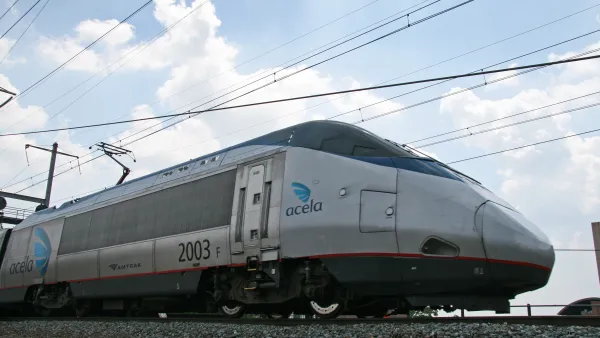
Amtrak Will Likely Break Ridership Record This Year
Despite closures and delays on major lines, passenger rail travel is set to break pre-pandemic records.
Virginia Passenger Rail Sets Ridership Records, Seeks More Wins
Virginia’s commitment to intercity rail is paying off in record ridership numbers, but more work will be necessary to achieve the state’s ambitions for passenger rail.
California Could Cut Transit Spending Even as Systems Struggle
Governor Newsom’s proposed budget would cut over $2 billion from transit infrastructure funds.

Planetizen Federal Action Tracker
A weekly monitor of how Trump’s orders and actions are impacting planners and planning in America.

California plans to bury El Niño’s downpour
If the state plays its cards right, it may be able to store a billion acre-feet of El Niño’s water in aquifers.

Desperate measures: Advocates weigh draining Lake Powell to fill Colorado River
Draining the reservoir could reduce evaporation losses by a couple hundred thousand acre-feet.

Los Angeles just elected an urban planner as its mayor
Transportation analysts are optimistic that Raman will be more aggressive in addressing transit issues than Bass.

Mamdani’s pied-à-terre tax survives legal challenge
A panel of judges found that the plaintiffs failed to demonstrate injury as a result of New York City's implementation of the tax.

Eastern Nebraska is running out of electricity
Data centers and electrification are straining eastern Nebraska’s grid, throttling economic development.

FREE Course: Walkable City 1: Why Walkability?
After describing his path towards focusing on walkability as the essence of good planning, Jeff Speck marches through his five principal reasons for making more walkable places.
Reinventing Malls: Planning Alchemy—Turning Gray Fields Into Gold
The course focuses on the opportunities and imperatives that shape reinvention of mall sites.

City of Rosemead
Rutgers University, Edward J. Bloustein School of Planning and Public Policy
One Hundred Miles
University of Michigan School for Environment and Sustainability (SEAS)
Hunter College, City University of New York (CUNY)
The Architects Foundation
City of Cambridge
Montrose County
The Pocatello Development Authority