Many things came together for light rail to come to Charlotte, starting in 1996. Key was perseverance by a conservative mayor, a volunteer group that started a historic trolley, voters who supported a sales tax, and experienced transit professionals


Grist explores the instrumental people and events that enabled this 10-mile system (known as LYNX) that opened Nov. 2007 to surpass its ridership forecast by 3,000 the first year. It forms a key part of the Charlotte Area Transit System.
Charlotte is car-loving NASCAR country, a vast suburbia of cul-de-sacs and strip malls. Yet its new light rail line is a national model for success. How did sensible transportation planning come to sprawlburbia?"
The key word is 'development' that would be enabled by the system, and transit oriented at that. Surprisingly, a 39-year-old conservative mayor knew that roads alone were not the city's future, and that transit would enable high density growth.
"In 1996, six months into his first mayoral term, conservative Republican Pat McCrory put transit atop his agenda. He lobbied relentlessly -- not about carbon footprints or global warming -- but about transit as economic develop men. The legislature finally OK'd a half-cent sales tax for transit , if voters approved. In 1998 they did."
Thanks to Daily Grist
Read the full story: Charlotte does light rail right

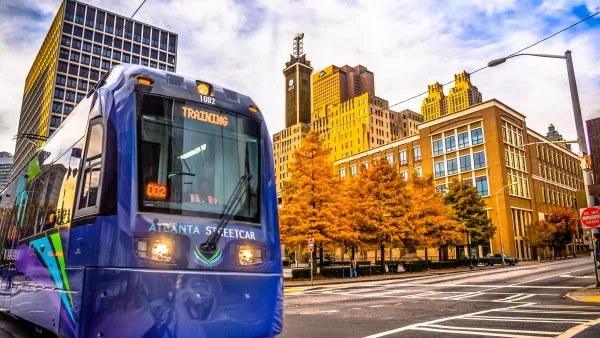
Expansion Planned for Atlanta Streetcar
A proposed expansion of Atlanta's beleaguered downtown streetcar could turn the 'novelty' line into a truly useful transportation option in the car-centric city.
Ridership Drops As Detroit's QLine Streetcar Starts Charging
Since Detroit's new streetcar system started charging, ridership has dropped. Those who are riding aren't necessarily paying anyways.
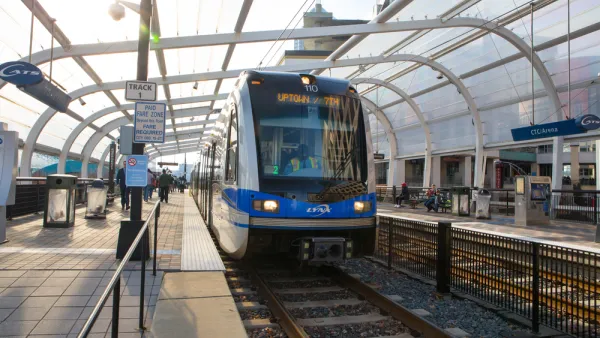
Light Rail Opening Next Year, More Lines Proposed—Transit Debates Keep Finding Charlotte
An extension of the Lynx Blue Line is schedule to open to the public on March 31, 2018. Controversy regarding sales taxes have traditionally followed transit projects in the region.

Planetizen Federal Action Tracker
A weekly monitor of how Trump’s orders and actions are impacting planners and planning in America.

The state-sanctioned urbicide of Austin
People don’t kill cities. Freeways do.

US to reduce Colorado River water deliveries to Mexico
A new Colorado Treaty amendment reduces Mexico’s Colorado River water allocation by 250,000 acre feet.

Nation's most wind-powered state turns to coal as data centers increase energy demand
For the first time in decades, Iowa has increased its generation of coal power.

NYC cools commuters with city's first rain garden above a bus stop
New York City officials say the plants in the rain garden can absorb 16 gallons of rainwater during heavy storms.

Brightline West’s future may rely on $6 billion federal loan
The company has until Nov. 2 to make a $400 million equity investment into its proposed high-speed rail line.

FREE Course: Walkable City 1: Why Walkability?
After describing his path towards focusing on walkability as the essence of good planning, Jeff Speck marches through his five principal reasons for making more walkable places.
Reinventing Malls: Planning Alchemy—Turning Gray Fields Into Gold
The course focuses on the opportunities and imperatives that shape reinvention of mall sites.

Greater Baltimore Committee
Eagle County Government
Harvard University Graduate School of Design
The Architects Foundation
University of Cincinnati Online
The Pocatello Development Authority
The Urban Renewal Agency of the City of Pocatello
Journal of the American Planning Association