Smart Planet talks with transportation researcher Reid Ewing about a new study he co-authored about how different development patterns can reduce auto use.


But it's not just density that helps reduce car use. In fact, the study fond that mix of uses has more of an impact on reducing car use than density.
"Planners for the last 40 years have been calling for mixed-use development, but we haven't known how beneficial mixed-use development was in terms of discouraging driving and encouraging walking and transit use. The study provides an estimate [of] just how important it is to balance jobs and housing in a neighborhood, rather than having all housing or all jobs.
The study made an attempt to generalize across something like 60 individual studies. It provides measures that can be used by planners and by policy makers to evaluate development proposals, to do health impact assessments, to do climate action plans.
If California metropolitan areas, under their smart growth climate law, double the density of their regions over the next 20 years, what effect will that have on total vehicle miles and total emissions? Now there's a convenient way of summarizing the effects. We can say with some certainty that if you double density you'll get a five to 10 percent reduction in vehicle miles traveled."
FULL STORY: Minimizing car travel by changing how we think about development

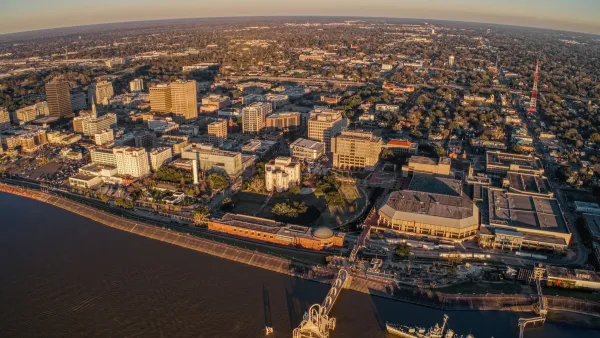
Baton Rouge master plan aims to triple downtown population
The Louisiana capital wants to entice developers to its riverfront district.

Five simple zoning changes that any city can make to increase housing affordability
Zoning for more affordable housing is not rocket science, says Donald Elliot, author of "An Even Better Way to Zone." Here’s his five-step guide to getting started.
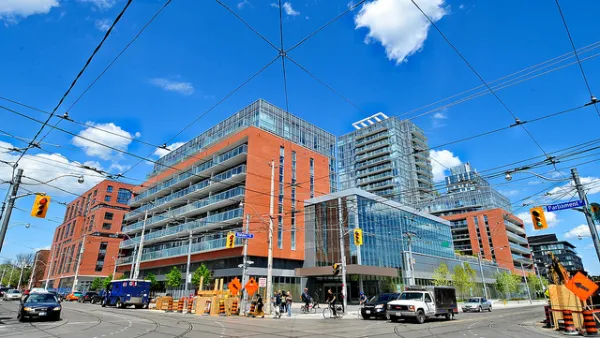
Canada Is Looking Better and Better
Alan Mallach unpacks a remarkable project currently underway in Toronto, suggesting that sometimes higher, rather than lower, density may be the best way to go.

Planetizen Federal Action Tracker
A weekly monitor of how Trump’s orders and actions are impacting planners and planning in America.

The state-sanctioned urbicide of Austin
People don’t kill cities. Freeways do.

US to reduce Colorado River water deliveries to Mexico
A new Colorado Treaty amendment reduces Mexico’s Colorado River water allocation by 250,000 acre feet.

5 New England states march closer to 800 megawatt wind energy project
Securing federal approval for the project may be complicated under the Trump administration, which has historically been hostile towards domestic wind power.

Baltimore to break ground on $50 million Transit Priority Project
The project will bring faster bus trips, safer streets and better bike connections to Baltimore.

Airbnb launches $250 million 'last-dollar financing' housing accelerator, makes first investment in Austin
The company will put $6.4 million towards affordable housing development in Texas’ capital.

FREE Course: Walkable City 1: Why Walkability?
After describing his path towards focusing on walkability as the essence of good planning, Jeff Speck marches through his five principal reasons for making more walkable places.
Reinventing Malls: Planning Alchemy—Turning Gray Fields Into Gold
The course focuses on the opportunities and imperatives that shape reinvention of mall sites.

Eagle County Government
Harvard University Graduate School of Design
Nashville Planning Department
The Architects Foundation
University of Cincinnati Online
The Pocatello Development Authority
The Urban Renewal Agency of the City of Pocatello
Journal of the American Planning Association