Suburban areas are becoming hotbeds for rising poverty. Though migration has a role, much of the transition from middle class to welfare has been caused by the housing crisis and recession.


This piece from Governing looks at the growing trend and what some suburban areas are trying to do about it.
"Poverty is on the rise in suburban areas nationwide. Some of it is pure demographics: More people are moving to the suburbs, so more poor people live in the suburbs. But there's more to it than that. The housing crisis and recession have hit suburbs harder than other places, which means foreclosures and unemployment have an outsize impact on suburban communities. By 2008, according to the Brookings Institution, the nation's suburbs were home to the largest and fastest-growing poor population in the nation.
That's making it doubly hard to deal with the problem. For one, the simple rise in poverty rates puts a strain on groups that administer services to the suburban poor. But many suburbs don't have the capacity to handle the poor populations they already have, much less an increase in those numbers."
Read the full story: Poverty Comes to the Suburbs

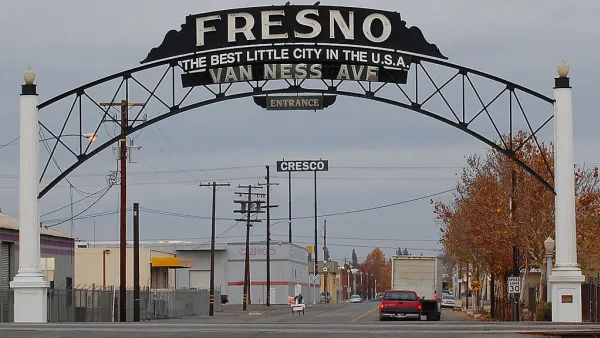
The Nation's Fastest-Rising Rents Are in California's Central Valley
Fresno's skyrocketing housing costs and inadequate supply are putting strain on the city's low-income households.
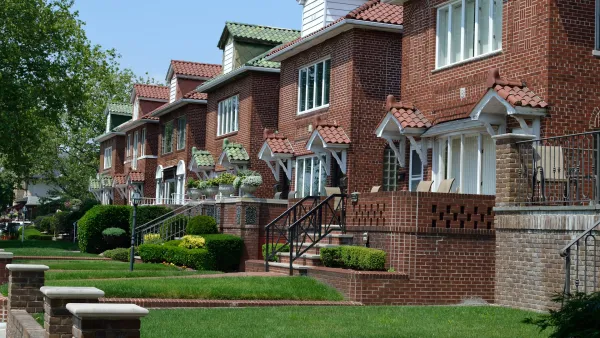
What Trump Gets Wrong About America’s Suburbs
The Trump administration’s talk about protecting the suburbs is based on misrepresentations of who really lives in suburbs and what these communities need.

Study Finds Seniors Could Be Stuck with Unsellable Homes in the Future
A new paper predicts that home-buying trends among younger generations will lead to a flood of homes that older homeowners will not be able to sell.

Planetizen Federal Action Tracker
A weekly monitor of how Trump’s orders and actions are impacting planners and planning in America.

Amtrak, CN end decades-long dispute with eight-year agreement
The new operating agreement establishes an updated framework for the companies to work together, including processes to resolve disputes.

Northwest rail fans eager for Sept. 30 debut of Amtrak’s Airo fleet
Get ready for that new train smell and more seats. But they won’t go faster or run more frequently on the Cascades route in Washington and Oregon.

Brightline Florida files for bankruptcy
The transit company is over $5 billion in debt.

St. Louis Metro to test if single-car trains can reduce operating costs, maintain rider satisfaction
The pilot program will run from October to spring 2027, and begin with one single-car train operating on Metrolink’s Red and Blue lines.

Pennsylvania is building data centers in abandoned mines
Housing data centers in mines provides an alternative to destroying local forests and may spare residents from data centers’ noise and air pollution.

FREE Course: Walkable City 1: Why Walkability?
After describing his path towards focusing on walkability as the essence of good planning, Jeff Speck marches through his five principal reasons for making more walkable places.
Reinventing Malls: Planning Alchemy—Turning Gray Fields Into Gold
The course focuses on the opportunities and imperatives that shape reinvention of mall sites.

City of Thousand Oaks
City of Wisconsin Rapids
Harvard University Graduate School of Design
The Architects Foundation
University of Cincinnati Online
The Pocatello Development Authority
The Urban Renewal Agency of the City of Pocatello