Public health was an early impetus for better urban planning. But over the years, it has faded into the background. This piece from Miler-McCune looks at how health concerns are moving their way back into mainstream planning.


"City planning originated, around the turn of the last century, out of concerns over health problems created by filthy slums and industries. Then the fields of public health and planning came uncoupled. Public health took on a mainly biomedical focus on individual genetics, biology and behavior and how clinicians could affect those, and on a narrowly biological approach to epidemiology and evidence. Meanwhile the planning of built environments was hijacked by the car.
Now the fields of city planning and public health - pushed by economic crisis, climate change and green technology, among other factors - are converging again."
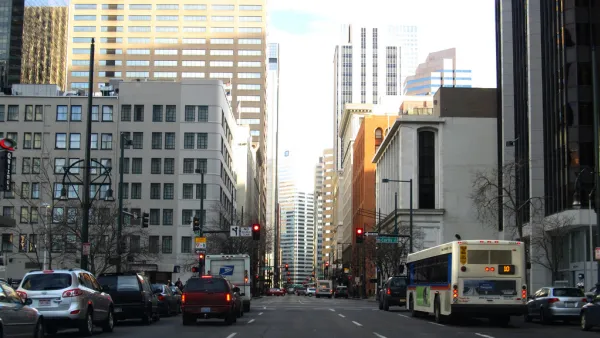
Through new studies and collaborations between the planning world and the public health world, city designers are making more of an effort to avoid the negative health effects their predecessors have created.
Read the full story: How Urban Planning Can Improve Public Health

Mental Health Facility Uses Design to Improve Outcomes
Far from the drab and claustrophobic mental health facilities of cinematic fame, Ohana aims to serve patients in an aesthetically soothing, nature-driven environment.
Improving Housing Through Trauma-Informed Design
A growing awareness of the link between the built environment and mental health has led some designers to examine the ways we can make housing feel more safe and welcoming for vulnerable populations.
Re-Connecting Housing and Health for a Better Future
Elizabeth Burton reminds us of the close connection between housing and health, and proposes better ways to gauge how housing may affect the health and well-being of residents.

Planetizen Federal Action Tracker
A weekly monitor of how Trump’s orders and actions are impacting planners and planning in America.

California plans to bury El Niño’s downpour
If the state plays its cards right, it may be able to store a billion acre-feet of El Niño’s water in aquifers.

Desperate measures: Advocates weigh draining Lake Powell to fill Colorado River
Draining the reservoir could reduce evaporation losses by a couple hundred thousand acre-feet.

US buildings threatened, destroyed by fires set to triple by 2060
Researchers found a high fire risk for socioeconomically vulnerable neighborhoods in the American West.

LA residents may be allowed to paint their own crosswalks
Councilwoman Katy Yaroslavsky put out a motion instructing the Los Angeles Department of Public Transportation to study the feasibility of allowing volunteers to paint crosswalks.

Dallas moves to overhaul its zoning code
The city's zoning reform will allow more multi-family and mixed-use developments.

FREE Course: Walkable City 1: Why Walkability?
After describing his path towards focusing on walkability as the essence of good planning, Jeff Speck marches through his five principal reasons for making more walkable places.
Reinventing Malls: Planning Alchemy—Turning Gray Fields Into Gold
The course focuses on the opportunities and imperatives that shape reinvention of mall sites.

City of Rosemead
Rutgers University, Edward J. Bloustein School of Planning and Public Policy
One Hundred Miles
Hunter College, City University of New York (CUNY)
The Architects Foundation
University of Cincinnati Online
City of Cambridge
Montrose County
The Pocatello Development Authority