In Tampa, voters can't seem to untangle an upcoming one-cent sales tax to fund light rail with the Obama administration's recent $1.25 billion award for high-speed rail, though the funding is completely separate.


Bill Varian reports that Tampa Bay area residents repeatedly entangle the two, and can't figure out why they need the sales tax with all the stimulus funding.
Varion writes, "Sam Rashid, a veteran of antitax campaigns who is opposing a Hillsborough tax referendum, agreed that the overlapping timing of the two issues presents a challenge to supporters.
Opponents have a simple message: The government wants to spend a bunch of money on a pipe dream. Supporters have a nuanced argument.
"You can easily sell one image. I think the picture people are drawing in their minds is of a monorail system from Disney World all through Tampa, not realizing it's two different animals," Rashid said."
Read the full story: As Tampa Bay area rail projects move forward, confusion reigns

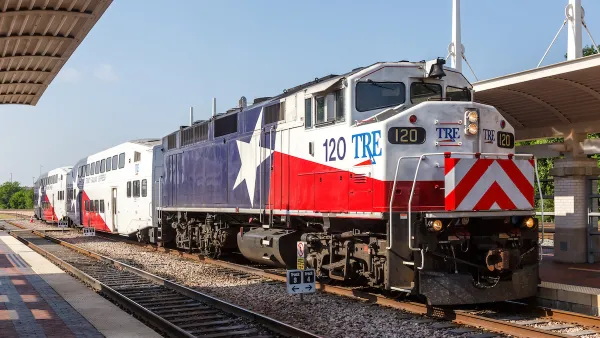
Revitalizing Texas: Sustainable Rail Solutions
An argument for why investing in trains is the key to sustainable growth and economic success in the Lone Star State.
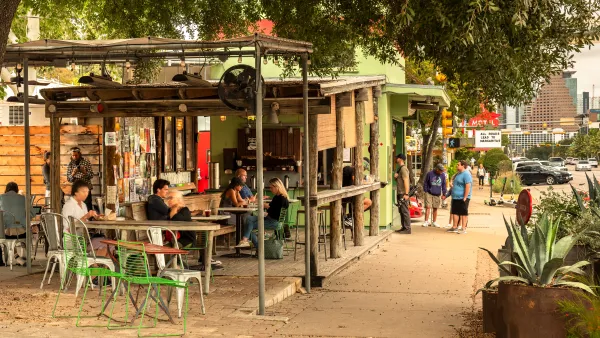
Large projects near Austin's light rail must include affordable housing
Elsewhere in the city, developers can pay into a city bank account for affordable housing rather than providing the required affordable units within their projects.

Budget constraints threaten light rail for Oregon, Washington’s new bridge
The current proposal includes only the infrastructure for the light rail, without funding for the train and tracks.

Planetizen Federal Action Tracker
A weekly monitor of how Trump’s orders and actions are impacting planners and planning in America.

Amtrak, CN end decades-long dispute with eight-year agreement
The new operating agreement establishes an updated framework for the companies to work together, including processes to resolve disputes.

Judges permit Denver to divert 77,000 acre feet from the Colorado River for reservoir expansion
Overuse and climate change have caused the Colorado River’s water levels to plummet.

Boston has spent millions making the Green Line more accessible — and there’s no end in sight
While the city has invested millions into expanding and adding platforms to the Green Line to make it more accessible, new train cars set to arrive next year will be too tall for disabled passengers to board without raising the current platforms.

Idaho may see an 18% drop in federal surface transit funding — the largest estimated cut in the US
Transit systems in rural communities are much more reliant on federal funding to provide their services.

How ‘post-disaster gentrification’ alters neighborhoods after natural calamities
After hurricanes, fires or other calamities, the original residents of a community are often replaced by younger, wealthier residents.

FREE Course: Walkable City 1: Why Walkability?
After describing his path towards focusing on walkability as the essence of good planning, Jeff Speck marches through his five principal reasons for making more walkable places.
Reinventing Malls: Planning Alchemy—Turning Gray Fields Into Gold
The course focuses on the opportunities and imperatives that shape reinvention of mall sites.

City of Wisconsin Rapids
Harvard University Graduate School of Design
KFH Group Inc.
The Architects Foundation
University of Cincinnati Online
The Pocatello Development Authority
The Urban Renewal Agency of the City of Pocatello