The City has reached a deal to take over 172-acres of undeveloped land from the State, and redevelopment possibilities are flooding in - public park, high school, commercial buildings, NYU satellite campus, and more.


Located just off the tip of Manhattan, Governor's Island is a former military base that now represents one of the largest pieces of undeveloped real estate in the New York area. Having languished under joint control of the City and the State, Mayor Michael Bloomberg just secured a deal to take over management of the island and begin an ambitious redevelopment plan including a major new public park.
A redevelopment plan is in the works and officials believe the final tally will approach $200 million. Bloomberg will appoint the majority of a new Governors Island Operating Entity to manage the process, while the National Parks Service will continue to manage an existing national monument.
The New York Times website has posted a forum where people can contribute their own ideas for the Island.
Read the full story: New York City Takes Over Governors Island

North Texas Town Launches Downtown Revitalization Plan
The Design Downtown Denton plan takes aim at improving walkability and highlighting the city’s historic assets.
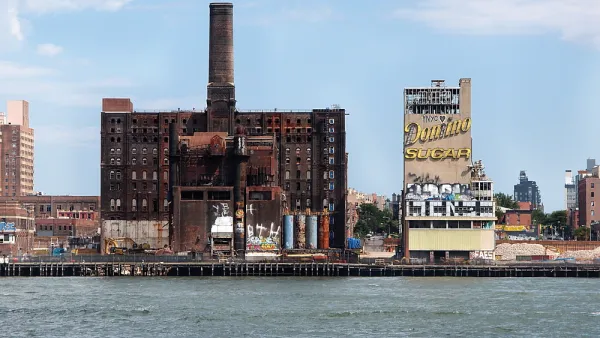
A New Riverfront Park in New York City
A new park on the East River in Williamsburg adds "one hell of an amenity" to Brooklyn.
Will Praise Mean Anything for Central Park?
New York's Central Park was recently named to the APA's list of the country's 10 best public spaces. Sewell Chan wonders if the designation will really mean anything new for the park.

Planetizen Federal Action Tracker
A weekly monitor of how Trump’s orders and actions are impacting planners and planning in America.

California plans to bury El Niño’s downpour
If the state plays its cards right, it may be able to store a billion acre-feet of El Niño’s water in aquifers.

Desperate measures: Advocates weigh draining Lake Powell to fill Colorado River
Draining the reservoir could reduce evaporation losses by a couple hundred thousand acre-feet.

Los Angeles just elected an urban planner as its mayor
Transportation analysts are optimistic that Raman will be more aggressive in addressing transit issues than Bass.

Mamdani’s pied-à-terre tax survives legal challenge
A panel of judges found that the plaintiffs failed to demonstrate injury as a result of New York City's implementation of the tax.

Eastern Nebraska is running out of electricity
Data centers and electrification are straining eastern Nebraska’s grid, throttling economic development.

FREE Course: Walkable City 1: Why Walkability?
After describing his path towards focusing on walkability as the essence of good planning, Jeff Speck marches through his five principal reasons for making more walkable places.
Reinventing Malls: Planning Alchemy—Turning Gray Fields Into Gold
The course focuses on the opportunities and imperatives that shape reinvention of mall sites.

City of Rosemead
Rutgers University, Edward J. Bloustein School of Planning and Public Policy
One Hundred Miles
University of Michigan School for Environment and Sustainability (SEAS)
Hunter College, City University of New York (CUNY)
The Architects Foundation
City of Cambridge
Montrose County
The Pocatello Development Authority