The federal government recently rejected a proposal by the state of Pennsylvania to toll Interstate 80. Robert Puentes argues that the decision is exactly what's holding metropolitan areas back from solving their transportation problems.


"The U.S. DOT's decision is based on their interpretation of the law that prohibits dedicating the proceeds of the tolls to anything but the roadway itself which includes paying off debts, potential profits for private investors, and general rehab and upkeep. Therefore, the state's plan to dedicate a portion of the revenues generated to fixing the state's roads and bridges, and to address its dire transit needs is a no-go.
The law needs to be changed."
Puentes says that states and metropolitan areas should be given the responsibility to determine which roads should be considered for tolling or pricing, not the federal government. However, reathorization of the much-delayed transportation bill could change those rules.
Read the full story: Outdated Thinking is Taking its Toll

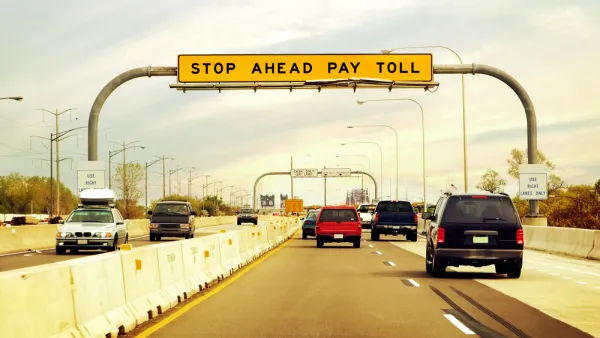
Video: Why U.S. Road Tolling Is So Complicated
States increasingly count on toll roads to supplement gas tax revenue, but why does the U.S. still lack national interoperability?
Transportation Bill Clears House Committee
A five-year transportation bill has advanced in the House, but it has a long way to go before Americans should expect to see a final federal transportation policy emerge from Congress.
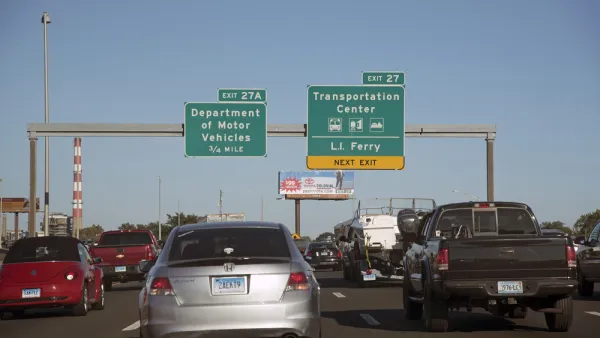
Connecticut Transportation Funding Debate: Toll Trucks or Toll All Vehicles?
New Connecticut Governor Ned Lamont has reversed the position of his campaign, when he pledged to toll only heavy trucks to tackle traffic congestion. In an op-ed, Lamont explains why all vehicles must be tolled. He also rules out a gas tax hike.

Planetizen Federal Action Tracker
A weekly monitor of how Trump’s orders and actions are impacting planners and planning in America.

Northwest rail fans eager for Sept. 30 debut of Amtrak’s Airo fleet
Get ready for that new train smell and more seats. But they won’t go faster or run more frequently on the Cascades route in Washington and Oregon.

Trump is considering data centers on 6 states' public land — some state officials say they had no idea
If the administration approves the proposed projects, data center and data center-related developments will cover 17,600 acres of public land.

After decades of planning, Sacramento gains new light rail station
Trains will arrive every 15 minutes during peak hours and every 30 minutes during non-peak hours.

Massive tunnel-boring machine breaks ground on Gateway Project
The Trump administration revoked funding for the project in October 2025, and then restored it earlier this year.

Airo trainsets begin service on Amtrak Cascades route
The trains feature panoramic windows, complementary wifi and over 300 seats per train set.

FREE Course: Walkable City 1: Why Walkability?
After describing his path towards focusing on walkability as the essence of good planning, Jeff Speck marches through his five principal reasons for making more walkable places.
Reinventing Malls: Planning Alchemy—Turning Gray Fields Into Gold
The course focuses on the opportunities and imperatives that shape reinvention of mall sites.

City of Thousand Oaks
City of Wisconsin Rapids
Harvard University Graduate School of Design
The Architects Foundation
University of Cincinnati Online
Northern Illinois Transit Authority (NITA)
The Pocatello Development Authority
The Urban Renewal Agency of the City of Pocatello