New research suggests that huge domes of carbon dioxide hover over urban areas, which is prompting some scientists and policymakers to stress the importance of cities as the frontlines of the war on greenhouse gas emissions.


"Mark Jacobson, professor of civil and environmental engineering and director of the Atmosphere/Energy Program at Stanford, has been vocal about the need for a complete clean-energy transformation. This week, with the political world consumed by health care, his work offers a reminder that carbon pollution is a serious health problem. It makes traditional air pollution-such as particulates and ozone-more harmful, so it poses particular threats to the places with the worst air pollution-cities."
This post from Grist takes a look at the new research and shows a map of how those CO2 "domes" span out across the U.S.
Read the full story: If it does matter where CO2 is released, cities are in trouble


How Cities Undercount Greenhouse Gas Emissions
By the usual measures, wealthy "consumer cities" have largely put a check on their carbon emissions. But that doesn't account for the emissions that their consumption habits fuel in other places.
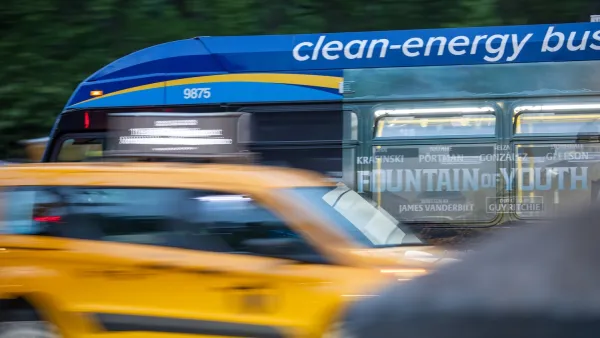
FTA Kills ‘Social Cost of Carbon’ in Transit Grant Criteria
The Capital Investments Grant program will no longer factor in the future impacts of carbon emissions.

Driving Equity and Clean Air: California Invests in Greener School Transportation
California has awarded $500 million to fund 1,000 zero-emission school buses and chargers for educational agencies as part of its effort to reduce pollution, improve student health, and accelerate the transition to clean transportation.

Planetizen Federal Action Tracker
A weekly monitor of how Trump’s orders and actions are impacting planners and planning in America.

Amtrak, CN end decades-long dispute with eight-year agreement
The new operating agreement establishes an updated framework for the companies to work together, including processes to resolve disputes.

Northwest rail fans eager for Sept. 30 debut of Amtrak’s Airo fleet
Get ready for that new train smell and more seats. But they won’t go faster or run more frequently on the Cascades route in Washington and Oregon.

LAX SkyLink opening delayed again, contractor won’t commit to new deadline
The project was supposed to open its doors to the public in 2023.

Caltrain may slash over one-third of its stations
If Bay Area voters reject two transit tax measures, Caltrain, BART and AC Transit will see steep service cuts.

A 'dangerous' precedent: North Carolina successfully pressures communities into voting for toll roads
Two mayors resigned from the Charlotte Regional Transportation Planning Organization after it voted in favor of the toll roads.

FREE Course: Walkable City 1: Why Walkability?
After describing his path towards focusing on walkability as the essence of good planning, Jeff Speck marches through his five principal reasons for making more walkable places.
Reinventing Malls: Planning Alchemy—Turning Gray Fields Into Gold
The course focuses on the opportunities and imperatives that shape reinvention of mall sites.

City of Thousand Oaks
City of Wisconsin Rapids
Harvard University Graduate School of Design
The Architects Foundation
University of Cincinnati Online
The Pocatello Development Authority
The Urban Renewal Agency of the City of Pocatello