The main reason people move to the outer suburbs is for larger homes, says a small study conducted by Ohio State University.


Hazel Morrow-Jones is a professor of city and regional planning at Ohio State University. She conducted the study with a student, surveying residents of the outer reaches of Columbus.
Jim Wieker writes, "Crime, school quality and traffic matter but not as much as one might think.
"People have told us they were not leaving the central city because of the schools; the rating they gave the schools is largely the same that suburban households give when they leave," [Morrow-Jones] said.
But in both cases they do leave, and, through time, the pattern is clear: Homeowners leave the central city for the suburbs, and they leave the inner suburbs for the outer ones."
Read the full story: Sprawl has spread deep into our minds

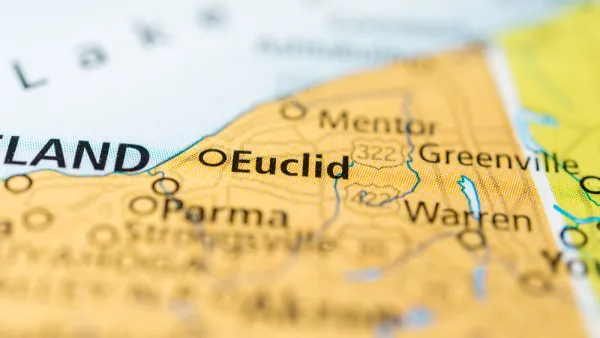
How One Lake Erie Town Got Free Waterfront Property for Public Use
Clear communication and a fair trade let Euclid, Ohio begin to rethink its lakefront—and its future.
Proposing a New Model for Regional Stratification: 'The New Donut'
Aaron Renn presents a new model for conceptualizing the health of the many layers of communities that make up metropolitan regions, namely the "new donut."
The Political Conflict of the Decade
Worldchanging's Alex Steffen says the question of cities versus suburbs is the political conflict that will define the next decade.

Planetizen Federal Action Tracker
A weekly monitor of how Trump’s orders and actions are impacting planners and planning in America.

California plans to bury El Niño’s downpour
If the state plays its cards right, it may be able to store a billion acre-feet of El Niño’s water in aquifers.

Desperate measures: Advocates weigh draining Lake Powell to fill Colorado River
Draining the reservoir could reduce evaporation losses by a couple hundred thousand acre-feet.

Metra may invest $9.1 billion in regional rail
The agency released a draft of a study examining potential ways to offer more frequent train service.

California city breaks ground on transit connector
The project includes three mobility hubs and a pedestrian bridge.

After public outcry, Massachusetts city releases housing development tracker
Cambridge’s tracker currently shows 250 housing projects in various stages of development.

FREE Course: Walkable City 1: Why Walkability?
After describing his path towards focusing on walkability as the essence of good planning, Jeff Speck marches through his five principal reasons for making more walkable places.
Reinventing Malls: Planning Alchemy—Turning Gray Fields Into Gold
The course focuses on the opportunities and imperatives that shape reinvention of mall sites.

City of Rosemead
Rutgers University, Edward J. Bloustein School of Planning and Public Policy
One Hundred Miles
Hunter College, City University of New York (CUNY)
The Architects Foundation
University of Cincinnati Online
City of Cambridge
Montrose County
The Pocatello Development Authority