Irrigation canals dating back to the year 1200 B.C. were discovered in Arizona this year, answering a long-asked question about how natives were able to farm the arid land.


The discovery is included in Archaeology magazine's list of the Top 10 Discoveries of 2009.
"For years, archaeologists in the American Southwest have wrestled with a frustrating puzzle: How did ancient farmers grow corn in the cactus-studded Sonoran Desert as early as 2000 B.C.? Some form of irrigation was clearly necessary, but until 2009 no one had ever seen evidence for one of these primeval watering systems. Now at the site of Las Capas outside Tucson, archaeologist James Vint of Desert Archaeology Inc. and his colleagues have excavated an enormous network of canals and fields stretching over as many as 100 acres and dating to 1200 B.C. It is the oldest documented irrigation system in North America."
Read the full story: Early Irrigators - Tucson, Arizona

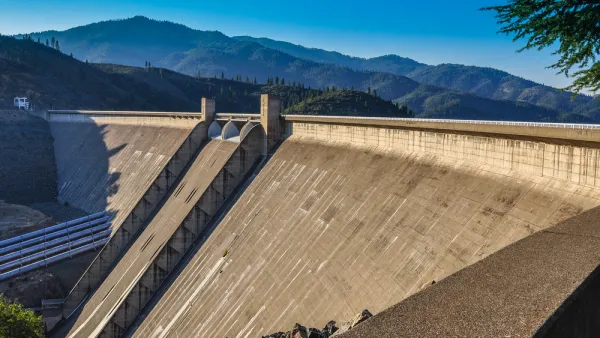
Why Are the Feds Suddenly in Favor of Raising the Shasta Dam?
Despite state opposition and potential violations of California law, the Trump Administration has revived a project that was deemed impracticable only a few years ago.

The Osage Nation’s Effort to Clean Up Abandoned Oil Wells
The Osage Nation is leading a complex and long-term initiative to identify, plug, and remediate thousands of orphaned oil wells on its reservation, protecting land, water, and community health for future generations.
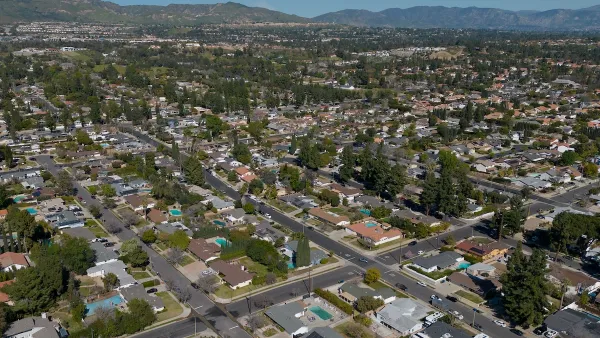
Honoring Elders: California Tribe Breaks Ground on Affordable Housing
The Fernandeño Tataviam Band of Mission Indians is launching its first senior housing project in Los Angeles County, creating 26 affordable units to serve Native elders and address longstanding housing inequities.

Planetizen Federal Action Tracker
A weekly monitor of how Trump’s orders and actions are impacting planners and planning in America.

California plans to bury El Niño’s downpour
If the state plays its cards right, it may be able to store a billion acre-feet of El Niño’s water in aquifers.

Chicago breaks ground on $3 billion megadevelopment
The new neighborhood, titled Foundry Park, will one day host 3,700 residences.

California High-Speed Rail Authority CEO resigns after $600,000 scandal
Under Ian Choudri, the authority used taxpayer dollars to fund first class flights and trips to nightclubs.

Want to study the Missouri River? Soon, you may need unanimous approval from 10 states
Legislation would require 10 governors’ permission to study or build projects moving water outside the basin.

Desperate measures: Advocates weigh draining Lake Powell to fill Colorado River
Draining the reservoir could reduce evaporation losses by a couple hundred thousand acre-feet.

FREE Course: Walkable City 1: Why Walkability?
After describing his path towards focusing on walkability as the essence of good planning, Jeff Speck marches through his five principal reasons for making more walkable places.
Reinventing Malls: Planning Alchemy—Turning Gray Fields Into Gold
The course focuses on the opportunities and imperatives that shape reinvention of mall sites.

City of Rosemead
Rutgers University, Edward J. Bloustein School of Planning and Public Policy
One Hundred Miles
Hunter College, City University of New York (CUNY)
The Architects Foundation
University of Cincinnati Online
City of Cambridge
Montrose County
The Pocatello Development Authority