The newest transit safety bill was unveiled yesterday to cautious praise. While states are struggling to fund transit, FTA chief Peter Rogoff says the goal is to create a nationwide floor for transit safety.


"The transit safety legislation, which was transmitted to congressional leaders yesterday, would allow states to keep their current transit oversight structure as long as federal regulators find that it meets a minimum safety threshold. States would receive federal aid to defray the costs of hiring and training safety inspectors, as well as achieving financial independence from the transit agencies they monitor."
"The FTA was prohibited from setting national transit safety under a 1965 law that was modified in 1991, when Congress created an oversight system that allowed flexible state standards for light rail and subways. Some state groups, such as those in New York and Massachusetts, have maintained independent and active oversight, but other transit safety entities -- Washington D.C.'s, most notably -- have been exposed as toothless."
FULL STORY: White House Unveils Transit Safety Bill to Cautious Praise on the Hill

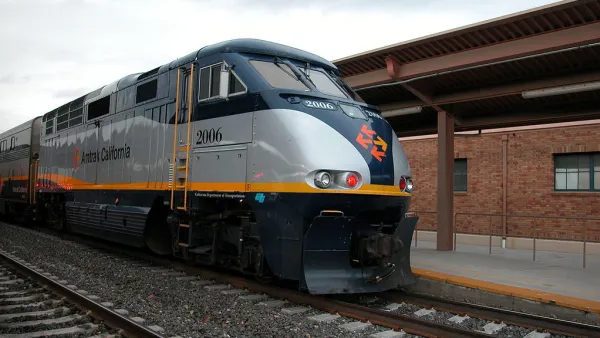
States Risk Losing Billions in Funding for Trains if They Don't Act on Safety
The Federal Transit Administration cannot award funds to states that don’t have federally approved safety-monitoring programs in place. On Monday, the agency warned a number of states that they needed prove they've undertaken these programs.
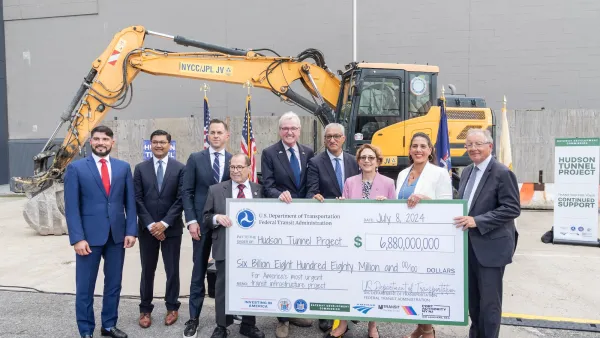
Trump administration is withholding over $7B in transit grants
Congress allocated $7.7 billion to the Capital Investment Grants program. The Federal Transit Administration has yet to sign a single agreement.

Thrift stores, public libraries and genderless bathrooms: How public amenities become trans infrastructure
Amenities like ample public transit, affordable retail and non-gendered bathroom spaces can make cities more safe and welcoming for transgender residents — and everyone else.

Planetizen Federal Action Tracker
A weekly monitor of how Trump’s orders and actions are impacting planners and planning in America.

The state-sanctioned urbicide of Austin
People don’t kill cities. Freeways do.

US to reduce Colorado River water deliveries to Mexico
A new Colorado Treaty amendment reduces Mexico’s Colorado River water allocation by 250,000 acre feet.

5 New England states march closer to 800 megawatt wind energy project
Securing federal approval for the project may be complicated under the Trump administration, which has historically been hostile towards domestic wind power.

Baltimore to break ground on $50 million Transit Priority Project
The project will bring faster bus trips, safer streets and better bike connections to Baltimore.

Airbnb launches $250 million 'last-dollar financing' housing accelerator, makes first investment in Austin
The company will put $6.4 million towards affordable housing development in Texas’ capital.

FREE Course: Walkable City 1: Why Walkability?
After describing his path towards focusing on walkability as the essence of good planning, Jeff Speck marches through his five principal reasons for making more walkable places.
Reinventing Malls: Planning Alchemy—Turning Gray Fields Into Gold
The course focuses on the opportunities and imperatives that shape reinvention of mall sites.

Eagle County Government
Harvard University Graduate School of Design
Nashville Planning Department
The Architects Foundation
University of Cincinnati Online
The Pocatello Development Authority
The Urban Renewal Agency of the City of Pocatello
Journal of the American Planning Association