Lessons from the Bronx: A community can halt a road expansion project if they get involved and make their voices heard. In this case, the NY DOT listened and thus chose not to widen exit ramps during a rehabilitation project on the Major Deegan.


The Major Deegan is now part of Interstate 87. Work began on the Bronx roadway in 1935 by Robert Moses with the backing of the Regional Plan Association. During this latest episode of its long history, the community rallied to prevent an expansion of exit ramps proposed by the state DOT.
"Every speaker at a public hearing at Hostos Community College on Nov. 9 denounced the state proposal. Some speakers also expressed concern that efforts to ease congestion would simply attract more cars, and more pollution. Others criticized plans to use eminent domain to seize existing businesses in order to make room for the new ramps.
"We need more jobs, more affordable housing, more clean air, not more highway," said Mychal Johnson, a member of Community Board 1 who initiated a petition campaign against the state plan. "The Deegan should be repaired, but not expanded," he said in an interview.
Opponents were particularly incensed that the Deegan plan ignored the city's desire to transform the Harlem River waterfront with a zoning plan passed last spring designed to attract developers to build high-rise apartments, new commercial buildings and a hotel."
Thanks to Streetsblog New York City
Read the full story: State won’t build new ramps on Deegan
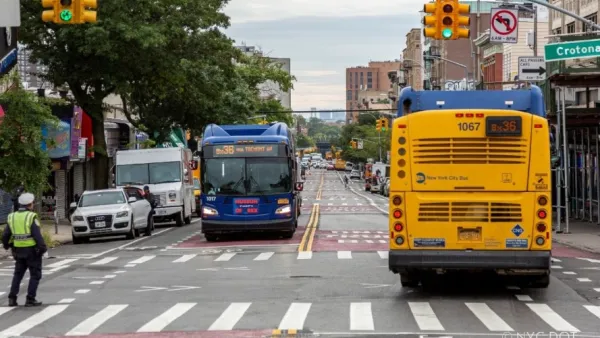
Buses travel at 5mph along this route in NYC. The Bronx's first-ever busway looks to change that
Prior to the busway, buses on the Bx36 route traveled as slowly as 5 miles per hour.
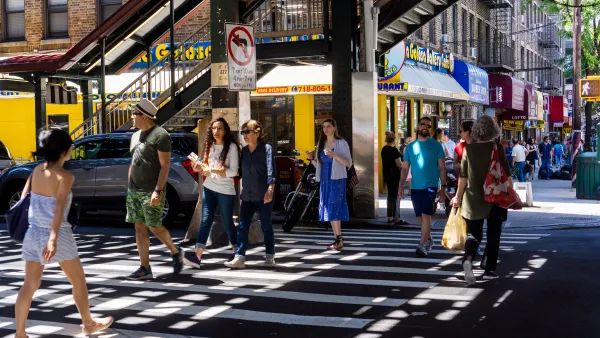
NYC needs 700,000 new homes to resolve housing crisis, report states
The report gave every neighborhood a non-binding development target.
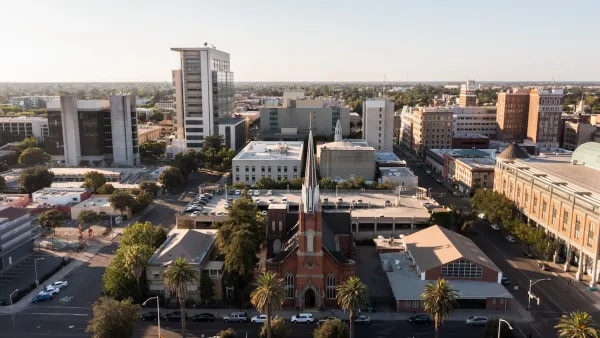
Will This Resident Group Get Full Control of the Complex They Helped Fix?
A group of Cambodian immigrants took partial control of an affordable housing property in the 90s, and since then, they’ve made big changes to the complex. But they haven’t been able to get full legal control of the property for decades. Why?

Planetizen Federal Action Tracker
A weekly monitor of how Trump’s orders and actions are impacting planners and planning in America.

California plans to bury El Niño’s downpour
If the state plays its cards right, it may be able to store a billion acre-feet of El Niño’s water in aquifers.

Desperate measures: Advocates weigh draining Lake Powell to fill Colorado River
Draining the reservoir could reduce evaporation losses by a couple hundred thousand acre-feet.

Mamdani’s pied-à-terre tax survives legal challenge
A panel of judges found that the plaintiffs failed to demonstrate injury as a result of New York City's implementation of the tax.

Eastern Nebraska is running out of electricity
Data centers and electrification are straining eastern Nebraska’s grid, throttling economic development.

Seattle passes record-breaking transit services expansion
Proposition 1 will double the city’s transit tax to add 95,000 more bus trips and preserve 180,000 bus trips annually.

FREE Course: Walkable City 1: Why Walkability?
After describing his path towards focusing on walkability as the essence of good planning, Jeff Speck marches through his five principal reasons for making more walkable places.
Reinventing Malls: Planning Alchemy—Turning Gray Fields Into Gold
The course focuses on the opportunities and imperatives that shape reinvention of mall sites.

City of Rosemead
Rutgers University, Edward J. Bloustein School of Planning and Public Policy
One Hundred Miles
University of Michigan School for Environment and Sustainability (SEAS)
Hunter College, City University of New York (CUNY)
The Architects Foundation
City of Cambridge
Montrose County
The Pocatello Development Authority