Smaller cities are showing signs of struggle, as the amount of college-educated residents continues to drop. Coupled with the economic recession, smaller cities seems to be taking a harder economic hit than their larger counterparts.


This article looks at a variety of indicators that show troubled times ahead for America's small cities. The trends are based on data from the U.S. Census Bureau.
"A review of newly released census data shows, for example, that smaller cities of between 20,000 and 50,000 residents have lagged behind their larger counterparts in attracting higher-educated residents in this decade. The smaller locales include remote towns, inner suburbs, the distant suburbs known as "exurbs" and other distinct areas.
In 2000, the smaller cities ranked at the top in the share of people with college diplomas. They slipped to No. 2 last year with 30 percent holding degrees - in between medium-sized cities, which had 31 percent, and big cities, at 29.8 percent."
Read the full story: Census: Small US cities lose luster in downturn


The future of architecture education according to 25 deans and directors
Interviews with architecture academic leadership revealed themes of adaptation, public engagement and climate resilience.

US Census Starts Using Postal Workers as Census Takers
A test program is using postal carriers to administer Census questionnaires.
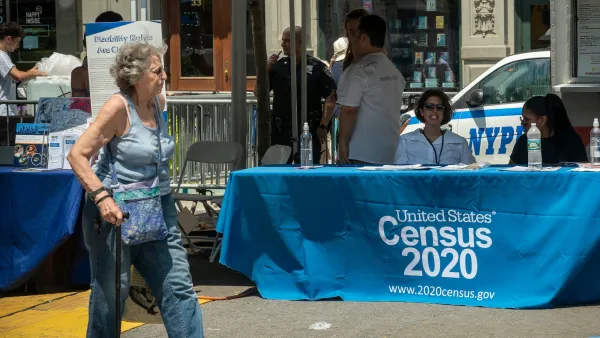
Two Lawsuits Aim to Strip Immigrants, Privacy Protections From US Census
The two cases could have major impacts on how Americans are counted in the next census.

Amtrak, CN end decades-long dispute with eight-year agreement
The new operating agreement establishes an updated framework for the companies to work together, including processes to resolve disputes.

Northwest rail fans eager for Sept. 30 debut of Amtrak’s Airo fleet
Get ready for that new train smell and more seats. But they won’t go faster or run more frequently on the Cascades route in Washington and Oregon.

Judges permit Denver to divert 77,000 acre feet from the Colorado River for reservoir expansion
Overuse and climate change have caused the Colorado River’s water levels to plummet.

NYC to turn city-owned property into thousands of homes
The city has scheduled a public hearing regarding the development for October.

Buses travel at 5mph along this route in NYC. The Bronx's first-ever busway looks to change that
Prior to the busway, buses on the Bx36 route traveled as slowly as 5 miles per hour.

Pittsburg launches 'EZ permits,' aims for one-day turnaround for low-risk permits
The pilot ‘fast lane’ for permits is part of a bundle of modernization efforts for Pittsburg’s permitting process.

FREE Course: Walkable City 1: Why Walkability?
After describing his path towards focusing on walkability as the essence of good planning, Jeff Speck marches through his five principal reasons for making more walkable places.
Reinventing Malls: Planning Alchemy—Turning Gray Fields Into Gold
The course focuses on the opportunities and imperatives that shape reinvention of mall sites.

City of Thousand Oaks
City of Wisconsin Rapids
Harvard University Graduate School of Design
The Architects Foundation
University of Cincinnati Online
The Pocatello Development Authority
The Urban Renewal Agency of the City of Pocatello