Undercounting is likely one of the biggest challenges facing the U.S. Census Bureau as it prepares to run its decennial census in April. Certain parts of the country will prove problematic when it comes time to count.


Jill Wilson of the Brookings Institution's Metropolitan Policy Program looked at a USA Today map to calculate the percent of each metropolitan area's population that lives in a "hard-to-count" neighborhood.
"Among the top 20 hard-to-count metros, only three (Albany, GA, Yakima, WA, and New York, NY) are not in a state bordering Mexico. The top sixteen are in TX, CA, NM, or AZ, though not all are border metros, with a cluster in California's "inland empire." Three metros (McAllen, Laredo, and Brownsville, TX) have more than half of their population in hard-to-count neighborhoods, and another seven have at least one third. Among metros with at least 1 million people, Los Angeles, New York, Las Vegas, Miami, and Houston rank highest, with at least one in five residents living in a hard-to-count neighborhood.
These places have their work cut out for them."
FULL STORY: Census NOT as easy as 1-2-3…

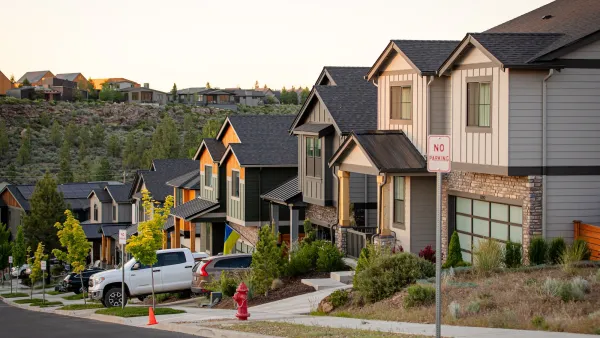
Oregon cities are excluding a key tool that could help their housing goals: maps
An effort to use geospatial analysis to understand how housing and access to opportunity are distributed in Oregon cities has largely stalled.
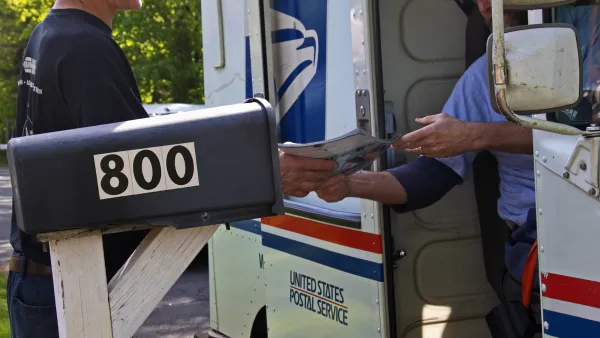
US Census Starts Using Postal Workers as Census Takers
A test program is using postal carriers to administer Census questionnaires.
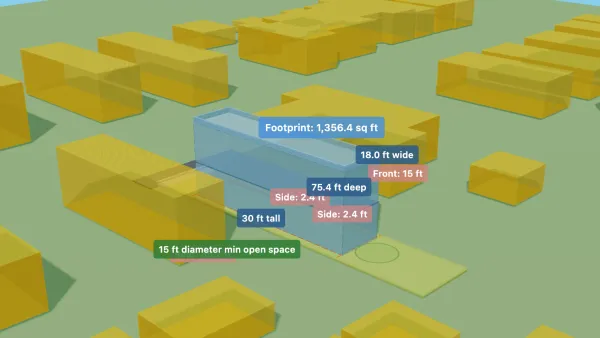
Interactive, 3D Chicago Zoning Map Lets You Visualize Potential Development
A new tool creates a visual model of potential development on Chicago lots based on the property’s specific zoning regulations.

Planetizen Federal Action Tracker
A weekly monitor of how Trump’s orders and actions are impacting planners and planning in America.

The state-sanctioned urbicide of Austin
People don’t kill cities. Freeways do.

US to reduce Colorado River water deliveries to Mexico
A new Colorado Treaty amendment reduces Mexico’s Colorado River water allocation by 250,000 acre feet.

5 New England states march closer to 800 megawatt wind energy project
Securing federal approval for the project may be complicated under the Trump administration, which has historically been hostile towards domestic wind power.

Baltimore to break ground on $50 million Transit Priority Project
The project will bring faster bus trips, safer streets and better bike connections to Baltimore.

Airbnb launches $250 million 'last-dollar financing' housing accelerator, makes first investment in Austin
The company will put $6.4 million towards affordable housing development in Texas’ capital.

FREE Course: Walkable City 1: Why Walkability?
After describing his path towards focusing on walkability as the essence of good planning, Jeff Speck marches through his five principal reasons for making more walkable places.
Reinventing Malls: Planning Alchemy—Turning Gray Fields Into Gold
The course focuses on the opportunities and imperatives that shape reinvention of mall sites.

Eagle County Government
Harvard University Graduate School of Design
Nashville Planning Department
The Architects Foundation
University of Cincinnati Online
The Pocatello Development Authority
The Urban Renewal Agency of the City of Pocatello
Journal of the American Planning Association