The Obama Administration has announced a plan to invest $4.25 billion of stimulus money to build low-income rental housing.


The move goes against previous housing approaches that favored policies that made it easier for people to own their own homes.
"The idea is to pay for the construction of low-rise rental apartment buildings and town houses, as well as the purchase of foreclosed homes that can be refurbished and rented to low- and moderate-income families at affordable rates.
Analysts say the approach takes a wrecking ball to Bush's heavy emphasis on encouraging homeownership as a way to create national wealth and provide upward mobility for low- and working-class families, especially minorities. Housing and Urban Development Secretary Shaun Donovan's recalibration of federal housing policy, they said, shows that the Obama White House has acknowledged that not everyone can or should own a home."
FULL STORY: President shifts focus to renting, not owning

Renting the American Dream
Home ownership remains a major part of the American dream. But more and more people are beginning to question the wisdom of investing in a home and are leaning towards renting.

Trump administration says DC height limits don't apply to federal projects
A federal commission cleared the way for the president's proposed 250-foot arch.
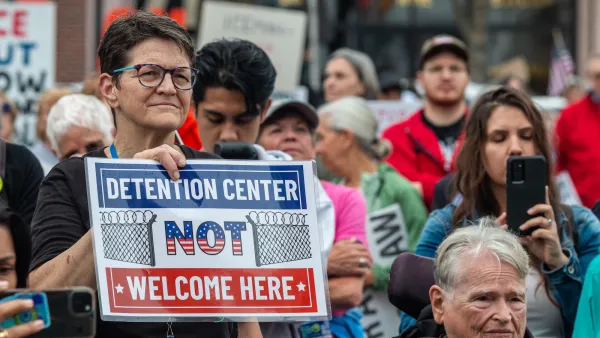
Land use as protest: How American cities are fighting federal immigration detention centers
Across the country, city officials are using zoning codes and land use law to limit where ICE detention facilities can be built.

The state-sanctioned urbicide of Austin
People don’t kill cities. Freeways do.

US to reduce Colorado River water deliveries to Mexico
A new Colorado Treaty amendment reduces Mexico’s Colorado River water allocation by 250,000 acre feet.

New Jersey’s second-largest city bans standalone data centers
Jersey City will continue to allow co-location facilities, such as those meant for research institutions that store their own data.

Amtrak not solely to blame for New Jersey commuter rail's unreliability, report finds
A new study from the Garden State Initiative found that NJ Transit’s budget grew 20% across a 4 year period, but reliability declined significantly over the same period.

EPA erases limits on planet-warming pollution from power plants
Under Monday’s plan, power plants would still have some limits on how much mercury, arsenic and other contaminants they can emit.

Phoenix announces new on-demand transit service, more frequent RAPID buses
Both new services will launch in October, and are part of Phoenix's Project Effective Access Solutions for Easing Congestion.

FREE Course: Walkable City 1: Why Walkability?
After describing his path towards focusing on walkability as the essence of good planning, Jeff Speck marches through his five principal reasons for making more walkable places.
Reinventing Malls: Planning Alchemy—Turning Gray Fields Into Gold
The course focuses on the opportunities and imperatives that shape reinvention of mall sites.

Eagle County Government
Harvard University Graduate School of Design
Nashville Planning Department
The Architects Foundation
University of Cincinnati Online
The Pocatello Development Authority
The Urban Renewal Agency of the City of Pocatello
Journal of the American Planning Association