This piece from Triple Canopy tracks the development of megachurches in America and the similar trajectory of corporate headquarters from dense city areas to vast exurban campuses.


"The midcentury embrace of car-friendly, arcadian settings for work and worship drew on a sense of the uprightness of the rural that had been cultivated by prominent Americans from Thomas Jefferson to William Jennings Bryan. Even after Schuller's congregation moved into a new building on the same site in 1961, it maintained its connection to the drive-in church: Richard Neutra, its architect, made the signature feature a floor-to-ceiling glass wall with panels that slid open during services, merging the sanctuary with the parking lot outside, giving worshipers in cars and pews an equal view of the pulpit.
A similar aesthetic emerged in office design. The Connecticut General Life Insurance Company, wishing to move away from downtown Hartford in order to expand its headquarters, hired Skidmore, Owings & Merrill to design a new structure in the idyllic suburb of Bloomfield. The result was a low, crystalline block set on two hundred acres of farmland."
FULL STORY: Infrastructure for Souls

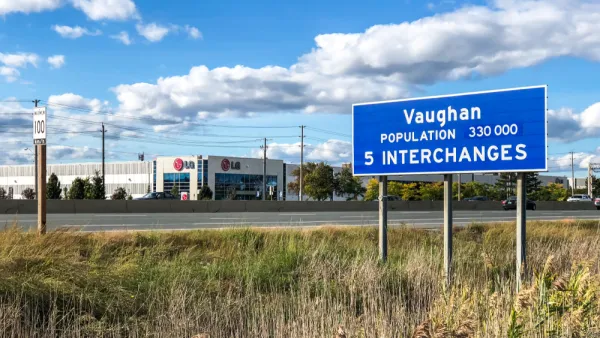
Council Votes to Allow Development on the York Region's Greenbelt
The York Regional Council took a significant step toward allowing development on a large chunk of the area's greenbelt—a move opponents say will set a dangerous precedent.
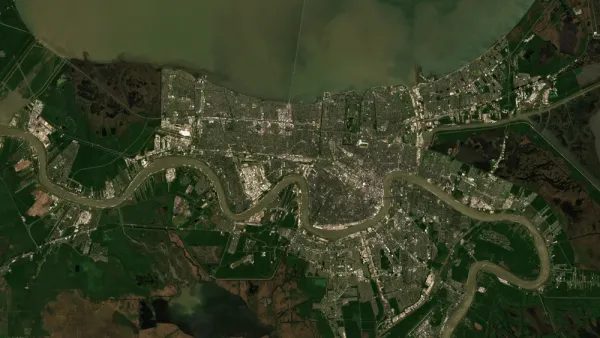
Satellite Imagery of a Decade's Transformation
Trends in land use and development are made obvious with satellite imagery tracking changes during the 2010s.
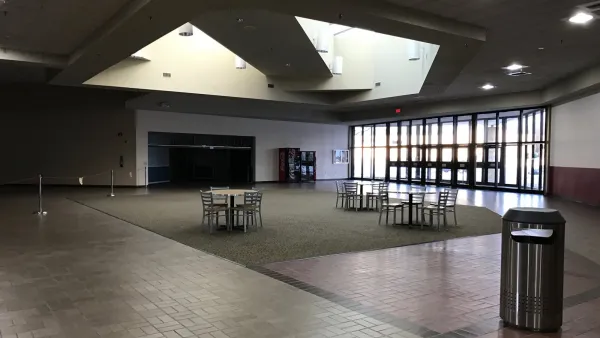
New Lives for Dead Malls
Suburban malls around the country are shutting down, and the huge spaces offer a variety of opportunities for creative reuse.

Planetizen Federal Action Tracker
A weekly monitor of how Trump’s orders and actions are impacting planners and planning in America.

The state-sanctioned urbicide of Austin
People don’t kill cities. Freeways do.

US to reduce Colorado River water deliveries to Mexico
A new Colorado Treaty amendment reduces Mexico’s Colorado River water allocation by 250,000 acre feet.

5 New England states march closer to 800 megawatt wind energy project
Securing federal approval for the project may be complicated under the Trump administration, which has historically been hostile towards domestic wind power.

Baltimore to break ground on $50 million Transit Priority Project
The project will bring faster bus trips, safer streets and better bike connections to Baltimore.

Airbnb launches $250 million 'last-dollar financing' housing accelerator, makes first investment in Austin
The company will put $6.4 million towards affordable housing development in Texas’ capital.

FREE Course: Walkable City 1: Why Walkability?
After describing his path towards focusing on walkability as the essence of good planning, Jeff Speck marches through his five principal reasons for making more walkable places.
Reinventing Malls: Planning Alchemy—Turning Gray Fields Into Gold
The course focuses on the opportunities and imperatives that shape reinvention of mall sites.

Eagle County Government
Harvard University Graduate School of Design
Nashville Planning Department
The Architects Foundation
University of Cincinnati Online
The Pocatello Development Authority
The Urban Renewal Agency of the City of Pocatello
Journal of the American Planning Association