Cyclists hear a lot about how much better the biking is in Europe. The Brooklyn Paper takes a look at why, and whether or not the lessons of Amsterdam are applicable in the US.


"In [Amsterdam's] central neighborhoods, nearly 60 percent of all trips are made on bicycles...While the sheer number of bicycles certainly makes the cyclists more visible on the streets, the city's bike-friendly planning has put two-wheelers at the top of the transportation pecking order.
"It's the quickest way to move around in the city, even more than a car or public transit," said Ria Hilhorst, top bike planner for Amsterdam's Dienst Infrastructuur Verkeer en Vervoer, which (we have been told) translates roughly to the Department of Transportation. 'It's a very, very important part of our policy to keep people on bicycles and stimulate the use of it.'"
Thanks to Franny Ritchie
Read the full story: Happy Streets: Holland's Carefree Thoroughfares

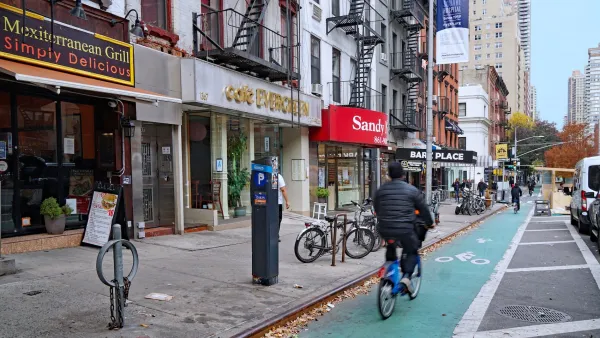
Study: Protected bike lanes increase Citi Bike rides by nearly 400 rides a month
An analysis of millions of NYC bike share rides reveals that only protected bike lanes have a 'statistically significant' increase in ridership.
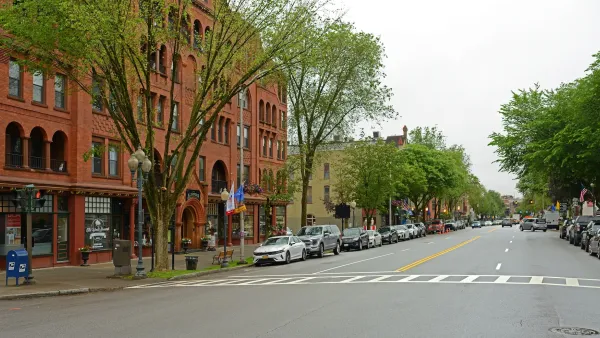
Saratoga Springs bike advocates say city is ignoring its Complete Streets plan
Despite a commitment to improving its multimodal infrastructure, the city has no plans to install bike lanes or curb cuts as part of repaving projects on two streets.
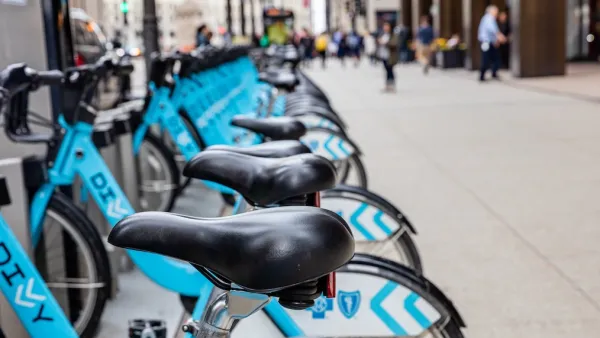
Chicago Sees Record Shared Bike, Scooter Use
Riders took over 11 million bike share and scooter trips in 2024.

Planetizen Federal Action Tracker
A weekly monitor of how Trump’s orders and actions are impacting planners and planning in America.

Amtrak, CN end decades-long dispute with eight-year agreement
The new operating agreement establishes an updated framework for the companies to work together, including processes to resolve disputes.

Nation's most wind-powered state turns to coal as data centers increase energy demand
For the first time in decades, Iowa has increased its generation of coal power.

Alabama scores up to $2.5 billion federal loan for largest infrastructure project in state’s history
The Mobile River Bridge and Bayway Project aims to ease congestion at Alabama’s worst bottleneck.

Trump is considering data centers on 6 states' public land — some state officials say they had no idea
If the administration approves the proposed projects, data center and data center-related developments will cover 17,600 acres of public land.

Despite court ruling, Trump is keeping nearly all wind projects in the US on hold
At least 110 wind energy projects have not heard from the government since a federal judge ruled that the Trump administration's freeze on wind turbine clearances was likely illegal.

FREE Course: Walkable City 1: Why Walkability?
After describing his path towards focusing on walkability as the essence of good planning, Jeff Speck marches through his five principal reasons for making more walkable places.
Reinventing Malls: Planning Alchemy—Turning Gray Fields Into Gold
The course focuses on the opportunities and imperatives that shape reinvention of mall sites.

KFH Group Inc.
Greater Baltimore Committee
Eagle County Government
The Architects Foundation
University of Cincinnati Online
The Pocatello Development Authority
The Urban Renewal Agency of the City of Pocatello