Residents in the greater Boise area are teaming up for a community visioning process they hope will help guide future physical and economic development in the region. It's been tried before, but organizers argue this time will be different.


"Vision for the Valley started as an editorial-page project of the Idaho Statesman but has been handed off to about 80 TreasureValley political, business and community members who formed a steering committee and 10 subcommittees addressing the economy, transportation, culture, environment and neighborhoods, and other topics.
For the first time, such a grass-roots project has embraced both Ada and Canyon counties, inviting people to explore new avenues of cooperation and craft a regional strategic plan.
Such grass-roots efforts can get results. In 2000, city leaders and a citizens group joined forces to preserve open space in the Foothills. The Boise Foothills levy - a two-year, $10 million property tax levy - received about 60 percent voter approval.
But community "visions" also can be fickle undertakings."
Read the full story: Valley citizens drive new community problem-solving project


Children in 55 countries are redesigning their cities in Minecraft
A U.N.-backed program lets students and community members reimagine sites in their neighborhoods in the game — and translate them into real-life buildings.
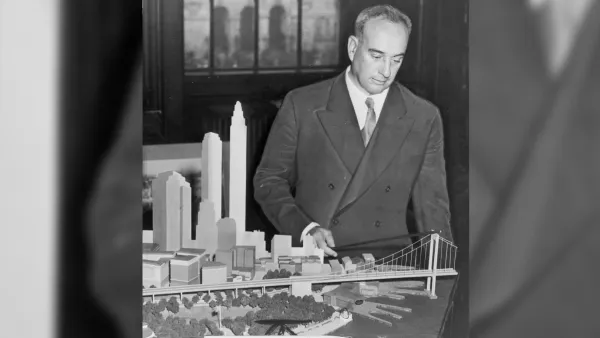
We are Perfectly Poised for Another Robert Moses
When “America is Building Again” while decentering equity, the ghost of Robert Moses haunts us.

New Idaho Laws Block Three Boise Complete Streets Projects
State law now bars highway districts from reducing road widths or and limits where they can eliminate traffic lanes in favor of multimodal infrastructure.

Planetizen Federal Action Tracker
A weekly monitor of how Trump’s orders and actions are impacting planners and planning in America.

Chicago breaks ground on $3 billion megadevelopment
The new neighborhood, titled Foundry Park, will one day host 3,700 residences.

This MA town is drowning in its own sewage — and residents like it that way
Susan Murcott, a waste water expert, said if Carlisle didn't address their leaking sewage, the problem could turn “deadly.”

Iowa taxpayers are paying thousands to clean manure out of their water
While the Clean Water Act makes states responsible for regulating factory farms that discharge pollutants, Iowa has turned a blind eye to the polluting farms.

Amtrak cuts ribbon on Seattle Airo maintenance facility
The $250 million, nearly 100,000-square-foot building can house an entire Cascades Airo trainset.

To power data centers, Google seeks autonomous control of thousands of homes’ electricity
The tech company has signed a deal to indirectly pay Mid-Atlantic residents to reduce their power demand when the grid is strained.

FREE Course: Walkable City 1: Why Walkability?
After describing his path towards focusing on walkability as the essence of good planning, Jeff Speck marches through his five principal reasons for making more walkable places.
Reinventing Malls: Planning Alchemy—Turning Gray Fields Into Gold
The course focuses on the opportunities and imperatives that shape reinvention of mall sites.

City of Rosemead
Rutgers University, Edward J. Bloustein School of Planning and Public Policy
One Hundred Miles
The Architects Foundation
University of Cincinnati Online
Montrose County
The Pocatello Development Authority
The Urban Renewal Agency of the City of Pocatello