Adam Matthews of GOOD Magazine looks at the $500 homes in places like Buffalo and sees opportunity for new immigrants, which in turn could help turn these places around.


"[R]eclaiming this housing requires a family willing to live in it. To many Americans, taking one of these homes and investing the sweat equity to bring them back to their former glory (or even basic functionality), just isn't worth it, or seems untenable. But perhaps we aren't looking far enough for potential residents.
Given the amount of reusable buildings materials that already gets dumped, the idea of throwing away housing that could be renovated, made energy-efficient, and saved from landfill is highly problematic.
Of the 1.9 billion children in the developing world, 640 million are without adequate shelter (that's one in three), and 400 million have no access to safe water (one in five). Surely, neighborhoods like Cleveland's Slavic Village or Buffalo's Broadway-Fillmore neighborhoods could be redeveloped into communities that again offer newcomers hope."
Read the full story: Rebuilding America’s Neighborhoods
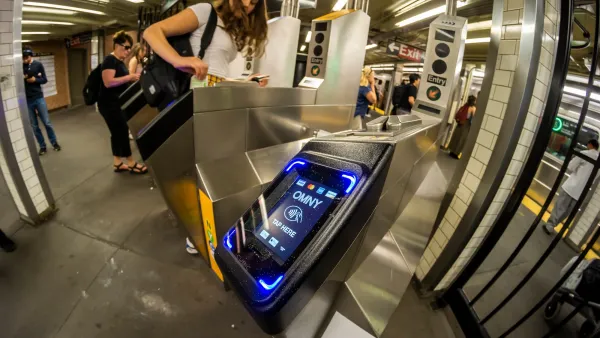
Popular transit payment system linked to Palantir could give ICE access to rider data
The tap-to-pay system is being used widely in transit systems including New York City, Boston and Chicago.
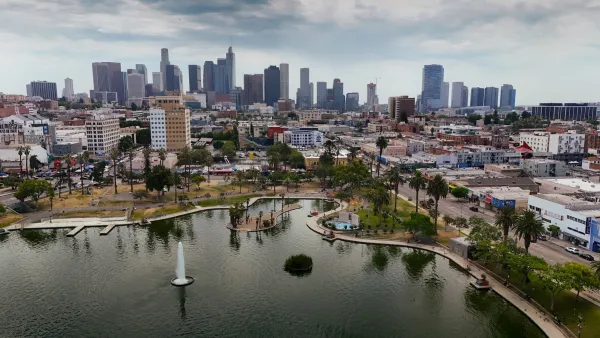
World Cup renews community spirit in LA's MacArthur Park
Soccer watch parties are bringing life back to the park that was recently the target of immigration raids and police actions.
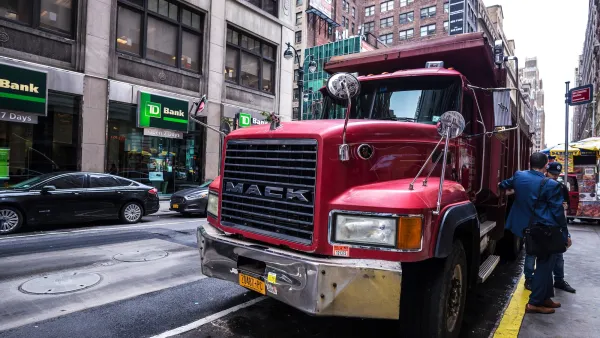
DOT withholds $73M from New York over immigrant trucking licenses
The Trump administration is requiring states to revoke the CDLs of non-domiciled drivers without proof of citizenship or risk losing federal funds.

Planetizen Federal Action Tracker
A weekly monitor of how Trump’s orders and actions are impacting planners and planning in America.

California plans to bury El Niño’s downpour
If the state plays its cards right, it may be able to store a billion acre-feet of El Niño’s water in aquifers.

Desperate measures: Advocates weigh draining Lake Powell to fill Colorado River
Draining the reservoir could reduce evaporation losses by a couple hundred thousand acre-feet.

Voters across the country reject data centers
Dozens of communities voted on measures to restrict the buildout of data centers.

US buildings threatened, destroyed by fires set to triple by 2060
Researchers found a high fire risk for socioeconomically vulnerable neighborhoods in the American West.

LA residents may be allowed to paint their own crosswalks
Councilwoman Katy Yaroslavsky put out a motion instructing the Los Angeles Department of Public Transportation to study the feasibility of allowing volunteers to paint crosswalks.

FREE Course: Walkable City 1: Why Walkability?
After describing his path towards focusing on walkability as the essence of good planning, Jeff Speck marches through his five principal reasons for making more walkable places.
Reinventing Malls: Planning Alchemy—Turning Gray Fields Into Gold
The course focuses on the opportunities and imperatives that shape reinvention of mall sites.

City of Rosemead
Rutgers University, Edward J. Bloustein School of Planning and Public Policy
One Hundred Miles
Hunter College, City University of New York (CUNY)
The Architects Foundation
University of Cincinnati Online
City of Cambridge
Montrose County
The Pocatello Development Authority