With a history of paltry funding, decaying infrastructure and soaring demand, the state of public transit in the United States is "perilous."


"Despite deteriorating infrastructure, commuters keep jumping aboard. Since 1995, public transit ridership has risen a whopping 32 percent, more than double the rate of population growth. In 2007, Americans took 10.3 billion trips on public transportation, the highest number in more than 50 years. The trajectory continued in 2008: Subways, buses, commuter rail and light-rail systems saw a 6.5 percent jump in ridership in the year's third quarter, the largest quarterly upsurge in 25 years.
With transit booming, many Americans are ditching their once-beloved cars. The Federal Highway Administration reports 13 consecutive months of driving decline, with 112 billion less vehicle-miles traveled than in the previous 13-month span.
Yet the federal government remains in a time warp, prioritizing highway funding even as Americans ditch their cars for seats on trains and buses. This year presents two enormous opportunities to alter the equation: First, the economic recovery package, which will include billions on transit infrastructure, and second, the reauthorization of the surface transportation bill, which could redistribute federal funds."
FULL STORY: The Future of Transit

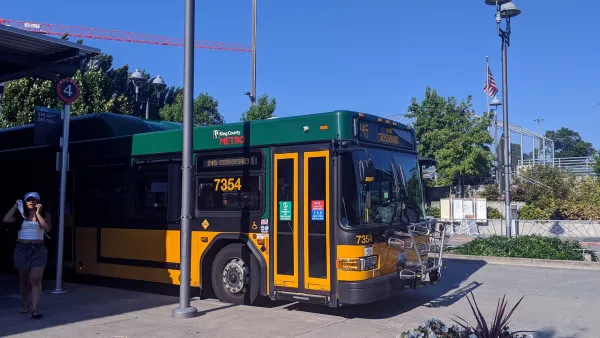
King County Metro adds 3,000 weekly bus trips, more connections to rail
King County Metro and Sound Transit are both making major adjustments to their bus networks to improve light rail connectivity across the region.
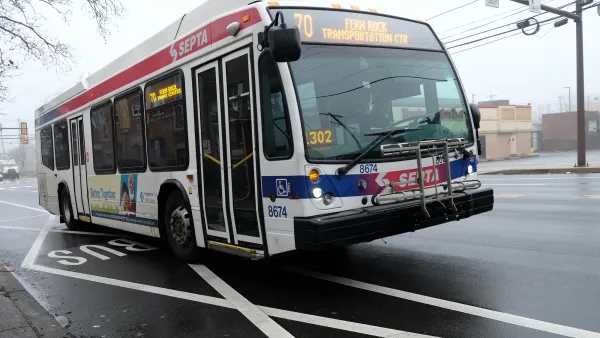
Pennsylvania lawmaker wants to ban fully self-driving buses
State Rep. Ben Waxman's proposed bill would require autonomous buses to have a licensed driver on board.
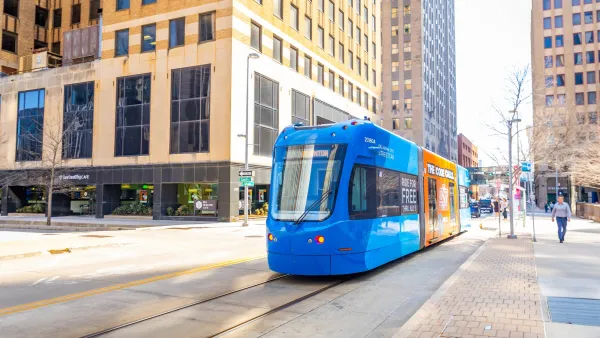
OKC streetcar will stay fare-free after ridership shot up 74%
The downtown streetcar saw a surge in ridership after it eliminated fares in January.

Planetizen Federal Action Tracker
A weekly monitor of how Trump’s orders and actions are impacting planners and planning in America.

The state-sanctioned urbicide of Austin
People don’t kill cities. Freeways do.

US to reduce Colorado River water deliveries to Mexico
A new Colorado Treaty amendment reduces Mexico’s Colorado River water allocation by 250,000 acre feet.

LA Metro’s ultimatum: no extra buses for LA28 if federal funding isn’t imminently secured
If Metro does not provide additional buses, LA28 organizers will have to find a new way to manage Olympic traffic. LA28’s budget does not include a line item for transit.

Colorado’s Largest Data Center Could Rise Next to Homes — Without a Public Hearing
The proposed campus would consume 11 times the power of Denver International Airport; as it has across the country, opposition mounts.

5 New England states march closer to 800 megawatt wind energy project
Securing federal approval for the project may be complicated under the Trump administration, which has historically been hostile towards domestic wind power.

FREE Course: Walkable City 1: Why Walkability?
After describing his path towards focusing on walkability as the essence of good planning, Jeff Speck marches through his five principal reasons for making more walkable places.
Reinventing Malls: Planning Alchemy—Turning Gray Fields Into Gold
The course focuses on the opportunities and imperatives that shape reinvention of mall sites.

Eagle County Government
Harvard University Graduate School of Design
Nashville Planning Department
The Architects Foundation
University of Cincinnati Online
The Pocatello Development Authority
The Urban Renewal Agency of the City of Pocatello
Journal of the American Planning Association