Urban policy is looking to be a major element of President Barack Obama's administration. Though it hasn't quite taken shape yet, this piece argues it's a good sign for cities and metropolitan regions.


"Both President Obama and his chief urban adviser, Valerie Jarrett, have made it clear that federal urban policy is about to evolve into something very different: a means of helping cities and their regions become instruments of American economic strength. Just how the policies will proceed won't be clear for some time. But when it comes to the new administration's commitment to a different approach, there is little room for doubt."
"Obama has fundamentally accepted the argument of mayors and other local officials that metropolitan areas are the primary economic drivers in the country and deserve to be treated as assets rather than problems. It's not just that many central cities have experienced downtown revival and an uptick in population over the past decade. It's that metro areas are punching well above their weight in contributing to the nation's economic activity, even during the current downturn."
FULL STORY: Obama and the Cities

Suburbs Aren't the Only Places Reacting to Rising Energy Prices
This article from USA Today looks at how some big cities are reacting to rising energy prices. Two examples from metropolitan Phoenix highlight the fact that it is not only suburbs that are being forced to respond.
15 US cities and their global namesakes
Hundreds of cities around the United States are named after other places. We tour a few of them.
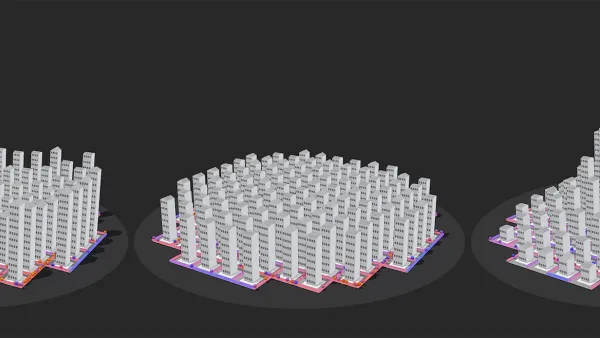
New study visualizes how city shapes impact mobility
Whether circular or linear, the shape and layout of cities affects how their residents get around.

Planetizen Federal Action Tracker
A weekly monitor of how Trump’s orders and actions are impacting planners and planning in America.

The state-sanctioned urbicide of Austin
People don’t kill cities. Freeways do.

US to reduce Colorado River water deliveries to Mexico
A new Colorado Treaty amendment reduces Mexico’s Colorado River water allocation by 250,000 acre feet.

LA Metro’s ultimatum: no extra buses for LA28 if federal funding isn’t imminently secured
If Metro does not provide additional buses, LA28 organizers will have to find a new way to manage Olympic traffic. LA28’s budget does not include a line item for transit.

Colorado’s Largest Data Center Could Rise Next to Homes — Without a Public Hearing
The proposed campus would consume 11 times the power of Denver International Airport; as it has across the country, opposition mounts.

5 New England states march closer to 800 megawatt wind energy project
Securing federal approval for the project may be complicated under the Trump administration, which has historically been hostile towards domestic wind power.

FREE Course: Walkable City 1: Why Walkability?
After describing his path towards focusing on walkability as the essence of good planning, Jeff Speck marches through his five principal reasons for making more walkable places.
Reinventing Malls: Planning Alchemy—Turning Gray Fields Into Gold
The course focuses on the opportunities and imperatives that shape reinvention of mall sites.

Eagle County Government
Harvard University Graduate School of Design
Nashville Planning Department
The Architects Foundation
University of Cincinnati Online
The Pocatello Development Authority
The Urban Renewal Agency of the City of Pocatello
Journal of the American Planning Association