Robin Hood Gardens is a 70s era, Brutalist public housing complex. Preservationists say it is historic; the government wants to tear it down. Reporter Nicolai Ouroussoff pays the project a visit to determine for himself.


"Just traveling to the complex can be an unwelcome lesson in failed urban policy. On my trip the Docklands Light Railway train from central London broke down, requiring me to board a garbage-strewn school bus and then two trains to reach my destination. The long walk from the station was even worse: a retrospective of failed public-housing design through the decades.
By the time I got there my enthusiasm had dwindled. My first view of Robin Hood Gardens was from across a busy roadway. The complex is surrounded by a ring of forbidding concrete walls tilted outward to block out noise. Just beyond this ring, ramps lead to underground parking, forming a kind of moat between the buildings and the street. The facades are in decrepit shape. Even on a rare sunny London day the project's famous concrete walkways, which the Smithsons called "streets in the air," look gray and melancholy. The rows of concrete mullions, a play on Mies van der Rohe's steel I-beams, give the facade the aura of a medieval fortification."
Read the full story: Rethinking Postwar Design in London
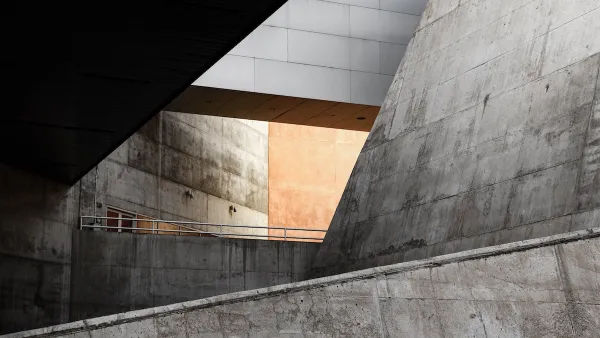
What ‘The Brutalist’ Teaches Us About Modern Cities
How architecture and urban landscapes reflect the trauma and dysfunction of the post-war experience.
Long Island public housing applicants face longest wait times in America
Applicants to large, medium and small housing authorities in Long Beach all face exceptionally long waiting periods.
Troubled Houston housing agency announces plan to resolve 'material deficiencies'
The newly renamed Housing Alliance Houston has created a new accounting team and instituted new tenant file inspections, per a recent update required by HUD.

Desperate measures: Advocates weigh draining Lake Powell to fill Colorado River
Draining the reservoir could reduce evaporation losses by a couple hundred thousand acre-feet.

Eastern Nebraska is running out of electricity
Data centers and electrification are straining eastern Nebraska’s grid, throttling economic development.

Move over, LA: St. Louis gears up for Olympics, invests millions in downtown redevelopment
The Missouri city will host the 2028 Olympic soccer group stage and knockout matches.

San Diego’s Midway Rising project gets greenlight from city council
The project looks to become the largest affordable housing development in California's history.

Bill to overhaul energy permitting clears Senate
The Bipartisan American Affordability and Jobs Act of 2026 still needs to pass the House of Representatives.

MTA sends Dem leaders a wish list to mend Trump’s damages
Requests include exempting new train and bus components from tariffs and increasing transit security funding.

FREE Course: Walkable City 1: Why Walkability?
After describing his path towards focusing on walkability as the essence of good planning, Jeff Speck marches through his five principal reasons for making more walkable places.
Reinventing Malls: Planning Alchemy—Turning Gray Fields Into Gold
The course focuses on the opportunities and imperatives that shape reinvention of mall sites.

City of Rosemead
Rutgers University, Edward J. Bloustein School of Planning and Public Policy
One Hundred Miles
University of Michigan School for Environment and Sustainability (SEAS)
Hunter College, City University of New York (CUNY)
The Architects Foundation
City of Cambridge
The Pocatello Development Authority
The Urban Renewal Agency of the City of Pocatello