A tent city is burgeoning in Sacramento, Calif., prompting local officials to consider whether such an encampment should be made permanent, with plumbing and all.


The primitive settlement sits in the shadow of the state capitol and is home to about 300 people who have no toilets or running water, creating unsanitary conditions that advocacy groups worry could promote diseases like cholera. With the downturn in the economy and more working-class people losing their jobs and their homes, the tent city is expanding.
The mayor of Sacramento, Kevin Johnson, said in an interview that he wants to create a permanent tent city for the homeless, although he is not sure where it should be. He said he recognized that doing so would be difficult politically. But he said a permanent site could bring sanitation services and regulations like a ban on drugs and alcohol.
Mr. Johnson said that the rise in homelessness was a regional problem, and that surrounding localities should help pay for any solution, like establishing a permanent tent city. He will also have access to $2.3 million that President Obama's stimulus package is giving Sacramento to deal with homeless issues.
"We've tried to sweep the homeless under the rug and it's been our dirty little secret for far too long," said the mayor, who took office three months ago and whose status as a former Phoenix Suns basketball star has helped attract media attention to the tent city. "We've been relying on good Samaritans and nonprofits, but they're overwhelmed now."
Thanks to Rob Bregoff
Read the full story: Sacramento and Its Riverside Tent City
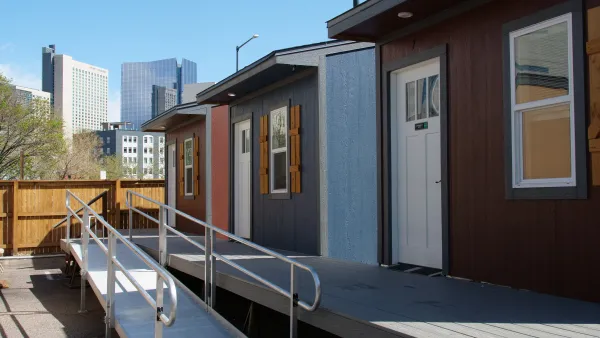
Denver is solving homelessness. Why aren't the rest of us?
Since 2023, Denver's street homeless population has decreased by 64%, proving that effective tools exist to support those in need of housing.
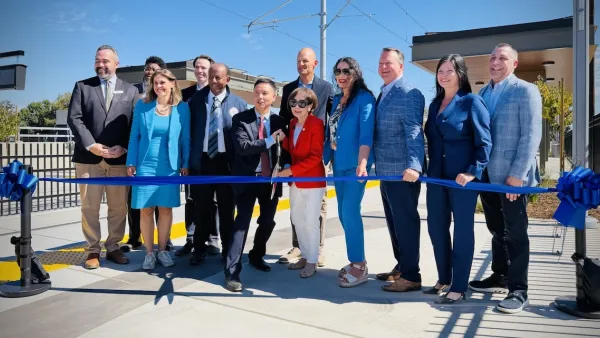
After decades of planning, Sacramento gains new light rail station
Trains will arrive every 15 minutes during peak hours and every 30 minutes during non-peak hours.
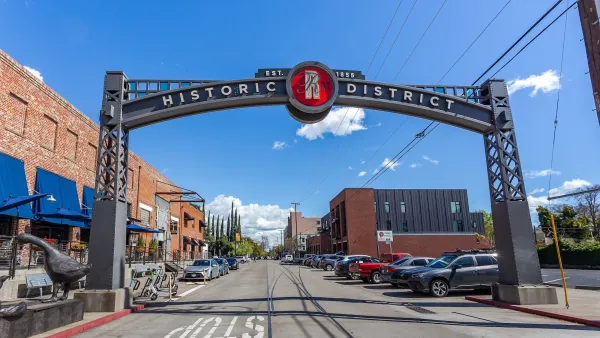
Sacramento Faces a $5 Billion Backlog of Transportation Projects
Between 2015 and 2024, 22,538 injury or fatal crashes occurred on Sacramento streets.

Washington state to charge fee to drivers with fuel-efficient cars
Revenue from the fee will go towards supporting the state’s highways.

Illinois considers spending $1 billion in taxpayer money on data center
A quantum computing campus and data center are currently under construction in Chicago.

Trump to blast ‘hydrocarbon highway’ through ‘world’s longest art gallery’
Environmental and historic preservation groups are suing to stop the project.

U.S. Army plan to explode reactive lead waste in Iowa postponed indefinitely
The Army will detonate the lead inside underground concrete chambers.

Data centers may drain 4 billion gallons of water annually from U.S.’s driest state
Nevada already has three dozen data centers; several dozen more are planned.

Boston City Council votes to no longer mandate parking in residential developments
The Boston Zoning Commission still needs to approve the proposal.

FREE Course: Walkable City 1: Why Walkability?
After describing his path towards focusing on walkability as the essence of good planning, Jeff Speck marches through his five principal reasons for making more walkable places.
Reinventing Malls: Planning Alchemy—Turning Gray Fields Into Gold
The course focuses on the opportunities and imperatives that shape reinvention of mall sites.

City of Charlotte
City of Rosemead
Rutgers University, Edward J. Bloustein School of Planning and Public Policy
University of Michigan School for Environment and Sustainability (SEAS)
Hunter College, City University of New York (CUNY)
The Architects Foundation
University District Partnership