A quarry in San Diego is on a path towards conversion into a $1.5 billion mixed-use housing and retail project, one many thought unlikely in today's tight market.


"The quarry, owned since the late 1920s by the Grant family, has produced stone and concrete for many of the major construction projects in San Diego County over the last 70 years - from airport runways at Lindbergh Field to skyscrapers, piers, Navy installations, highways and most recently, Petco Park, the downtown baseball stadium of the San Diego Padres."
"On this February morning, the two men watched as a front-end loader dug into the last of the rapidly waning piles of fist-sized stone on the quarry floor. The deafening sound of rocks smashing into a metal dump truck will soon fall silent. In its place, Mr. Sudberry said, will be the sounds of "waterfalls, song birds, wind in the trees" and children playing."
"The project, called Quarry Falls, has been on the drawing board for much of the last decade, but was approved by the city council last October. In the next months, earthmovers will finish compacting soil and terracing the 230-acre site as it is readied for the first phase of construction, set to begin next year."
"Phase one - which is budgeted for $375 million, a quarter of the project's $1.5 billion price tag - will include construction of multifamily housing units, retail shops and some commercial office space."
FULL STORY: San Diego Reinvents a Fading Quarry

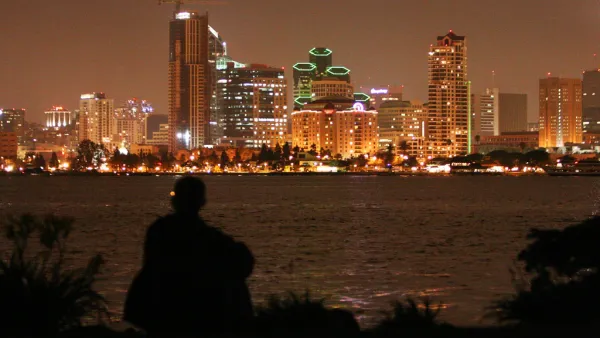
Big Development Plans Proposed for Downtown San Diego
A local developer has proposed a $400 million development that would add several game-changing uses to Downtown San Diego.

Op-ed: Federal austerity is funding what kills us
Tracing the backstory of the last year of cuts to multimodal transportation reveals an alarming definition of road safety that only serves one mode.
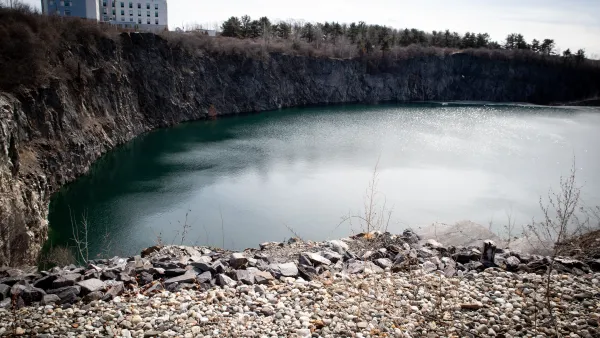
Maine’s booming quarry industry is sending disruptive shockwaves into homes
Climate change has caused sea level rise, flooding and erosion along the coast of Maine, leading to a trend of coastal residents erecting or repairing stone walls.

The state-sanctioned urbicide of Austin
People don’t kill cities. Freeways do.

US to reduce Colorado River water deliveries to Mexico
A new Colorado Treaty amendment reduces Mexico’s Colorado River water allocation by 250,000 acre feet.

New Jersey’s second-largest city bans standalone data centers
Jersey City will continue to allow co-location facilities, such as those meant for research institutions that store their own data.

Amtrak not solely to blame for New Jersey commuter rail's unreliability, report finds
A new study from the Garden State Initiative found that NJ Transit’s budget grew 20% across a 4 year period, but reliability declined significantly over the same period.

EPA erases limits on planet-warming pollution from power plants
Under Monday’s plan, power plants would still have some limits on how much mercury, arsenic and other contaminants they can emit.

Phoenix announces new on-demand transit service, more frequent RAPID buses
Both new services will launch in October, and are part of Phoenix's Project Effective Access Solutions for Easing Congestion.

FREE Course: Walkable City 1: Why Walkability?
After describing his path towards focusing on walkability as the essence of good planning, Jeff Speck marches through his five principal reasons for making more walkable places.
Reinventing Malls: Planning Alchemy—Turning Gray Fields Into Gold
The course focuses on the opportunities and imperatives that shape reinvention of mall sites.

Eagle County Government
Harvard University Graduate School of Design
Nashville Planning Department
The Architects Foundation
University of Cincinnati Online
The Pocatello Development Authority
The Urban Renewal Agency of the City of Pocatello
Journal of the American Planning Association