Before officials get too excited about using stimulus money to repair the nation's infrastructure, they should carefully consider design, according to this oped.


"The U.S. Conference of Mayors has listed 15,221 local infrastructure projects in 641 cities that are "ready to go." But while speed in getting work started and jobs created is clearly key, the importance of good design that will last for generations should not be lost in the haste."
"We need to ensure that the money spent goes to creative, sustainable buildings that will stand the test of time and will still be used by our children and our grandchildren. After all, they are the ones who are going to be paying for these debt-financed projects."
"Perhaps the greatest design opportunity the economic stimulus can give us is for green and sustainable design to become an automatic and essential part of the architecture of new buildings, not just an add-on. In the same way that a bailout for the auto industry presents the prospect to reorient the design of automobiles in a sustainable direction, so is the economic-stimulus package a once-in-a-lifetime opportunity to reorient our architectural focus toward sustainable design."
Read the full story: Good, green design can be stimulating, timeless
Stimulus Spreading Work to Otherwise Barren Field of Architecture
Work has been hard to find for many architects over the last year. But for architects doing federal work, the story is a bit different.
Stimulus is Funding the Status Quo in California
While high speed rail and smart grid technology were used to sell the idea of the economic stimulus package, the majority of stimulus money in California is being spent on routine projects, according to new figures.
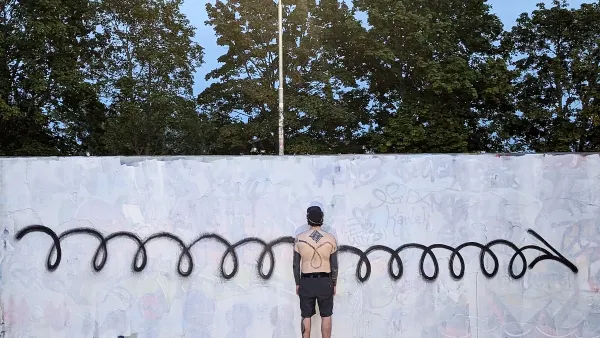
“Skin, Like a City, Will Tell You if You’ve Ignored its History”
Once an urban planner, Sean Colgrave traded in infrastructure for ink when he became a tattoo artist. Now he says: one profession has a lot to learn from the other.

Planetizen Federal Action Tracker
A weekly monitor of how Trump’s orders and actions are impacting planners and planning in America.

California plans to bury El Niño’s downpour
If the state plays its cards right, it may be able to store a billion acre-feet of El Niño’s water in aquifers.

Desperate measures: Advocates weigh draining Lake Powell to fill Colorado River
Draining the reservoir could reduce evaporation losses by a couple hundred thousand acre-feet.

Chicago voters approve permanent festival grounds, penalty for vacant property owners
Currently, major summer and fall festivals take over public parks for weeks at a time, drawing criticism from nearby residents

NYC votes to cut outdoor dining red tape, speed up permitting
New York City also voted to allow the Department of Transportation to begin work on urgent projects before notifying elected officials.

California appears to reject Prop. 45
The proposition would have expanded the projects that qualify for a streamlined environmental review, effectively paring down the California Environmental Quality Act.

FREE Course: Walkable City 1: Why Walkability?
After describing his path towards focusing on walkability as the essence of good planning, Jeff Speck marches through his five principal reasons for making more walkable places.
Reinventing Malls: Planning Alchemy—Turning Gray Fields Into Gold
The course focuses on the opportunities and imperatives that shape reinvention of mall sites.

City of Rosemead
Rutgers University, Edward J. Bloustein School of Planning and Public Policy
One Hundred Miles
Hunter College, City University of New York (CUNY)
The Architects Foundation
University of Cincinnati Online
City of Cambridge
Montrose County
The Pocatello Development Authority