It's not Blue vs. Red, but Green vs. Brown when it comes to energy policy debates on Capitol Hill.


"Most of the policy makers on Capitol Hill and in the administration charged with shaping legislation to address global warming come from California or the East Coast, regions that lead the country in environmental regulation and the push for renewable energy sources."
Democrats from the manufacturing, coal-dependent heartland may not be on-board.
"This 'brown state-green state' clash is likely to encumber any effort to set a mandatory ceiling on the carbon dioxide emissions blamed as the biggest contributor to global warming, something Mr. Obama has declared to be one of his highest priorities.
Obama has said he intends to press ahead on such an initiative, despite opposition within his own party in Congress
Resisting these efforts may be Democratic Senator Debbie Stabenow of MI, a leader of the so-called Gang of 10, representing the coal-dependent states in the middle of the country; the group was formed after the failure of a Senate global warming bill pushed by Ms. Boxer last June. The members' goal is to assure that their concerns are met in any future legislation."
Thanks to Mark Boshnack
Read the full story: Geography Is Dividing Democrats Over Energy
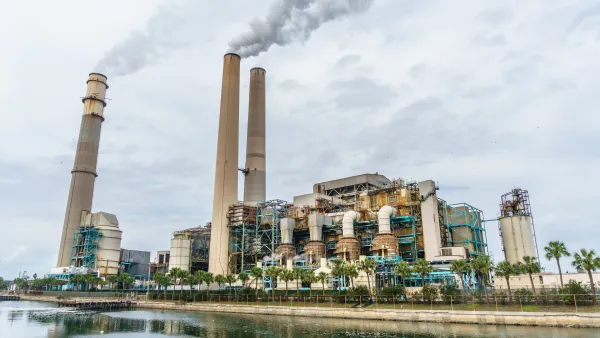
EPA to slash water treatment requirements for coal plants, citing growing electricity demand from AI data centers
The agency says the revisions to wastewater regulations — which critics call dangerous to human health — will decrease energy production costs by $1.1 billion annually.

Trump Officials Want to Keep Coal Plants “100% Open”
While officials tout the return of coal power as the answer to the affordability crisis, critics point to America’s aging coal infrastructure as a pain point in its return.
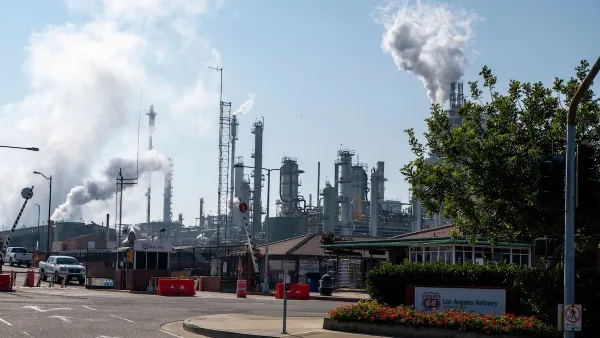
California’s Cap and Trade Program Up in the Air
The state’s carbon trading program is being attacked as ineffective from one side and overly onerous from the other.

Desperate measures: Advocates weigh draining Lake Powell to fill Colorado River
Draining the reservoir could reduce evaporation losses by a couple hundred thousand acre-feet.

Eastern Nebraska is running out of electricity
Data centers and electrification are straining eastern Nebraska’s grid, throttling economic development.

Malls are becoming the midtowns of the future
Mall and office park redevelopments are a generational opportunity to create new nodes of urbanity.

NYC breaks ground on anti-flooding infrastructure project
New York City's new system will reduce stormwater flows to local sewers by 90%.

One Kentucky town’s secret to affordable housing
The Smoketown Community Land Trust has already built seven affordable homes for community members.

Houston gains petal-shaped cooling infrastructure to make streets more ‘delightful’
The city has installed the pavilions along 15 blocks in Houston.

FREE Course: Walkable City 1: Why Walkability?
After describing his path towards focusing on walkability as the essence of good planning, Jeff Speck marches through his five principal reasons for making more walkable places.
Reinventing Malls: Planning Alchemy—Turning Gray Fields Into Gold
The course focuses on the opportunities and imperatives that shape reinvention of mall sites.

City of Rosemead
Rutgers University, Edward J. Bloustein School of Planning and Public Policy
One Hundred Miles
University of Michigan School for Environment and Sustainability (SEAS)
Hunter College, City University of New York (CUNY)
The Architects Foundation
City of Cambridge
Montrose County
The Pocatello Development Authority