As Secretary of Commerce, Herbert Hoover championed the Standard Zoning Enabling Act. Rick Cole argues it is time to leave Hoover's legacy behind.


"Under zoning, new neighborhoods were segregated by income, and commerce was torn asunder from both customers and workers. Timeless ways of creating great places were ruthlessly outlawed. The sprawl spawned by zoning spread from sea to shining sea.
Almost everyone admits the environmental and social devastation caused by sprawl. Yet it remains the law. What's been lacking is the tool for producing great places instead of bleak, auto-dependent landscapes. If "zoning" is the DNA of sprawl the coding that endlessly replicates the bleak landscape of autotopia, then what is the DNA of livable communities?
It is found in timeless ways of building, updated for the 21st Century, including the need to accommodate cars. It regulates incompatible uses without the absurdities of conventional zoning. It is calibrated for new buildings to contribute to their context and to the larger goal of making a great place. It does so primarily by regulating the form of buildings, since that is what determines the long-neglected public realm of streets and sidewalks."
FULL STORY: Hoover’s Other Error: Making Sprawl the Law

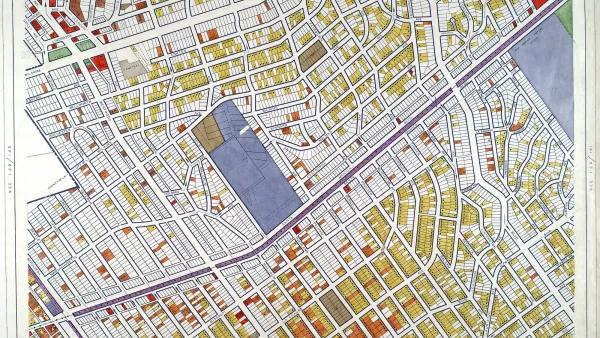
100 Years ago, Zoning Changed how US Cities Grow. Today, it is Ripe for Reform.
Euclidean zoning was enshrined in U.S. town planning by a 1926 Supreme Court decision. Cities are recognizing it’s time for some drastic changes.
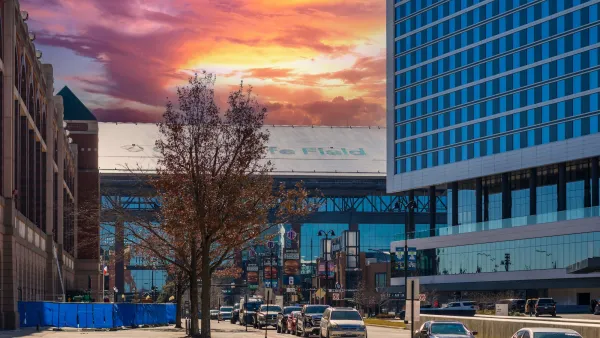
Arlington’s New Form-Based Zoning Designed to Guide a Cohesive Public Realm
Form-based zoning focuses on the design of buildings and how they interact with the public realm.

Rural New York Explores Creative Housing Solutions
Rural communities and small cities are implementing affordable housing solutions at the local level, while the state budget prioritizes urban areas.

Planetizen Federal Action Tracker
A weekly monitor of how Trump’s orders and actions are impacting planners and planning in America.

The state-sanctioned urbicide of Austin
People don’t kill cities. Freeways do.

US to reduce Colorado River water deliveries to Mexico
A new Colorado Treaty amendment reduces Mexico’s Colorado River water allocation by 250,000 acre feet.

Mamdani overhauls NYC's Vision Zero plan with 100 new policy goals
The overhaul aims to reduce traffic deaths and make streets safer for pedestrians, cyclists and drivers through lower speed limits, new safety infrastructure and more.

Amtrak not solely to blame for New Jersey commuter rail's unreliability, report finds
A new study from the Garden State Initiative found that NJ Transit’s budget grew 20% across a 4 year period, but reliability declined significantly over the same period.

EPA erases limits on planet-warming pollution from power plants
Under Monday’s plan, power plants would still have some limits on how much mercury, arsenic and other contaminants they can emit.

FREE Course: Walkable City 1: Why Walkability?
After describing his path towards focusing on walkability as the essence of good planning, Jeff Speck marches through his five principal reasons for making more walkable places.
Reinventing Malls: Planning Alchemy—Turning Gray Fields Into Gold
The course focuses on the opportunities and imperatives that shape reinvention of mall sites.

Eagle County Government
Harvard University Graduate School of Design
Nashville Planning Department
The Architects Foundation
University of Cincinnati Online
The Pocatello Development Authority
The Urban Renewal Agency of the City of Pocatello
Journal of the American Planning Association