'Fridge-sized units' are being installed around Philadelphia to control traffic lights. Why so big? Columnist Inga Saffron investigates the morass of requirements that led to the oversized street furniture.


"The typical traffic light is roughly the size of a large table fan.
The hardware necessary to switch a signal from green to amber to red in a fail-safe way can probably fit into the space of an old desktop computer.
So why does Philadelphia need to install control boxes as big as refrigerators to operate its traffic lights?
Let's start with the Department of Homeland Security.
On orders from the federal government, Philadelphia is replacing all its electromechanical signal boxes with a digital system that will eventually host the guts for a citywide network of surveillance cameras. While the old signal boxes were small enough to be strapped to the poles of traffic lights, the new digital, camera-ready signals require a lot more space - freestanding cabinets 67 inches tall."
Read the full story: Big boxes making us safer, and uglier

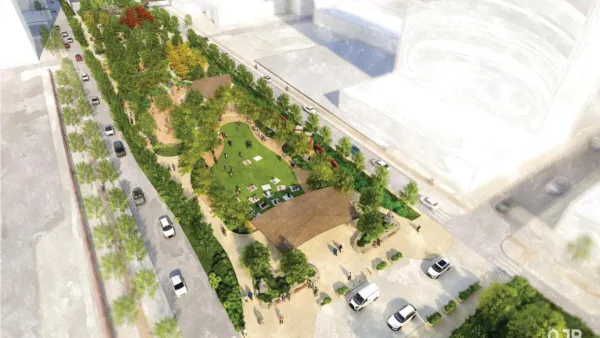
Philadelphia lawmakers fight to save 'Chinatown Stitch' from Trump cuts
The freeway cap project, approved and funded under the Biden administration, is now in jeopardy after the federal government rescinded all but $8 million in funding.
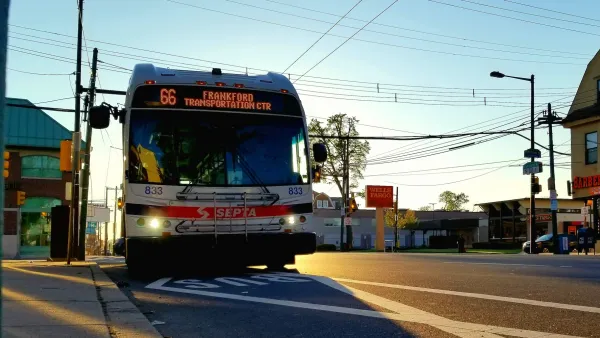
SEPTA's bus-mounted lane enforcement cameras cut travel times by up to 6%
The AI-assisted cameras have issued nearly 200,000 citations to drivers blocking bus lanes.
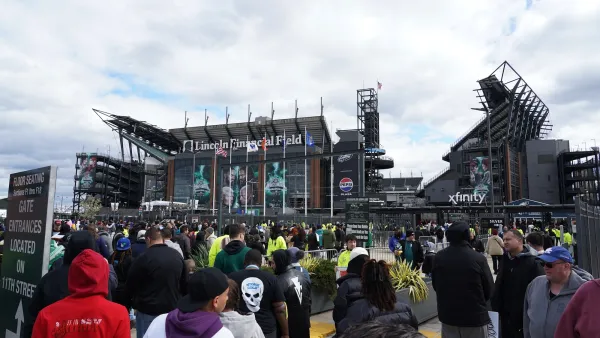
Philadelphia officials say city is ready for World Cup
The city touted its plans to ensure security and accessibility during FIFA World Cup events.

Planetizen Federal Action Tracker
A weekly monitor of how Trump’s orders and actions are impacting planners and planning in America.

Amtrak, CN end decades-long dispute with eight-year agreement
The new operating agreement establishes an updated framework for the companies to work together, including processes to resolve disputes.

Northwest rail fans eager for Sept. 30 debut of Amtrak’s Airo fleet
Get ready for that new train smell and more seats. But they won’t go faster or run more frequently on the Cascades route in Washington and Oregon.

Brightline Florida files for bankruptcy
The transit company is over $5 billion in debt.

St. Louis Metro to test if single-car trains can reduce operating costs, maintain rider satisfaction
The pilot program will run from October to spring 2027, and begin with one single-car train operating on Metrolink’s Red and Blue lines.

Pennsylvania is building data centers in abandoned mines
Housing data centers in mines provides an alternative to destroying local forests and may spare residents from data centers’ noise and air pollution.

FREE Course: Walkable City 1: Why Walkability?
After describing his path towards focusing on walkability as the essence of good planning, Jeff Speck marches through his five principal reasons for making more walkable places.
Reinventing Malls: Planning Alchemy—Turning Gray Fields Into Gold
The course focuses on the opportunities and imperatives that shape reinvention of mall sites.

City of Thousand Oaks
City of Wisconsin Rapids
Harvard University Graduate School of Design
The Architects Foundation
University of Cincinnati Online
The Pocatello Development Authority
The Urban Renewal Agency of the City of Pocatello