Figures recently released by the Census Bureau offer a glimpse at the pre-existing economic situation that led to the burst of the housing bubble.


"New census data show that throughout the first half of the decade, the slumping economy touched nearly every U.S. community. Incomes dropped while poverty and unemployment rose in the vast majority of the nation's cities and towns."
"The numbers weren't as bad in other parts of country, but no region was spared, with incomes dropping as home prices escalated. The result: an unsustainable housing market that fueled the current economic crisis."
"The new numbers explain why the housing bubble burst and why the economy was such a big issue in this year's presidential campaign. They also explain why voters soured so much on President Bush's handling of the economy, even before the current financial crisis."
"The years covered by the report include the housing market at its peak. Incomes had started to rise while poverty and unemployment rates had begun to fall, after the recession earlier in the decade. But in the vast majority of cities and towns, economic conditions never fully reached the prosperity that marked the beginning of the decade."
Read the full story: New census numbers explain why the housing bubble burst

Post-Housing Bubble New Jersey: Cities Lead in Population Growth
After the bust of the housing market in 2008, a striking reversal of settlement patterns in New Jersey gives cities the lead in population growth over once-booming suburbs and exurbs.

US Census Starts Using Postal Workers as Census Takers
A test program is using postal carriers to administer Census questionnaires.
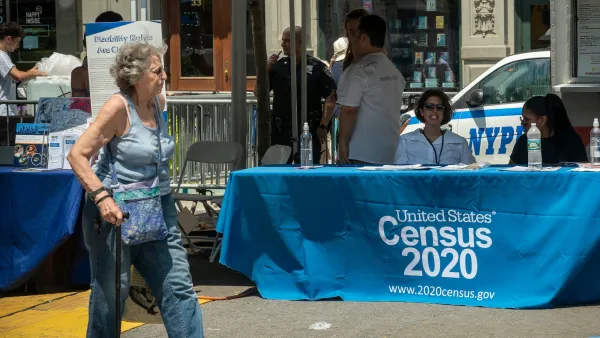
Two Lawsuits Aim to Strip Immigrants, Privacy Protections From US Census
The two cases could have major impacts on how Americans are counted in the next census.

Planetizen Federal Action Tracker
A weekly monitor of how Trump’s orders and actions are impacting planners and planning in America.

The state-sanctioned urbicide of Austin
People don’t kill cities. Freeways do.

US to reduce Colorado River water deliveries to Mexico
A new Colorado Treaty amendment reduces Mexico’s Colorado River water allocation by 250,000 acre feet.

Nation's most wind-powered state turns to coal as data centers increase energy demand
For the first time in decades, Iowa has increased its generation of coal power.

NYC cools commuters with city's first rain garden above a bus stop
New York City officials say the plants in the rain garden can absorb 16 gallons of rainwater during heavy storms.

Brightline West’s future may rely on $6 billion federal loan
The company has until Nov. 2 to make a $400 million equity investment into its proposed high-speed rail line.

FREE Course: Walkable City 1: Why Walkability?
After describing his path towards focusing on walkability as the essence of good planning, Jeff Speck marches through his five principal reasons for making more walkable places.
Reinventing Malls: Planning Alchemy—Turning Gray Fields Into Gold
The course focuses on the opportunities and imperatives that shape reinvention of mall sites.

Eagle County Government
Harvard University Graduate School of Design
Nashville Planning Department
The Architects Foundation
University of Cincinnati Online
The Pocatello Development Authority
The Urban Renewal Agency of the City of Pocatello
Journal of the American Planning Association