A proposed New Orleans hospital will have to be built on top of an historic neighborhood that some residents feel that they have just regained. Those in favor of the project insist that the selection of that site was necessary.


"'In selecting these sites, the VA and LSU have made a serious error,' Richard Moe, president of the National Trust for Historic Preservation, said in a statement after the announcement here. 'They chose the alternatives that will not only be the most time-consuming, costly and complex to implement, but will needlessly destroy a historic neighborhood where residents are struggling to rebuild their community in the wake of Hurricane Katrina.'
The National Trust for Historic Preservation estimates that there are about 165 historic structures that will go down if the hospitals are built - a compendium of New Orleans architecture, with shotgun houses predominating. Although the government report says the 'majority' of the area is vacant, or parking lots, the trust's New Orleans field director, Walter Gallas, said at a hearing in June: 'To deny the significance of such a massive level of neighborhood destruction would be inconceivable.'
Officials at the news conference said steps would be taken to mitigate the loss, including moving some houses in the way of the proposed development. But they suggested that the city's higher priority was to begin rebuilding the economy with a high-impact project."
Read the full story: New Orleans' hospital complex: Spectacular or a disaster?


Study: New Orleans sea level rise is at 'point of no return'
Research shows that the city could be surrounded by water by the end of this century.

Amtrak’s Mardi Gras train ‘blows away’ ridership expectations
The line brought back rail service between New Orleans and Mobile, Alabama for the first time since Hurricane Katrina.
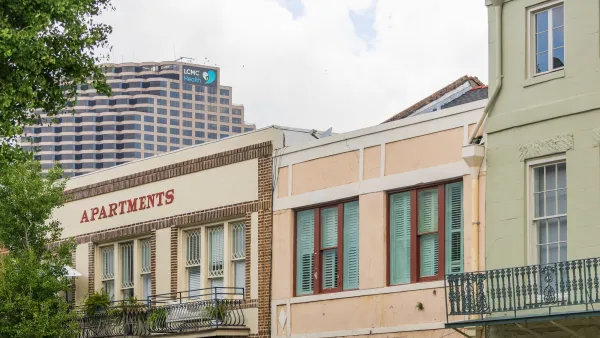
Is New Orleans’ Healthy Homes Ordinance a Hollow Promise?
The Healthy Homes Ordinance is supposed to help fix New Orleans’s deteriorating rental housing stock. But three years in, many “certified habitable” apartments still have leaking roofs, black mold, and dangerous heat. What went wrong?

Planetizen Federal Action Tracker
A weekly monitor of how Trump’s orders and actions are impacting planners and planning in America.

‘Going backwards:’ Baltimore mayor, students rally against state's transit funding plan
Maryland's proposed six-year plan provides no funding for Baltimore’s BMORE bus program and reduces its road maintenance funding.
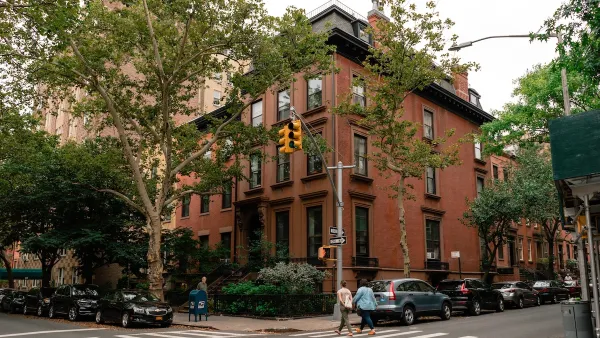
Mamdani sent nearly 6,000 pied-à-terre tax warnings to homes that didn’t qualify
A judge has ordered the administration to cancel thousands of pied-à-terre tax notices after it sent 35% of them erroneously.

A Colorado neighborhood is the testing ground for the future of home energy
A start up may have found a way to quickly bring geothermal energy to new communities.

Mamdani sent nearly 6,000 pied-à-terre tax warnings to homes that didn’t qualify
A judge has ordered the administration to cancel thousands of pied-à-terre tax notices after it sent 35% of them erroneously.

Detroit to transform waterfront with $2.2 billion investment
Developers will convert about 18 acres of unused parking lot space into civic spaces.

FREE Course: Walkable City 1: Why Walkability?
After describing his path towards focusing on walkability as the essence of good planning, Jeff Speck marches through his five principal reasons for making more walkable places.
Reinventing Malls: Planning Alchemy—Turning Gray Fields Into Gold
The course focuses on the opportunities and imperatives that shape reinvention of mall sites.

City of Thousand Oaks
City of Wisconsin Rapids
Harvard University Graduate School of Design
The Architects Foundation
University of Cincinnati Online
Northern Illinois Transit Authority (NITA)
The Pocatello Development Authority
The Urban Renewal Agency of the City of Pocatello