Berkeley, CA was one of the first cities to use special utility districts to fund the switch to solar power in their community. Now the man behind the plan is trying to make the financing system national.


"Cisco DeVries wanted to outfit his home with solar power, but he wasn't sure the costly installation would pencil out. So the Oakland resident put together a spreadsheet, analyzing his last three years of PG&E bills. He soon realized it wasn't going to work financially. "Screw this," he thought to himself. But then he had an epiphany.
At the time, DeVries was the chief of staff to Berkeley Mayor Tom Bates. In 2006, Bates had helped spearhead the passage of Measure G, a city ordinance which set some of the most aggressive targets for reducing greenhouse gases in the nation. Bates made DeVries the point person in his office for coming up with innovative ways to meet Measure G's goals. Then DeVries had an idea about solar power.
The city was working on an underground utility district for a neighborhood, and DeVries thought that the same concept could be applied to solar installations. Such utility districts are common throughout the state. They allow neighborhoods to form a taxing district and sell bonds that pay for putting the utilities underground. Then the neighborhood residents pay off the bonds by paying extra taxes on their annual property bills.
It was simple, and DeVries thought the same could be done with solar installations."
FULL STORY: Will Berkeley's Solar Plan Go Viral?

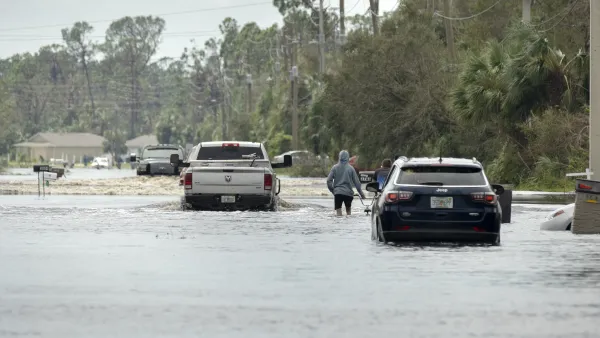
Courts order EPA to release billions in climate grants
The grants primarily funded projects aimed at Black, low-income and disadvantaged communities.
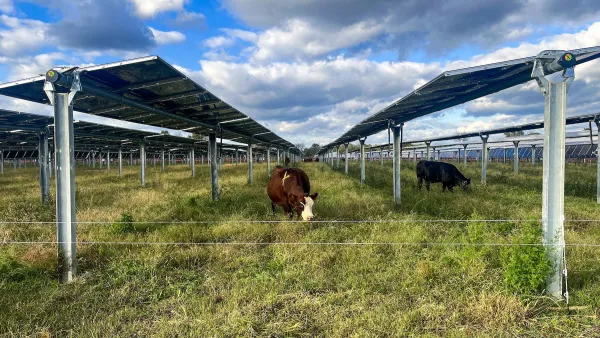
Cows at Tennessee's 'Silicon Ranch' graze under solar panels
The project aims to prove that agriculture and solar energy production can work in tandem.
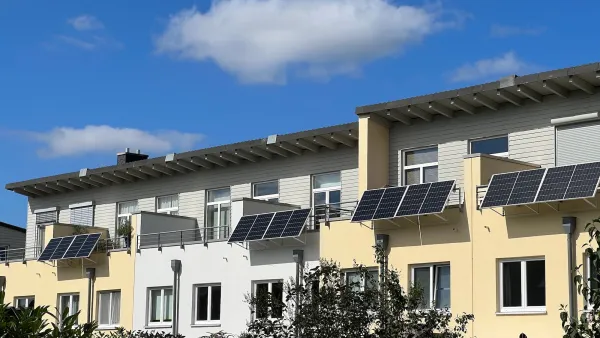
28 States and DC Could Legalize ‘Balcony Solar’
Plug-in solar panels, which are becoming popular across Europe, live in a regulatory gray area in the United States.

Planetizen Federal Action Tracker
A weekly monitor of how Trump’s orders and actions are impacting planners and planning in America.

The state-sanctioned urbicide of Austin
People don’t kill cities. Freeways do.

US to reduce Colorado River water deliveries to Mexico
A new Colorado Treaty amendment reduces Mexico’s Colorado River water allocation by 250,000 acre feet.

5 New England states march closer to 800 megawatt wind energy project
Securing federal approval for the project may be complicated under the Trump administration, which has historically been hostile towards domestic wind power.

Baltimore to break ground on $50 million Transit Priority Project
The project will bring faster bus trips, safer streets and better bike connections to Baltimore.

Airbnb launches $250 million 'last-dollar financing' housing accelerator, makes first investment in Austin
The company will put $6.4 million towards affordable housing development in Texas’ capital.

FREE Course: Walkable City 1: Why Walkability?
After describing his path towards focusing on walkability as the essence of good planning, Jeff Speck marches through his five principal reasons for making more walkable places.
Reinventing Malls: Planning Alchemy—Turning Gray Fields Into Gold
The course focuses on the opportunities and imperatives that shape reinvention of mall sites.

Eagle County Government
Harvard University Graduate School of Design
Nashville Planning Department
The Architects Foundation
University of Cincinnati Online
The Pocatello Development Authority
The Urban Renewal Agency of the City of Pocatello
Journal of the American Planning Association