Repairing the nation's infrastructure is a good move on to-be President Obama's part, as it also creates jobs "that lead to the creation of still more jobs."


"The advantage of infrastructure spending for a liberal-leaning president is that it doesn't carry the whiff of welfare. It appears hard-headed, practical and anything but effete. Cutting a stimulus check? 'Girly-man' stuff, Schwarzenegger would say. Rebuilding a bridge? That's macho stimulus."
"Sure, any such package will raise howls from a new flock of deficit hawks, taking flight on creaky wings after eight years of being grounded under George W. Bush. But with a deep recession looming, the pressure on Obama to balance the budget will be minimal. His charge is to create jobs that lead to the creation of still more jobs.
The historical timing is right for massive investments. All over the country, bridges that were built as part of the Interstate Highway System are nearing the end of their useful lives. Traffic congestion in major metropolitan areas is sparking new interest in mass transit. The philosophical aversion to investments in high-speed intercity rail that has marked the past eight years is about to be loaded up on a moving truck and sent to that new presidential library in Texas."
FULL STORY: Momentum might be building to build up the U.S. infrastructure

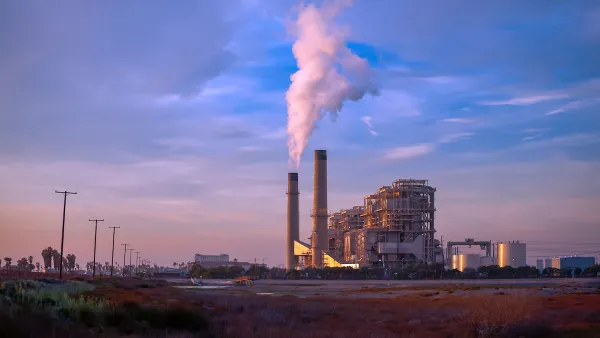
Power Plants: A Win for the EPA
New rules from the US Environmental Protection Agency to regulate greenhouse gas emissions from fossil fuel-fired power plants survived an attempt by 25 Republican-led states to block their implementation while their case is litigated.
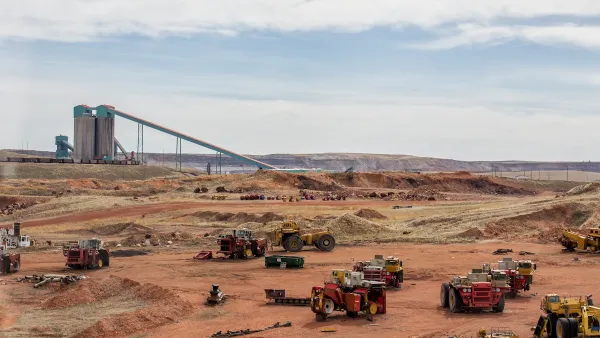
A Win for ‘Keep it in the Ground’
Coal mining in Wyoming will take a major hit as a result of a U.S. Department of Interior plan to cease future leasing of coal mines in the nation's most productive coal mining basin. The decision casts a spotlight on the presidential election.
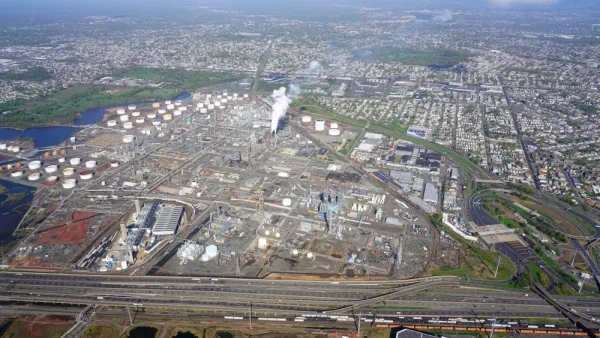
Supreme Court Guts the U.S. EPA’s Ability to Limit Carbon Emissions
The consequences of this ruling have long been foretold. With the U.S. Environmental Protection Agency now officially barred from the fight against climate change, Congress will have to act to reduce carbon emissions.

Planetizen Federal Action Tracker
A weekly monitor of how Trump’s orders and actions are impacting planners and planning in America.

The state-sanctioned urbicide of Austin
People don’t kill cities. Freeways do.

US to reduce Colorado River water deliveries to Mexico
A new Colorado Treaty amendment reduces Mexico’s Colorado River water allocation by 250,000 acre feet.

5 New England states march closer to 800 megawatt wind energy project
Securing federal approval for the project may be complicated under the Trump administration, which has historically been hostile towards domestic wind power.

Baltimore to break ground on $50 million Transit Priority Project
The project will bring faster bus trips, safer streets and better bike connections to Baltimore.

Airbnb launches $250 million 'last-dollar financing' housing accelerator, makes first investment in Austin
The company will put $6.4 million towards affordable housing development in Texas’ capital.

FREE Course: Walkable City 1: Why Walkability?
After describing his path towards focusing on walkability as the essence of good planning, Jeff Speck marches through his five principal reasons for making more walkable places.
Reinventing Malls: Planning Alchemy—Turning Gray Fields Into Gold
The course focuses on the opportunities and imperatives that shape reinvention of mall sites.

Eagle County Government
Harvard University Graduate School of Design
Nashville Planning Department
The Architects Foundation
University of Cincinnati Online
The Pocatello Development Authority
The Urban Renewal Agency of the City of Pocatello
Journal of the American Planning Association