Officials in Austin, Texas, are drafting what's believed to be the nation's most substantive sustainability policy for special events--including measures to reduce waste and conserve water and energy.


"The group's ideas, which are still in draft form, include:
• Banning plastic foam cups and the sale or distribution of bottled water at big events.
• Requiring event organizers to recycle paper, plastic, aluminum and glass goods as well as food grease.
• Requiring recycling bins to be placed next to trash cans.
• Requiring bike racks, shuttles or readily available bus schedules.
• Requiring event organizers to buy renewable energy credits to offset carbon emissions.
The rules would apply only to events that have more than 200 attendees and that make use of a city building, sponsorship, street closure or fee waiver.
The city might start a green-star rating system for festivals and other events and create a green-events tool kit that suggests ideas and resources to help organizers comply, according to the draft."
Read the full story: Group wants to make Austin events and festivals greener


Creating Ocean-Safe Plastic from Seashells
USC researchers have created a biodegradable, marine-safe plastic alternative using calcium carbonate from seashells, offering a promising solution to ocean pollution.

Commentary: Colorado Will Forge Ahead With Conservation Work
While federal policy may become less friendly to environmental efforts, support from state legislators and agencies can prevent the state from backsliding.
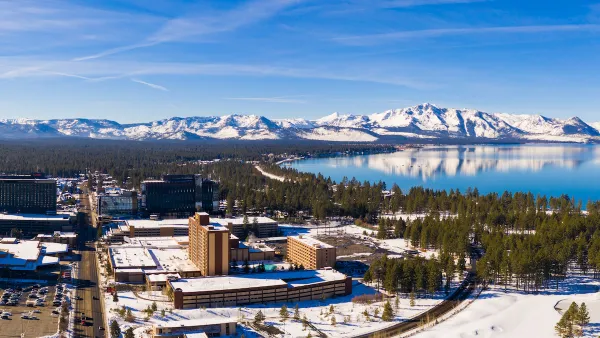
Nevada to Host National Outdoor Recreation Conference
In May 2024, the Society of Outdoor Recreation Professionals will hold its national conference in Stateline, Nevada, offering opportunities to learn and network in the beautiful setting of Lake Tahoe.

Planetizen Federal Action Tracker
A weekly monitor of how Trump’s orders and actions are impacting planners and planning in America.

California plans to bury El Niño’s downpour
If the state plays its cards right, it may be able to store a billion acre-feet of El Niño’s water in aquifers.

Chicago breaks ground on $3 billion megadevelopment
The new neighborhood, titled Foundry Park, will one day host 3,700 residences.

California High-Speed Rail Authority CEO resigns after $600,000 scandal
Under Ian Choudri, the authority used taxpayer dollars to fund first class flights and trips to nightclubs.

Want to study the Missouri River? Soon, you may need unanimous approval from 10 states
Legislation would require 10 governors’ permission to study or build projects moving water outside the basin.

Desperate measures: Advocates weigh draining Lake Powell to fill Colorado River
Draining the reservoir could reduce evaporation losses by a couple hundred thousand acre-feet.

FREE Course: Walkable City 1: Why Walkability?
After describing his path towards focusing on walkability as the essence of good planning, Jeff Speck marches through his five principal reasons for making more walkable places.
Reinventing Malls: Planning Alchemy—Turning Gray Fields Into Gold
The course focuses on the opportunities and imperatives that shape reinvention of mall sites.

City of Rosemead
Rutgers University, Edward J. Bloustein School of Planning and Public Policy
One Hundred Miles
Hunter College, City University of New York (CUNY)
The Architects Foundation
University of Cincinnati Online
City of Cambridge
Montrose County
The Pocatello Development Authority