Measure B would have allotted $30 million to lower-income residents who currently can't afford to live in San Francisco.


"Measure B would have required that 2.5 cents for every $100 of property tax revenue collected in the city go toward affordable housing during the next 15 years. At least half of all new affordable housing units would need to be suited for families - with two bedrooms or more - and 40 percent of new units would have to go to the poorest residents, those making less than 30 percent of the city's median income.
[Mayor Gavin] Newsom has said that the measure would tie up cash that the city needs now more than ever for social services like homeless shelters and public health programs. He has noted repeatedly that the city is facing a possible $250 million deficit in 2009, which makes this a bad time to tie up money for specific projects like affordable housing.
'Prop. B is a real backbreaker. We will have to make massive cuts to social services. That is not a threat, it is an objective truth,' Newsom said. 'As much as we all support affordable housing, where do we find the money in this budget climate?'
The mayor added that the city already has spent more than $200 million on affordable housing in the past several years, and is building more units - some affordable, some not - than anytime in recent history."
Read the full story: Affordable housing measure fails in SF


As prices skyrocket, San Francisco Mayor declares rent emergency
Landlords in San Francisco have initiated over 2,400 evictions since January, putting the city on track to see more evictions this year than during any year in the past decade.

San Francisco Affordable Housing can Cost $1 Milllion per Unit. One Developer Says He can Slash the Cost by 65%
An expansion of a federal tax credit is prompting for-profit developers to get into the affordable housing market.

San Francisco Mayor’s ‘Family Zoning’ Plan Faces Pushback, Displacement Concerns
Newly proposed legislation aims to protect long-term tenants from displacement caused by Mayor Lurie’s proposed zoning reform plan, which would allow for more housing construction in parts of the city.

Planetizen Federal Action Tracker
A weekly monitor of how Trump’s orders and actions are impacting planners and planning in America.

Chicago breaks ground on $3 billion megadevelopment
The new neighborhood, titled Foundry Park, will one day host 3,700 residences.
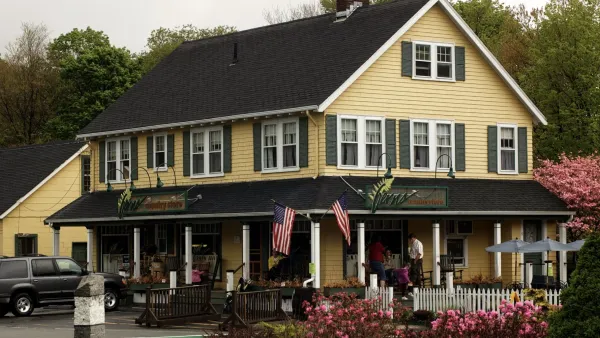
This MA town is drowning in its own sewage — and residents like it that way
Susan Murcott, a waste water expert, said if Carlisle didn't address their leaking sewage, the problem could turn “deadly.”

Feds to more closely scrutinize proposed Amtrak facility’s environmental impact
The Federal Railroad Administration had initially said the facility qualified for a less extensive environmental review.

Boston is hard to build housing in: its chief of planning wants to keep it that way
Chief of Planning Kairos Shen said she would not make changes to Boston’s affordability requirements for new housing, which critics say have slowed down development.

California plans to bury El Niño’s downpour
If the state plays its cards right, it may be able to store a billion acre-feet of El Niño’s water in aquifers.

FREE Course: Walkable City 1: Why Walkability?
After describing his path towards focusing on walkability as the essence of good planning, Jeff Speck marches through his five principal reasons for making more walkable places.
Reinventing Malls: Planning Alchemy—Turning Gray Fields Into Gold
The course focuses on the opportunities and imperatives that shape reinvention of mall sites.

City of Rosemead
Rutgers University, Edward J. Bloustein School of Planning and Public Policy
One Hundred Miles
Hunter College, City University of New York (CUNY)
The Architects Foundation
University of Cincinnati Online
Montrose County
The Pocatello Development Authority
The Urban Renewal Agency of the City of Pocatello