Voters in Honolulu have approved a 20-mile light rail system for the Hawaiian city -- the largest public works project in the state's history.


"The rail system's cost is estimated to be $3.9 million in 2008 dollars, but it is expected to be closer to $5 billion after adjusting for inflation during the life of the 20-mile project. City officials expect to cover the costs with $1.2 billion in federal funding and a 0.5 percent surcharge to the general excise tax that would bring in $4.1 billion through 2022."
"Rail supporters contended the transit system would be the best way to ease traffic, which is expected to increase with new homes planned for Central Oahu and the Ewa Plain. Opponents argued the system is too costly to build and maintain, too ugly, too noisy and not the best alternative to relieve traffic congestion."
Read the full story: Rail rolls to victory on ballot
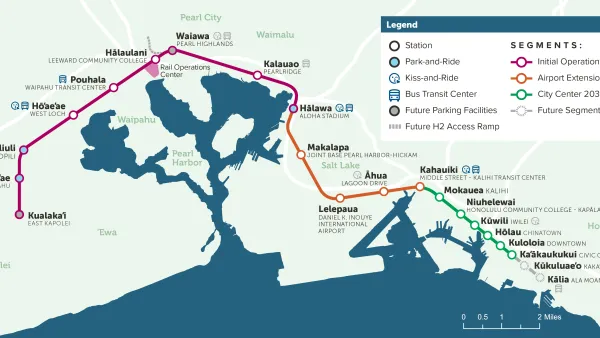
Skyline Rail, Now Serving Honolulu
In a historic day for public transit, Skyline Rail, a project once deemed the worst transit project in the United States due to extreme cost overruns and construction delays, finally opened to the public at the end of June.
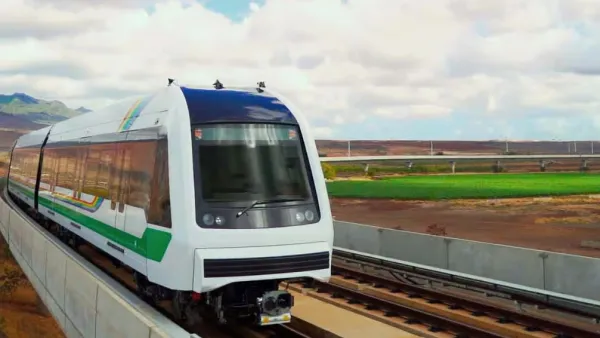
Honolulu Light Rail to Open in June
The city’s first light rail line will finally begin service after more than a half century of planning.
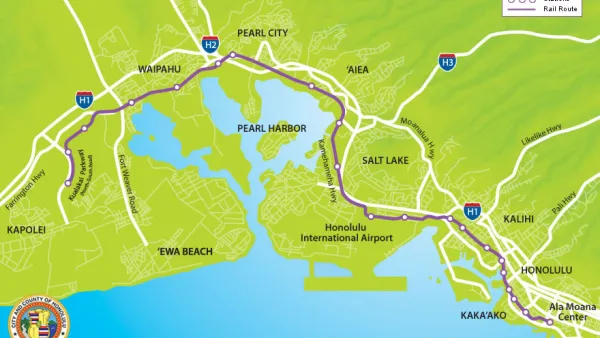
Honolulu Rail Cost Overruns Now Exceed $1 Billion
Add another $200 million to the $910 million shortfall already facing Honolulu's rail project. The changing circumstances surrounding the project won't make it any easier to create a viable funding plan to make up the difference.

Planetizen Federal Action Tracker
A weekly monitor of how Trump’s orders and actions are impacting planners and planning in America.

Eastern Nebraska is running out of electricity
Data centers and electrification are straining eastern Nebraska’s grid, throttling economic development.

Study reveals best places in the U.S. for cycling, walking
New research from Streetlight Data examines bicycle and pedestrian miles per capita in the 100 largest U.S. cities by population.

Developers reveal $10 billion stadium plan as ‘Hail Mary’ to keep Bears in Chicago
The plan would also boast a public park, high- and mid-rise buildings and a youth sports complex.

As Texas embraces carbon storage, a Black community questions the risks
Texas now issues permits for companies to store carbon dioxide underground. East Texas residents fear safety risks, and skeptics doubt the climate benefits.

New BLM proposal would slash public comment periods, environmental protections
The proposed rewrite would also strip legal leverage from Tribal nations and state governments.

FREE Course: Walkable City 1: Why Walkability?
After describing his path towards focusing on walkability as the essence of good planning, Jeff Speck marches through his five principal reasons for making more walkable places.
Reinventing Malls: Planning Alchemy—Turning Gray Fields Into Gold
The course focuses on the opportunities and imperatives that shape reinvention of mall sites.

City of Rosemead
Rutgers University, Edward J. Bloustein School of Planning and Public Policy
One Hundred Miles
University of Michigan School for Environment and Sustainability (SEAS)
Hunter College, City University of New York (CUNY)
The Architects Foundation
City of Cambridge
The Pocatello Development Authority
The Urban Renewal Agency of the City of Pocatello