


"The rise in mass transit ridership should be great news. Not since the OPEC oil embargo and energy crisis in the '70s have famously car-centric Americans been so eager to shell out for a bus fare or a train ticket and leave the polluter in the driveway. Automobile transportation is one of the largest chunks of the country's carbon footprint, so the more that Americans opt for trains and buses, the more that footprint could shrink.
But the news isn't all that sunny. In fact, the mini-exodus from driving has exposed significant cracks in the country's mass transit systems, which are struggling to accommodate new riders. Having spent decades forsaking the bus and the train for the convenience and privacy of cars, Americans are now finding that the buses, streetcars, trolleys and trains that they left behind are strapped for cash, if they still exist at all.
'All across the country, public transportation systems are experiencing capacity problems,' says Virginia Miller, a spokeswoman for the American Public Transportation Association. 'Due to the high costs of fuel, systems' budgets are being severely impacted.' A survey of 115 of the association's members found that 60 percent of the systems are considering fare increases, while 35 percent are experiencing service cuts. 'It's ironic that at a time of record ridership we don't have the funding to expand public transportation systems,' says Miller."
Read the full story: Who says Americans won't ride mass transit?

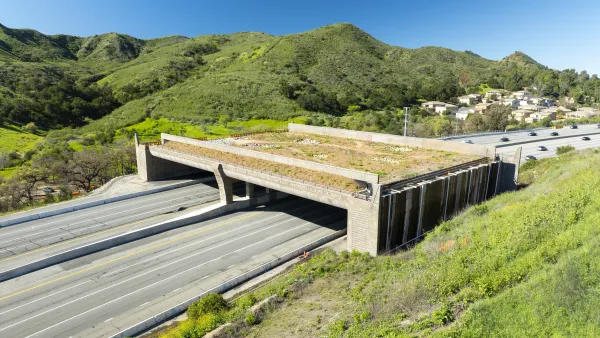
California invests $2.7 billion in over 150 transportation projects
The fund allocates money to transit upgrades and safety improvements to streets surrounding schools, among other ventures.
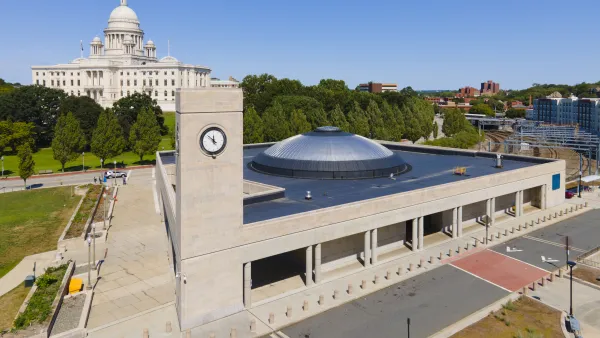
Providence train station to gain new bus hub
The new hub will replace the one currently located at Kennedy Plaza.
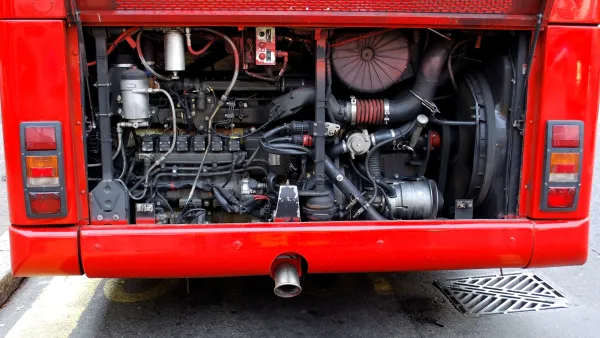
APTA Requests CDL Testing Change to Address Bus Operator Shortage
Eighty-four percent of U.S. transit agencies surveyed said CDL complexity was a hiring obstacle, with the “under-the-hood” requirement being the most challenging.

Planetizen Federal Action Tracker
A weekly monitor of how Trump’s orders and actions are impacting planners and planning in America.

The state-sanctioned urbicide of Austin
People don’t kill cities. Freeways do.

US to reduce Colorado River water deliveries to Mexico
A new Colorado Treaty amendment reduces Mexico’s Colorado River water allocation by 250,000 acre feet.

Nation's most wind-powered state turns to coal as data centers increase energy demand
For the first time in decades, Iowa has increased its generation of coal power.

NYC cools commuters with city's first rain garden above a bus stop
New York City officials say the plants in the rain garden can absorb 16 gallons of rainwater during heavy storms.

Brightline West’s future may rely on $6 billion federal loan
The company has until Nov. 2 to make a $400 million equity investment into its proposed high-speed rail line.

FREE Course: Walkable City 1: Why Walkability?
After describing his path towards focusing on walkability as the essence of good planning, Jeff Speck marches through his five principal reasons for making more walkable places.
Reinventing Malls: Planning Alchemy—Turning Gray Fields Into Gold
The course focuses on the opportunities and imperatives that shape reinvention of mall sites.

Eagle County Government
Harvard University Graduate School of Design
Nashville Planning Department
The Architects Foundation
University of Cincinnati Online
The Pocatello Development Authority
The Urban Renewal Agency of the City of Pocatello
Journal of the American Planning Association