As cycling increases in Philadelphia, more bike parking is needed. But the common upside-down U-shaped rack won't provide enough for the city, according to this piece from The Philadelphia Inquirer.


"There's no single reason why bicycle commuting has gone into high gear, though spiraling gas prices, concern about greenhouse-gas emissions, and an appreciation of messenger cool are surely contributing to the crowded bike lanes. Philadelphia's nearly flat central street grid is perfect terrain for bicycles. Besides, pedal power is often more reliable than taking SEPTA or driving. No wonder bicycles have become the transportation of choice for low-paid workers, like those who staff the city's restaurant kitchens."
"The problem starts when the bikers stop. There just aren't enough bike racks on Philadelphia's heavily used, narrow sidewalks for everyone. Desperate bikers will lock to anything that won't move, like Rittenhouse Square's elegant wrought-iron fence or the railing around SEPTA's 16th Street concourse entrance. The tangle of metal is not pretty."
"The Nutter administration hopes to improve the situation somewhat in the next few months. It just ordered 1,500 racks and expects to begin installation in November."
Read the full story: Changing Skyline: The city needs to get creative on bike parking
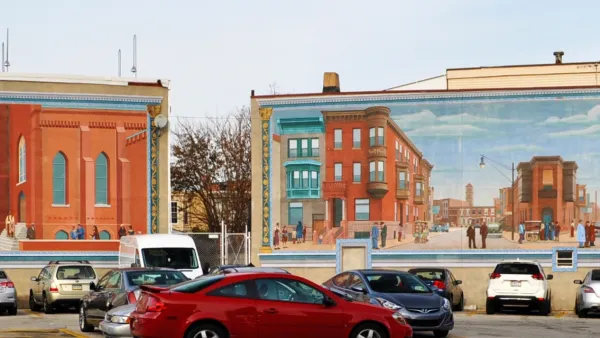
Philadelphia's downtown parking lots are a 'valuable, untapped resource'
Over two dozen city-owned parking lots could be developed into housing or other uses.
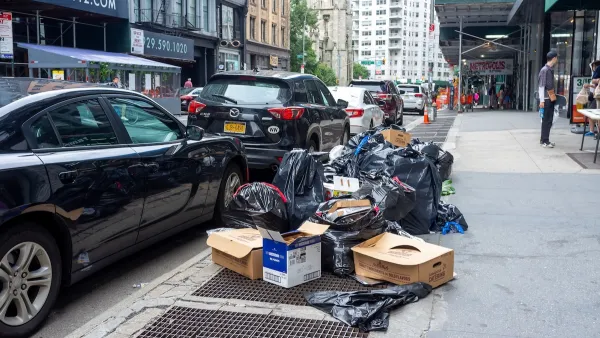
NYC Launches ‘Smart Curbs’ Program
The pilot program on the Upper West Side will remove some curbside parking spots to replace them with public seating, bike racks, and delivery zones.
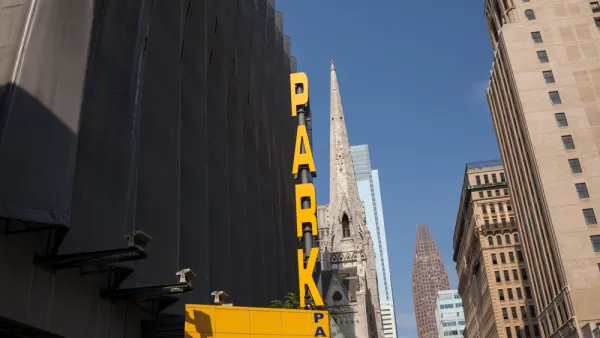
Opinion: Proposed Parking Tax Reduction Would Do More Harm Than Good
Recent investigations into the conditions facing workers in private parking lots in Philadelphia has produced a series of legislation reforms, but one idea, to lower the city's parking tax, isn't going to fly with this opinion writer.

Planetizen Federal Action Tracker
A weekly monitor of how Trump’s orders and actions are impacting planners and planning in America.

Eastern Nebraska is running out of electricity
Data centers and electrification are straining eastern Nebraska’s grid, throttling economic development.

Study reveals best places in the U.S. for cycling, walking
New research from Streetlight Data examines bicycle and pedestrian miles per capita in the 100 largest U.S. cities by population.

DSA members accuse Mamdani of 'abandoning values' over housing redevelopment
New York City's mayor plans to replace about 2,000 units of public housing with private, mixed-income housing.

All sides of BRT debate unhappy with CDOT’s most recent move
The Colorado Department of Transportation is no longer considering center-running bus lanes for Colorado Boulevard.

Massachusetts bogs generate both power, and cranberries
Putting solar panels above farmland is one way Massachusetts is advancing toward its goal of net-zero carbon emissions by 2050.

FREE Course: Walkable City 1: Why Walkability?
After describing his path towards focusing on walkability as the essence of good planning, Jeff Speck marches through his five principal reasons for making more walkable places.
Reinventing Malls: Planning Alchemy—Turning Gray Fields Into Gold
The course focuses on the opportunities and imperatives that shape reinvention of mall sites.

City of Rosemead
Rutgers University, Edward J. Bloustein School of Planning and Public Policy
One Hundred Miles
University of Michigan School for Environment and Sustainability (SEAS)
Hunter College, City University of New York (CUNY)
The Architects Foundation
City of Cambridge
The Pocatello Development Authority
The Urban Renewal Agency of the City of Pocatello