Los Angelenos have long forgotten that they live in a desert, but the coming drought will mean water consumption patterns will need to change on a massive scale writes Scott Thill.


"Los Angeles has always been a managed fantasy...It has water on its beaches, but rarely anywhere else. For that, it has drained someone else's supply for centuries. Which brings us...to the future of Los Angeles, whose Sierra snowpack will likely evaporate under the weight of global warming's changed game. With declining snowfall and earlier snowmelts, there is nothing Los Angeles can do but borrow someone else's water and get its hyperreal and hyperconsumptive act together.
According to the Los Angeles Times, the state's water reserves are nearly finished, which leaves California with two options: Pray for rain, or suck off Northern California's supply.
Behavior modification is the only way Los Angeles can extend, but not prevent, what some scientists are saying will be a permanent drought for not just the sunshine-and-noir metropolis but also for most, if not all, of the American Southwest. Sustainability exercises and policies will go a long way to mitigating the desert's reclamation of its lands from Hollywood and Hummers, but the Dust Bowl had nothing on what's coming to California. And it's coming to stay."
FULL STORY: When Will Los Angeles Run Out of Water? Sooner Than You Think.


To guarantee residents fresh water, Tijuana looks to the sea
Construction on one of the largest desalination plants in Latin America will soon break ground to reduce reliance on the dwindling Colorado river.
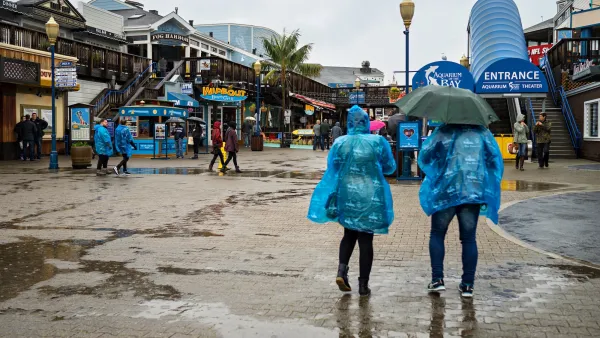
Rain gardens keep up to 99% of pollutants out of San Francisco Bay
The city's roadside rain gardens soak up stormwater and filter out dozens of harmful micropollutants.
Climate change could double household water costs in some cities, study finds
New research suggests that climate change-related stressors are straining municipal water systems.

Planetizen Federal Action Tracker
A weekly monitor of how Trump’s orders and actions are impacting planners and planning in America.

The state-sanctioned urbicide of Austin
People don’t kill cities. Freeways do.

US to reduce Colorado River water deliveries to Mexico
A new Colorado Treaty amendment reduces Mexico’s Colorado River water allocation by 250,000 acre feet.

5 New England states march closer to 800 megawatt wind energy project
Securing federal approval for the project may be complicated under the Trump administration, which has historically been hostile towards domestic wind power.

Baltimore to break ground on $50 million Transit Priority Project
The project will bring faster bus trips, safer streets and better bike connections to Baltimore.

Airbnb launches $250 million 'last-dollar financing' housing accelerator, makes first investment in Austin
The company will put $6.4 million towards affordable housing development in Texas’ capital.

FREE Course: Walkable City 1: Why Walkability?
After describing his path towards focusing on walkability as the essence of good planning, Jeff Speck marches through his five principal reasons for making more walkable places.
Reinventing Malls: Planning Alchemy—Turning Gray Fields Into Gold
The course focuses on the opportunities and imperatives that shape reinvention of mall sites.

Eagle County Government
Harvard University Graduate School of Design
Nashville Planning Department
The Architects Foundation
University of Cincinnati Online
The Pocatello Development Authority
The Urban Renewal Agency of the City of Pocatello
Journal of the American Planning Association