Prague is building on prosperity and tourism by creating new public-private spaces for shopping and entertainment. Detractors are concerned that they are destroying real public space, and are paired with greater control on unwanted users.


"Change is afoot in Prague. Following the heady exuberance of the early 1990s, the sobering reassessments at the turn of the millennium and the consolidations of the first Václav Klaus presidency, the city is thrusting itself into a new transitional phase. Keen to position itself as a thriving metropolis, alert to contemporary challenges and opportunities, Prague can point to growing prosperity, a flirtation with hosting the Olympics, a proliferation of new shopping centers, major real estate development, a proactive approach to issues such as homelessness and 'anti-social behavior,' and plans for more pedestrian zones in the center.
While these seemingly disparate signifiers of success appear to reflect well on the approach of city government in providing a framework for business-led development, backed by urban planning and socially aware law enforcement, closer inspection reveals more. Common to all these trends is the destruction of 'common space' - the zones of interaction and social potential where access is not restricted to certain groups and outcomes are not predetermined. New 'public-private' hybrid spaces are replacing the commons, our behavior is ever more closely regulated and we run the risk of being infantilized into consumerist conformity."
Read the full story: Uncommon ground

Prague's Temporary Beach Offers A View of the City
Prague's temporary riverfront beach gives locals a summer destination and a view on the city's iconic architecture.
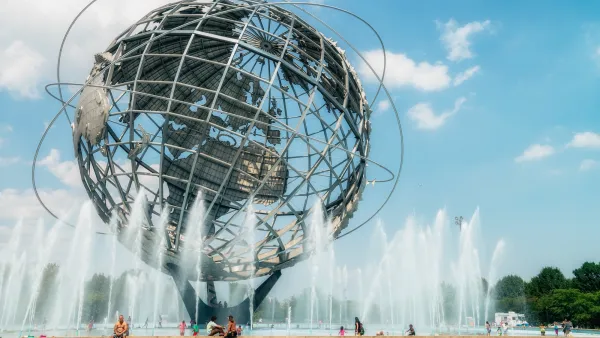
Historic Queens park is getting a $120M upgrade
The borough's largest park will undergo significant upgrades for accessibility, flood mitigation and historic preservation.
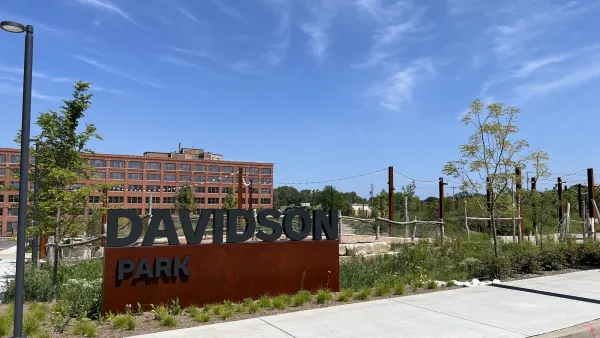
Harley-Davidson turned a Milwaukee parking lot into a green oasis
The park, adjacent to Harley-Davidson headquarters, doubles as stormwater retention infrastructure.

Planetizen Federal Action Tracker
A weekly monitor of how Trump’s orders and actions are impacting planners and planning in America.

The state-sanctioned urbicide of Austin
People don’t kill cities. Freeways do.

US to reduce Colorado River water deliveries to Mexico
A new Colorado Treaty amendment reduces Mexico’s Colorado River water allocation by 250,000 acre feet.

Nation's most wind-powered state turns to coal as data centers increase energy demand
For the first time in decades, Iowa has increased its generation of coal power.

NYC cools commuters with city's first rain garden above a bus stop
New York City officials say the plants in the rain garden can absorb 16 gallons of rainwater during heavy storms.

Brightline West’s future may rely on $6 billion federal loan
The company has until Nov. 2 to make a $400 million equity investment into its proposed high-speed rail line.

FREE Course: Walkable City 1: Why Walkability?
After describing his path towards focusing on walkability as the essence of good planning, Jeff Speck marches through his five principal reasons for making more walkable places.
Reinventing Malls: Planning Alchemy—Turning Gray Fields Into Gold
The course focuses on the opportunities and imperatives that shape reinvention of mall sites.

Greater Baltimore Committee
Eagle County Government
Harvard University Graduate School of Design
The Architects Foundation
University of Cincinnati Online
The Pocatello Development Authority
The Urban Renewal Agency of the City of Pocatello
Journal of the American Planning Association