By charging more to ride at peak commuting hours, BART hopes to spread the use of the system more evenly throughout the day.


"Only so many people can fit onto the trains, flow through the stations or find space at station parking lots, said Kenya Wheeler, BART senior planner. And while BART can currently accommodate all the passengers traveling through its system, heavy use during peak hours is pushing the system near its limits.
Earlier this week, BART hit a one-day ridership record when the agency counted more than 405,000 people boarding the system. Last month, the average weekday ridership was nearly 370,000 - about 15,000 more than in August 2007. High gas prices, heightened concern over air pollution and increasingly congested roadways are driving a surge in transit ridership, not just in the Bay Area but across the country, transit experts say. Reaching capacity is a mounting concern voiced by transit operators, according to a study released this week by the American Public Transportation Association."
Thanks to rob bregoff
Read the full story: BART considers higher fares for peak hours

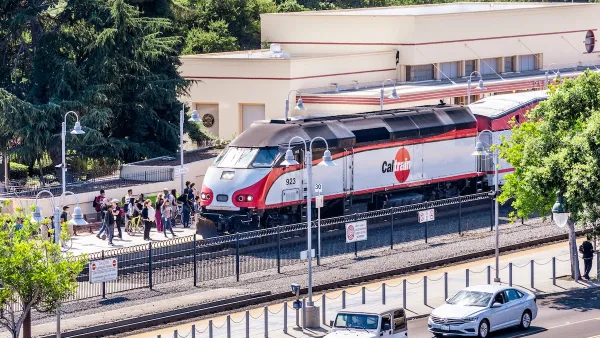
Caltrain may slash over one-third of its stations
If Bay Area voters reject two transit tax measures, Caltrain, BART and AC Transit will see steep service cuts.
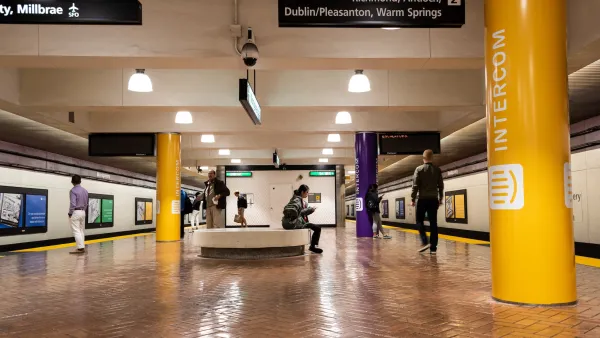
BART Announces Major Service Cuts, Fare Increases in Face of $376M Deficit
If a November ballot measure fails to bring new funding, BART’s ‘alternative service plan’ would reduce frequencies to 30 minutes, raise fares by 30%, and close up to 15 stations.
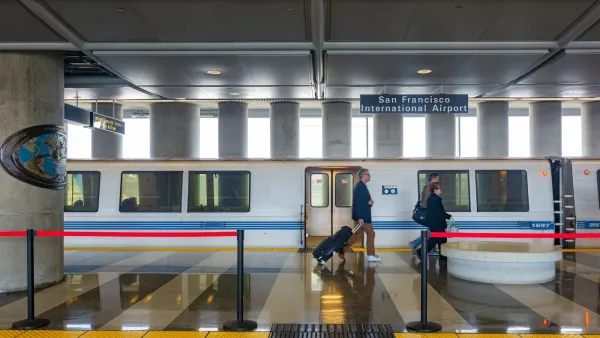
BART Adds Uber to its App Without Board Approval
Riders will now see a link to the Uber app at the top of BART’s own transit planning app.

Planetizen Federal Action Tracker
A weekly monitor of how Trump’s orders and actions are impacting planners and planning in America.

California plans to bury El Niño’s downpour
If the state plays its cards right, it may be able to store a billion acre-feet of El Niño’s water in aquifers.

Chicago breaks ground on $3 billion megadevelopment
The new neighborhood, titled Foundry Park, will one day host 3,700 residences.

California High-Speed Rail Authority CEO resigns after $600,000 scandal
Under Ian Choudri, the authority used taxpayer dollars to fund first class flights and trips to nightclubs.

Want to study the Missouri River? Soon, you may need unanimous approval from 10 states
Legislation would require 10 governors’ permission to study or build projects moving water outside the basin.

Desperate measures: Advocates weigh draining Lake Powell to fill Colorado River
Draining the reservoir could reduce evaporation losses by a couple hundred thousand acre-feet.

FREE Course: Walkable City 1: Why Walkability?
After describing his path towards focusing on walkability as the essence of good planning, Jeff Speck marches through his five principal reasons for making more walkable places.
Reinventing Malls: Planning Alchemy—Turning Gray Fields Into Gold
The course focuses on the opportunities and imperatives that shape reinvention of mall sites.

City of Rosemead
Rutgers University, Edward J. Bloustein School of Planning and Public Policy
One Hundred Miles
Hunter College, City University of New York (CUNY)
The Architects Foundation
University of Cincinnati Online
City of Cambridge
Montrose County
The Pocatello Development Authority